

The signs in the «Orientation signs» group belong to the VII. Vertical traffic signs block of the Spanish DGT theory. It is an information sign: rectangular or square, usually with a blue background.
On this page you have the complete catalogue of these signs with their image, official code and meaning, exactly as they may appear in the driving-licence theory exam.
💡 In the exam you will be shown the image of the sign and must recognise its meaning: look at the shape and colour to work out which group it belongs to.
 S-200
S-200
Roundabout pre-signage
Indicates the directions of the various exits from the next roundabout. If any inscription appears on a blue background, it indicates that the exit leads to a motorway or dual carriageway.
Article 162 (2)
 S-246
S-246
Additional pre-signaling of towns on highways or dual carriageways
Indicates nearby towns with more than 5,000 inhabitants that can be reached from the exit shown in the sub-sign above, as well as the distance to it.
Article 162 (2)
 S-247
S-247
Pre-signaling of exits on a town bypass
Indicates the number of the different exits on a town bypass, accompanied by the name of the access route or the cardinal point.
Article 162 (2)
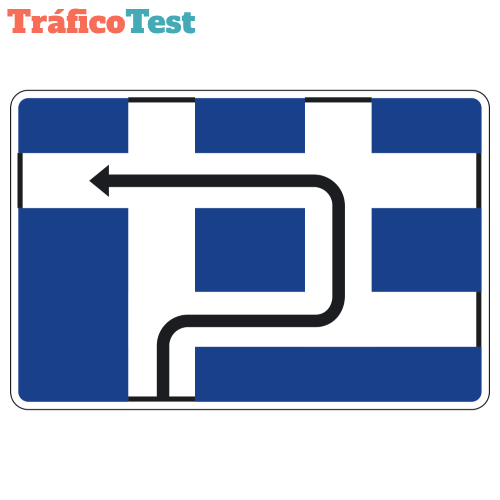 S-250
S-250
Route pre-signal
Indicates the route you must follow to take the direction indicated by the arrow.
Article 162 (2)
 S-260
S-260
Lane pre-marking
Indicates the only permitted directions at the next intersection for users traveling in the marked lanes. A corresponding box will be placed above the arrows indicating the lanes required for the roadway being traveled. Its use will be limited to exceptional situations where the continuous lane separation line does not diverge from the lanes located to the left, or to interchanges or forks between two dual carriageways or motorways with heavy traffic on both.
Article 162 (2)
 S-261
S-261
Pre-signaling of services on conventional roads with heavy traffic and on all multi-lane r
oads. On conventional roads with heavy traffic (according to the specifications of Standard 8.1-IC for vertical signage) and on all multi-lane roads, it indicates the proximity of an exit to the signposted services. If these are located in a town, the name of the town may appear on the first line of the sign, and if they are located on a service road, the inscription "service road" will appear. If there is a service station between the services, the distance to it, as well as its opening hours, will be indicated. The lower sub-sign will indicate the distance and opening hours of the next service station in the direction of travel. The upper box will indicate the distance to the exit.
Article 162 (2)
 S-263
S-263
Pre-signaling of services on motorways or dual carriageways
On motorways or dual carriageways, this sign indicates the proximity of an exit to the signposted services. If these are located in a town or city, the name of the town may appear on the first line of the sign, and if they are located on a service road, the inscription "service road" will appear. If there is a service station among the services, the distance to it and its opening hours will be indicated. The lower sub-sign will indicate the distance and opening hours of the next service station in the direction of travel. The upper sub-signs will indicate the exit number and distance to it.
Article 162 (2)
 S-267
S-267
Pre-signaling of various services on a conventional or multi-lane road
Indicates, on a conventional or multi-lane road, the proximity of an exit to signposted services such as residential developments, marinas, sports areas, commercial areas, industrial estates, business parks, and leisure areas. The distance to the exit will be indicated in the upper box.
Article 162 (2)
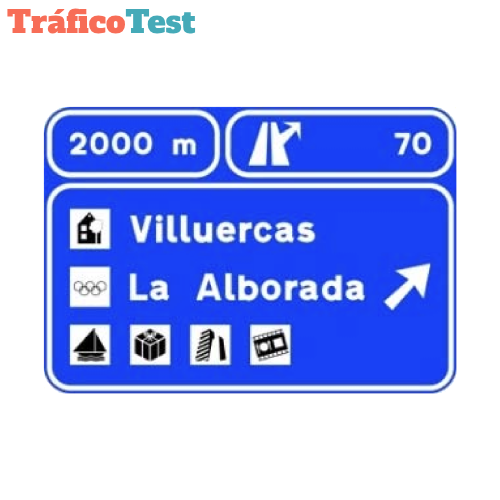 S-268
S-268
Pre-signaling of various services on a motorway or dual carriageway
Indicates, on a motorway or dual carriageway, the proximity of an exit to designated services such as residential developments, marinas, sports areas, commercial areas, industrial estates, business parks, and leisure areas. The exit number and distance to the exit will be indicated on the upper sub-signs.
Article 162 (2)
 S-271
S-271
Service area pre-signaling
On a motorway or dual carriageway, it indicates the proximity of an exit to a service area, including its name and opening hours, as well as pictograms of the services it offers. The upper box will indicate the distance to the exit. The lower sub-sign will indicate the distance and opening hours of the next service area in the direction of travel.
Article 162 (2)
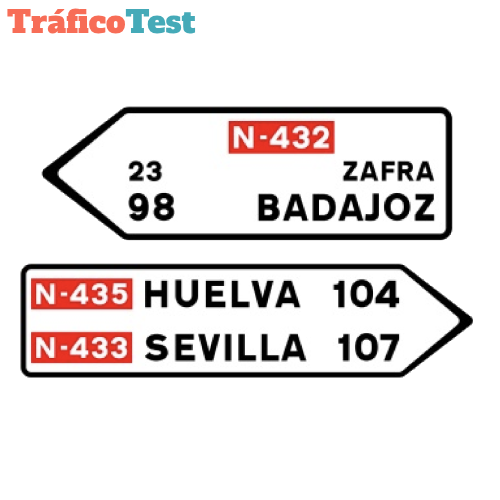 S-300
S-300
Towns along a conventional road route
Indicates the names of towns located along a route consisting of a conventional road and the direction in which they are reached. The box inside the sign defines the road category and number. The numbers inside the sign indicate the distance in kilometers.
Article 162 (3)
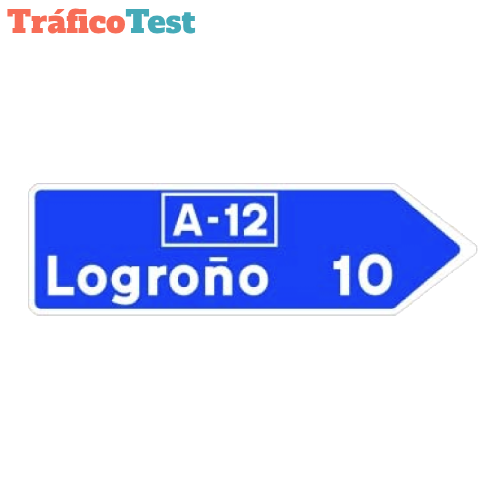 S-301
S-301
Towns on a motorway or dual carriageway route
Indicates the names of towns located on a motorway or dual carriageway route and the direction from which they are reached. The box inside the sign indicates the road category and number. The numbers inside the sign indicate the distance in kilometers.
Article 162 (3)
 S-320
S-320
Places of interest along conventional roads
Indicates places of general interest that are not towns and villages located along a route consisting of a conventional road. The numbers inside the sign indicate the distance in kilometers.
Article 162 (3)
 S-321
S-321
Places of interest along highways or dual carriageways
Indicates places of interest other than towns and cities located along a route consisting of a highway or dual carriageway. The numbers inside the sign indicate the distance in kilometers.
Article 162 (3)
 S-322
S-322
Destination sign for a bicycle path or cycleway
Indicates the existence of a bicycle path or cycleway in the direction indicated by the arrow. The numbers inside the sign indicate the distance in kilometers.
Article 162 (3)
 S-341
S-341
Destination signs for immediate exit to a conventional road
Indicates the exit point from a highway or dual carriageway to a conventional road. The number indicates the interchange number corresponding to the kilometer point of the road.
Article 162 (3)
 S-342
S-342
Destination signs for immediate exit to highway or dual carriageway
Indicates the exit point from a highway or dual carriageway to a motorway or dual carriageway. The number indicates the interchange number corresponding to the kilometer point of the road.
Article 162 (3)
 S-344
S-344
Immediate exit destination signs for a zone, area, or service road
Indicates the exit point from any roadway to a zone, area, or service road.
Article 162 (3)
 S-347
S-347
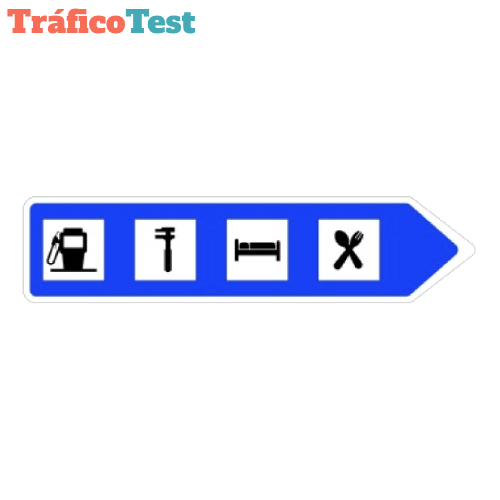
Destination signs for immediate exit to a zone, area, or service road, with a shared exit
to a highway or dual carriageway. Indicates the exit point from any road to a zone, area, or service road, and that this exit coincides with an exit to a highway or dual carriageway.
Article 162 (3)
 S-348
S-348
Immediate exit signage with side panel on a conventional road or multi-lane road toward an
other conventional or multi-lane road. Indicates, on a conventional or multi-lane road, the destinations of the exits at the next junction when they lead to a conventional or multi-lane road.
Article 162 (3)
 S-348a
Immediate exit signage with side panel on a conventional road or multi-lane road toward an
other conventional or multi-lane road and main direction. Indicates, on a conventional or multi-lane road, the main direction of the road being traveled and the destinations of the exits at the next junction when they lead to a conventional or multi-lane road.
Article 162 (3)
 S-349
S-349
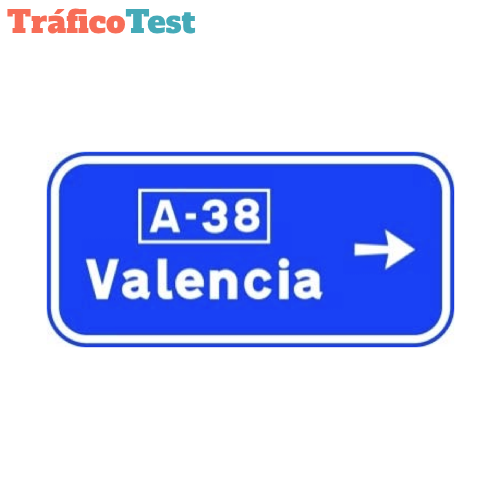
Immediate exit signage with side panel on a conventional road or multi-lane road toward a
motorway or dual carriageway. Indicates, on a conventional or multi-lane road, the destinations of the exits at the next junction when they lead to a motorway or dual carriageway.
Article 162 (3)
 S-349a
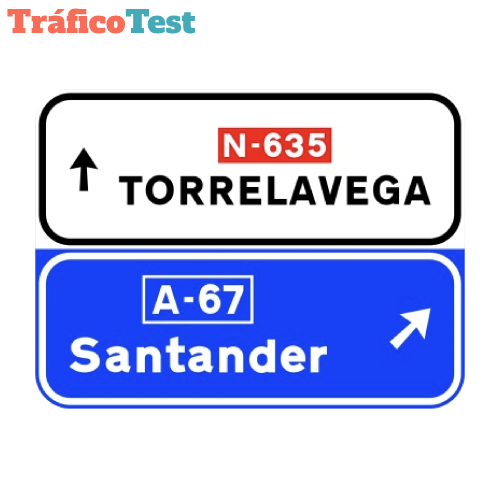
Immediate exit signage with side panel on a conventional road or multi-lane road toward a
motorway or dual carriageway and main direction. Indicates, on a conventional or multi-lane road, the main direction of the road being traveled and the destinations of the exits at the next junction when they lead to a motorway or dual carriageway.
Article 162 (3)
 S-350
S-350
Overhead sign on a conventional road
Immediate exit toward a conventional road. Indicates, on a conventional road, at the point where the exit ramp begins, the destinations reachable via the immediate exit to a conventional road and, if applicable, its route number.
Article 162 (3)
 S-350a
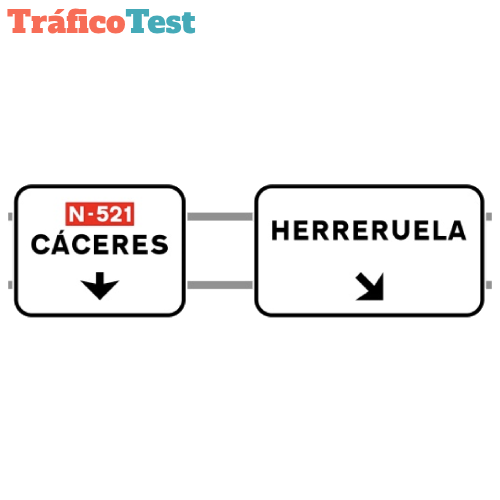
Immediate exit signage with overhead signs on a conventional or multi-lane road toward a c
onventional or multi-lane road and main direction. Indicates, on a conventional or multi-lane road, the main direction of the road being traveled and the destinations of the next junction exit when it leads to a conventional or multi-lane road.
Article 162 (3)
 S-351
S-351
Overhead sign on a motorway or dual carriageway
Immediate exit toward a conventional road. Indicates, on a motorway or dual carriageway, at the point where the exit ramp begins, the destinations reachable via the immediate exit to a conventional road and, if applicable, its route number. Also shows the junction and ramp number and letter if applicable.
Article 162 (3)
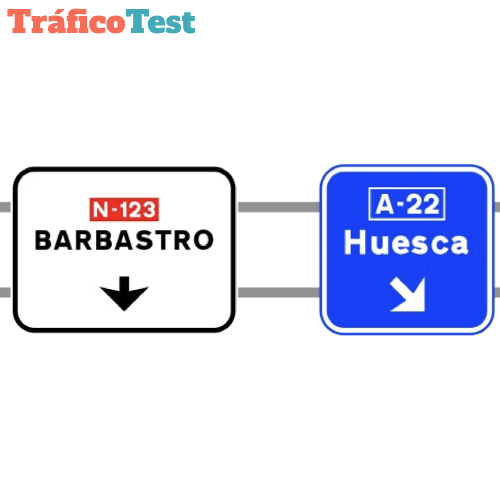 S-351a
Immediate exit signage with overhead signs on a conventional or multi-lane road toward a m
otorway or dual carriageway and main direction. Indicates, on a conventional or multi-lane road, the main direction of the road being traveled and the destinations of the next junction exit when it leads to a motorway or dual carriageway.
Article 162 (3)
 S-352
S-352
Immediate exit signage with overhead sign on a motorway or dual carriageway toward a conve
ntional or multi-lane road. Indicates, on a motorway or dual carriageway, the destinations of the next junction exit when it leads to a conventional or multi-lane road. Also shows the exit number and, if applicable, the letter.
Article 162 (3)
 S-352a
Immediate exit signage with overhead signs on a motorway or dual carriageway toward a conv
entional or multi-lane road and main direction. Indicates, on a motorway or dual carriageway, the main direction of the road being traveled and the destinations of the next junction exit when it leads to a conventional or multi-lane road. Also shows the exit number and, if applicable, the letter.
Article 162 (3)
 S-353
S-353
Immediate exit signage with overhead sign on a motorway or dual carriageway toward a motor
way or dual carriageway. Indicates, on a motorway or dual carriageway, the destinations of the next junction exit when it leads to another motorway or dual carriageway. Also shows the exit number and, if applicable, the letter.
Article 162 (3)
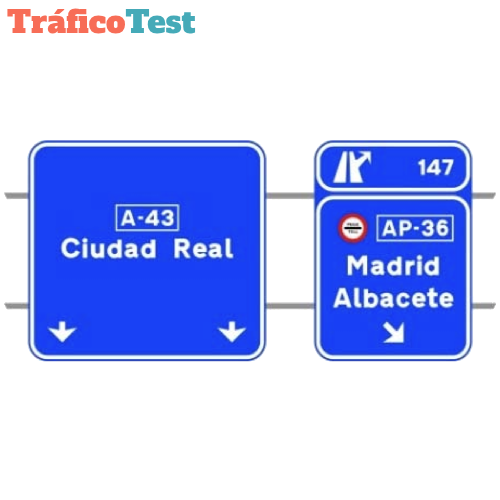 S-353a
Immediate exit signage with overhead signs on a motorway or dual carriageway toward a moto
rway or dual carriageway and main direction. Indicates, on a motorway or dual carriageway, the main direction of the road being traveled and the destinations of the next junction exit when it leads to another motorway or dual carriageway. Also shows the exit number and, if applicable, the letter.
Article 162 (3)
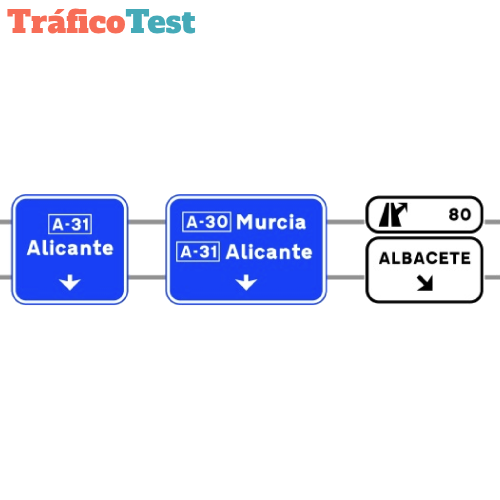 S-373
S-373
Signage of the first immediate exit of two very close exits, with overhead signs, on a mot
orway or dual carriageway toward a conventional or multi-lane road, destinations of the second exit, and main direction. Indicates, at the first of two very close exits on a motorway or dual carriageway, the main direction of the road being traveled (left and center signs), the destinations of the second exit (center sign), and the destinations of the first exit when it leads to a conventional or multi-lane road (right sign). Also shows the exit number and, if applicable, the letter.
Article 162 (3)
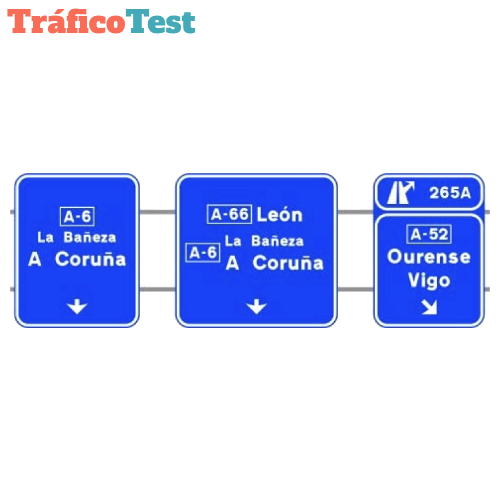 S-375
S-375
Signage of the first immediate exit of two very close exits, with overhead signs, on a mot
orway or dual carriageway toward a motorway or dual carriageway, destinations of the second exit, and main direction. Indicates, at the first of two very close exits on a motorway or dual carriageway, the main direction of the road being traveled (left and center signs), the destinations of the second exit (center sign), and the destinations of the first exit when it leads to another motorway or dual carriageway (right sign). Also shows the exit number and, if applicable, the letter.
Article 162 (3)
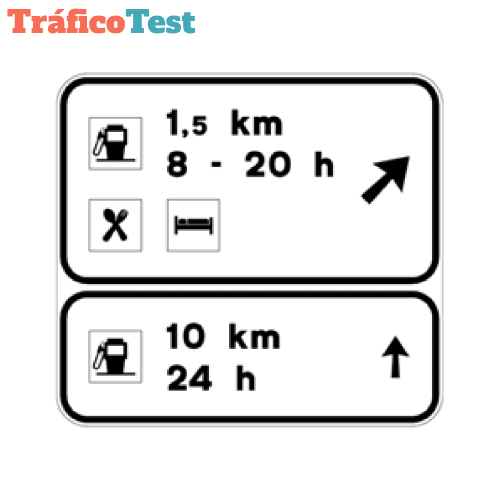 S-376
S-376
Immediate exit signage to services on conventional roads with high traffic volume and on a
ll multi-lane roads. Indicates, on conventional roads with high traffic (according to standard 8.1-IC on vertical signage) and on all multi-lane roads, the exit to the signed services. If located within a town, the town name may appear on the first line of the sign. If located on a service road, the sign will display “vía de servicio.” If one of the services is a service station, its distance and opening hours will be shown. The lower panel will show the distance and opening hours of the next service station in the direction of travel.
Article 162 (3)
 S-377
S-377
Immediate exit signage to services on other conventional roads
Indicates, on the rest of conventional roads, the exit to the signed services. If one of them is a service station, its opening hours will be shown.
Article 162 (3)
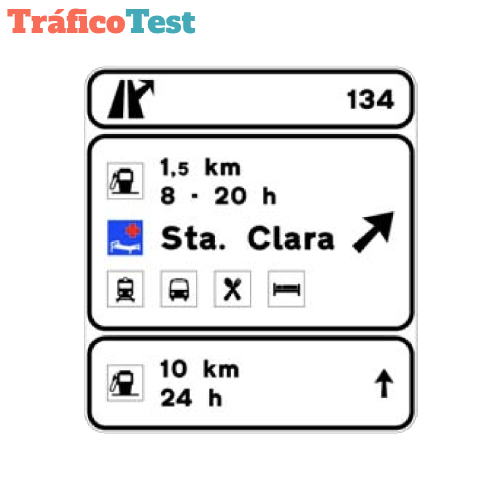 S-378
S-378
Immediate exit signage to services on a motorway or dual carriageway
Indicates, on a motorway or dual carriageway, the exit to the signed services. If located within a town, the town name may appear on the first line of the sign. If located on a service road, the sign will display “vía de servicio.” If one of the services is a service station, its distance and opening hours will be shown. The lower panel shows the distance and opening hours of the next service station in the direction of travel. The upper panel shows the exit number.
Article 162 (3)
 S-379
S-379
Immediate exit signage toward a service area
Indicates, on a motorway or dual carriageway, the exit toward a service area, showing its name and opening hours, along with pictograms of the services it offers. The lower panel shows the distance and opening hours of the next service area in the direction of travel.
Article 162 (3)
 S-380
S-380
Destination sign for immediate exit toward a service area
Indicates the point of exit from a motorway or dual carriageway toward a service area.
Article 162 (3)
 S-400
S-400
European route
Identifies a route on the European network.
Article 162 (4)
 S-410
S-410
Motorway and dual carriageway
Identifies a motorway or dual carriageway. When the motorway is within the autonomous community, in addition to the letter A and following the corresponding number or above the sign with an additional panel, the initials identifying the autonomous community may be included. No road that does not have motorway or dual carriageway characteristics may be identified with the letter A. When the motorway or dual carriageway is a ring road or bypass, the letter A may be replaced by the letters indicating the city, in accordance with the code established for this purpose by the Ministries of Public Works and the Interior.
Article 162 (4)
 S-410a
Toll Road
Identifies a toll road.
Article 162 (4)
 S-420
S-420
State highway
Identifies a road in the state highway network that is not a motorway or dual carriageway.
Article 162 (4)
 S-430
S-430
First-level regional highway
Identifies a first-level road, other than a motorway or dual carriageway, in the regional network of the community to which the identification acronym corresponds.
Article 162 (4)
 S-440
S-440
Second-level regional road
Identifies a second-level road, other than a highway or dual carriageway, in the regional network of the community to which the identification acronym corresponds.
Article 162 (4)
 S-450
S-450
Third-level regional highway
Identifies a third-level road, other than a motorway or dual carriageway, within the regional network of the community to which the identification acronym corresponds.
Article 162 (4)
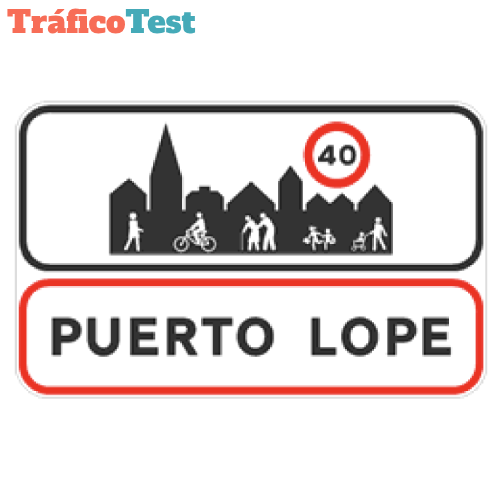 S-500
S-500
Entrance to a town
Indicates the location from which traffic rules for the town apply.
Article 162 (5)
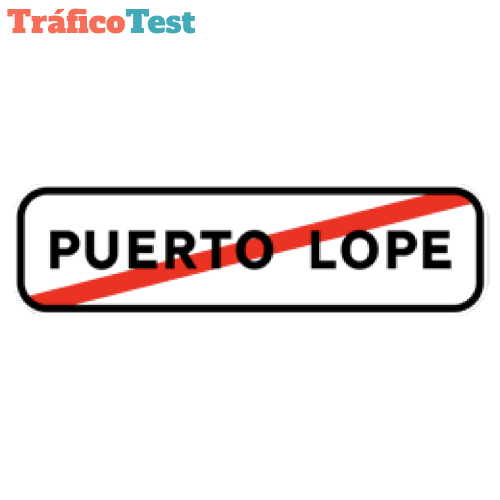 S-510
S-510
End of settlement
Indicates the point where the traffic rules relating to settlements cease to apply.
Article 162 (5)
 S-520
S-520
Location of a characteristic point on the route
Indicates a place of general interest along the route.
Article 162 (5)
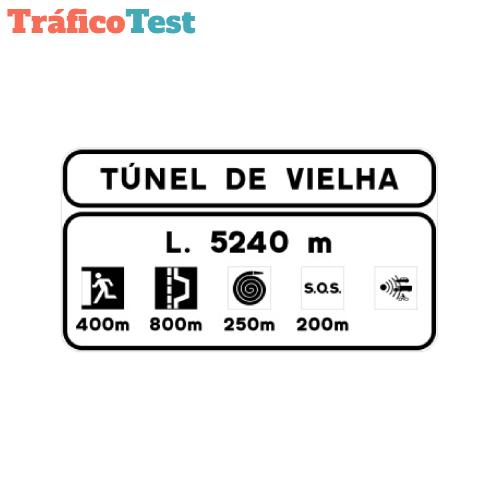 S-530
S-530
Location of a tunnel on a conventional or multi-lane road with information about its safet
y features. Indicates the location of a tunnel on a conventional or multi-lane road, including information about its safety installations and its length.
Article 162 (5)
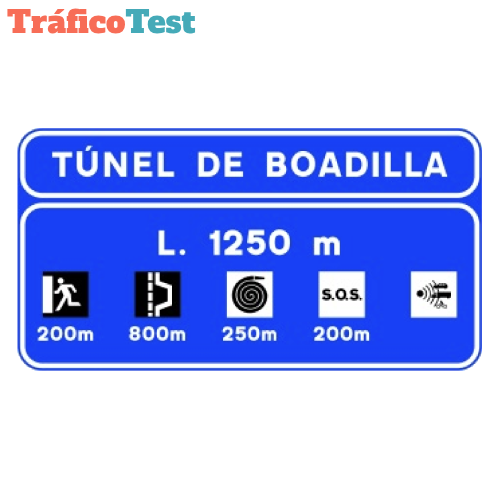 S-531
S-531
Location of a tunnel on a motorway or dual carriageway with information about its safety f
eatures. Indicates the location of a tunnel on a motorway or dual carriageway, including information about its safety installations and its length.
Article 162 (5)
 S-532
S-532
Location of a tunnel on a conventional or multi-lane road with information about specific
driving obligations inside it. Indicates the location of a tunnel on a conventional or multi-lane road, including information about specific driving obligations within the tunnel.
Article 162 (5)
 S-533
S-533
Location of a tunnel on a motorway or dual carriageway with information about specific dri
ving obligations inside it. Indicates the location of a tunnel on a motorway or dual carriageway, including information about specific driving obligations within the tunnel.
Article 162 (5)
 S-540
S-540
Provincial boundary location
Indicates the point at which the road enters a province.
Article 162 (5)
 S-550
S-550
Autonomous community boundary
Indicates the point at which the road enters an autonomous community.
Article 162 (5)
 S-560
S-560
Location of the border between an autonomous community and a province
Indicates the point at which the road enters an autonomous community or province.
Article 162 (5)
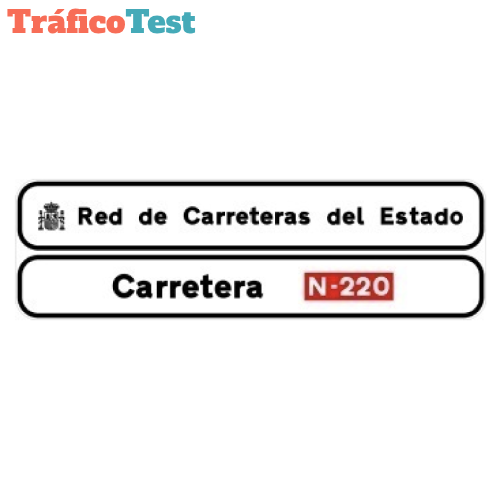 S-561
S-561
Institutional sign on a conventional or multi-lane road
Sign indicating the ownership, numbering, and name of the conventional or multi-lane road being accessed. If the road has no name, the sign will include the word "Carretera" followed by the identifying panel.
Article 162 (5)
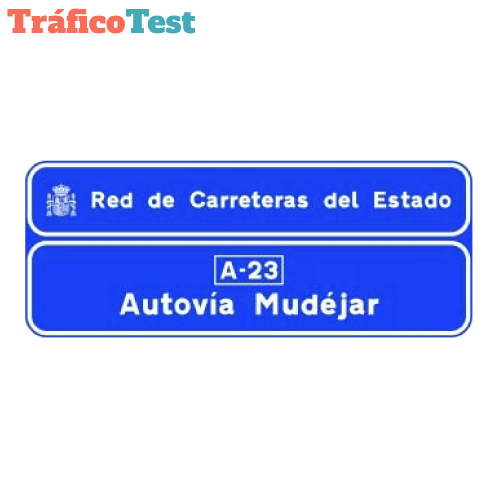 S-562
S-562
Institutional sign on a motorway or dual carriageway
Sign indicating the ownership, numbering, and name of the motorway or dual carriageway being accessed. If the motorway or dual carriageway has no name, the sign will include the word “Autopista” or “Autovía” followed by the identifying panel.
Article 162 (5)
 S-570
S-570
Kilometer marker on highways and dual carriageways
Indicates the kilometer point of the highway or dual carriageway whose identification appears above.
Article 162 (5)
 S-570a
Kilometer marker on a toll highway
Indicates the kilometer point of the toll highway whose identification appears above.
Article 162 (5)
 S-571
S-571
Kilometer marker on a motorway or dual carriageway that is also part of a European route
Indicates the kilometer point of a motorway or dual carriageway that is also part of a European route, the identification of which appears at the top of the sign.
Article 162 (5)
 S-572
S-572
Kilometer marker on a conventional road
It indicates the kilometer point of a conventional road, the identification of which appears at the top of the road against a background color corresponding to the road network to which it belongs.
Article 162 (5)
 S-573
S-573
Kilometer marker on a European route
It indicates the kilometer point of a conventional road that is part of a European route, and its letters and numbers appear at the top of the sign.
Article 162 (5)
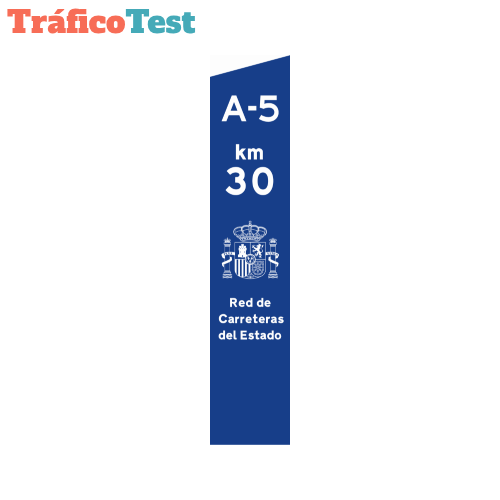 S-574
S-574
Milestone on a motorway or dual carriageway
Indicates the kilometer point of a motorway or dual carriageway when it is a multiple of 10.
Article 162 (5)
 S-574a
Milestone on a conventional road
Indicates the kilometer point of a conventional road when it is a multiple of 10.
Article 162 (5)
 S-574b
Milestone on a toll highway
Indicates the kilometer point of a toll highway when it is a multiple of 10.
Article 162 (5)
 S-574c
Hectometric milestone on a conventional or multi-lane road that is part of an internationa
l route. Indicates the kilometer marker when it is a multiple of ten on a conventional or multi-lane road that is part of an international route, with the route identifier shown at the top of the sign.
Article 162 (5)
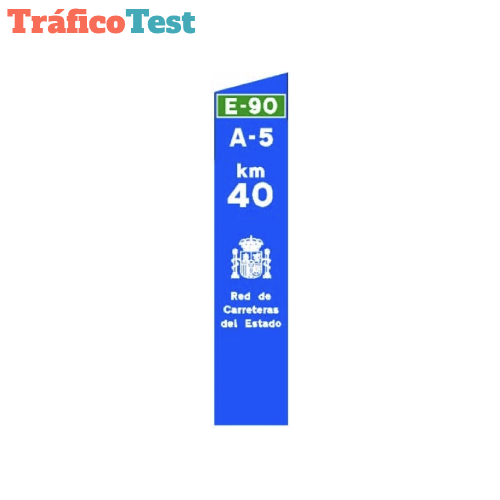 S-574d
Hectometric milestone on a motorway or dual carriageway that is part of an international r
oute. Indicates the kilometer marker when it is a multiple of ten on a motorway or dual carriageway that is part of an international route, with the route identifier shown at the top of the sign.
Article 162 (5)
 S-574e
Hectometric milestone on a toll motorway that is part of an international route
Indicates the kilometer marker when it is a multiple of ten on a toll motorway that also forms part of an international route, with the route identifier shown at the top of the sign.
Article 162 (5)
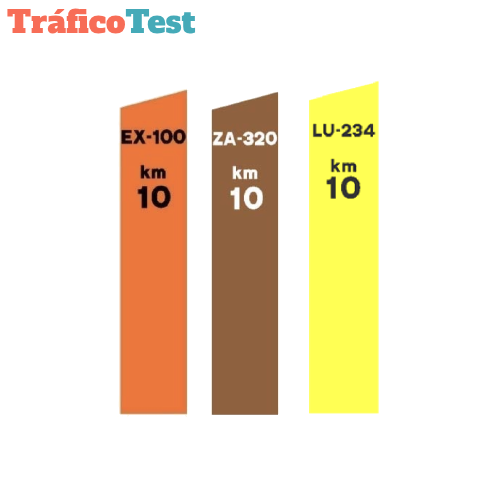 S-575
S-575
Milestone
Indicates the kilometre point of a road that is not a motorway or dual carriageway when the kilometre point is a multiple of 10. Its colour will correspond to that of the network of which the road forms part.
Article 162 (5)
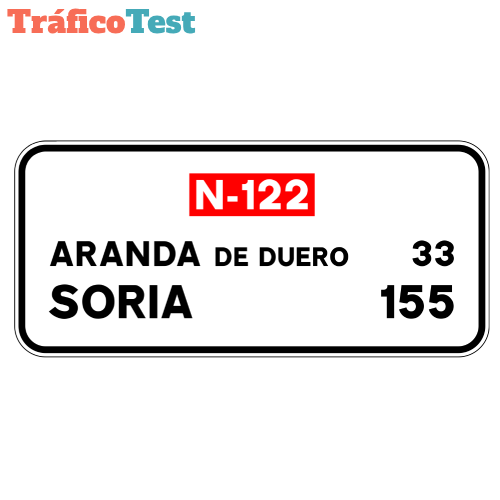 S-600
S-600
Confirmation of towns on a conventional road route
Indicates, on a conventional road, the names and distances in kilometres to the towns indicated.
Article 162 (6)
 S-602
S-602
Confirmation of towns on a highway or dual carriageway route
Indicates, on a highway or dual carriageway, the names and distances in kilometres to the towns indicated.
Article 162 (6)
 S-603
S-603
Supplementary confirmation with exit preseñalization
Indicates on a motorway or dual carriageway the names of provincial capitals not directly adjacent to the road being traveled and their respective distances in kilometers. It also includes identification panels for the motorways or dual carriageways that provide access to those cities. The upper sub-panels also show the corresponding exit number and the distance to that exit.
Article 162 (6)
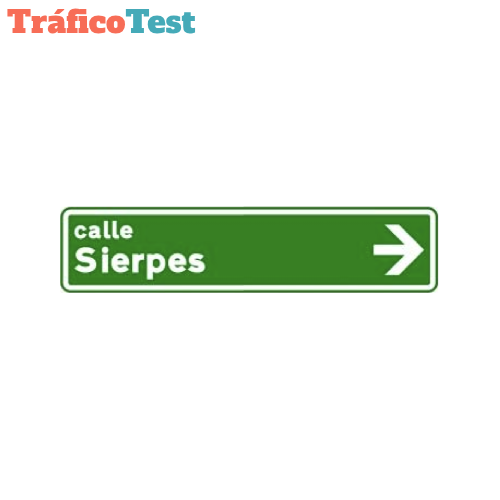 S-700
S-700
Places on the urban road network
Indicates the names of streets, avenues, squares, roundabouts or any other point on the road network.
Article 162 (7)
 S-710
S-710
Places of interest for travelers
Indicates places of interest for travelers, such as stations, airports, port boarding areas, hotels, campsites, tourist offices and automobile clubs.
Article 162 (7)
 S-720
S-720
Places of sporting or recreational interest
Indicates places where sporting or recreational interest predominates.
Article 162 (7)
 S-730
S-730
Places of geographical or ecological nature
Indicates places of geographical or ecological interest.
Article 162 (7)
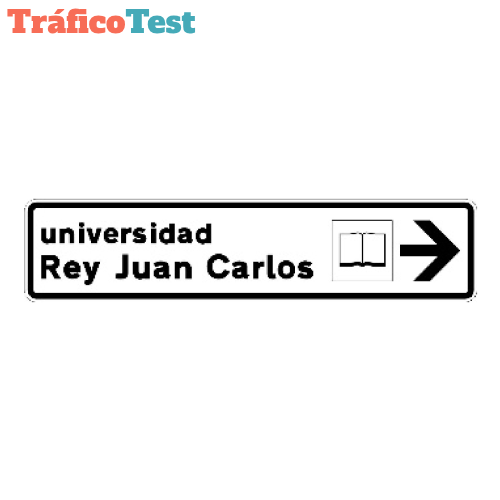 S-740
S-740
Places of monumental or cultural interest
Indicates places of monumental, historical, artistic or, in general, cultural interest.
Article 162 (7)
 S-750
S-750
Industrial use areas
Indicates areas of significant attraction for trucks, goods and, in general, heavy industrial traffic.
Article 162 (7)
 S-760
S-760
Motorways and dual carriageways
Indicates motorways and dual carriageways and the places that can be accessed from them.
Article 162 (7)
 S-770
S-770
Other places and roads
Indicates roads that are not motorways or dual carriageways, towns that can be accessed via them, as well as other places of public interest not included in signs S-700 to S-760.
Article 162 (7)
❓ Frequently asked questions
What are «Orientation signs» signs?
How many signs does this group include?
Do these signs appear in the DGT theory exam?
🚦 Practise with DGT tests
Already recognise these signs? Test yourself with official exam-style questions.
📝 Start with TraficoTest