

The signs in the «Hazard warning signs» group belong to the VII. Vertical traffic signs block of the Spanish DGT theory. It is a hazard warning sign: triangular, with a red border and a white background.
On this page you have the complete catalogue of these signs with their image, official code and meaning, exactly as they may appear in the driving-licence theory exam.
💡 In the exam you will be shown the image of the sign and must recognise its meaning: look at the shape and colour to work out which group it belongs to.
 P-1
P-1
Intersection with priority
Danger due to the proximity of an intersection with a road, whose users must give way.
Article 149 (5)
 P-1a
P-1a
Intersection with priority over road on the right
Danger due to the proximity of an intersection with a road on the right, whose users must give way.
Article 149 (5)
 P-1b
P-1b
Intersection with priority over a road on the left
Danger due to the proximity of an intersection with a road on the left, whose users must give way.
Article 149 (5)
 P-1c
P-1c
Intersection with priority over right-hand merging
Danger due to the proximity of a right-hand merging of a road, whose users must give way.
Article 149 (5)
 P-1d
P-1d
Intersection with priority over left-hand merging
Danger due to the proximity of a left-hand merging of a road, whose users must give way.
Article 149 (5)
 P-1e
P-1e
Section with shortcuts
Danger due to the proximity of a section with several shortcuts to the road, and users of these shortcuts must yield the right of way.
Article 149 (5)
 P-2
P-2
Intersection with right priority
Danger due to proximity to an intersection where the general rule of right of way applies.
Article 149 (5)
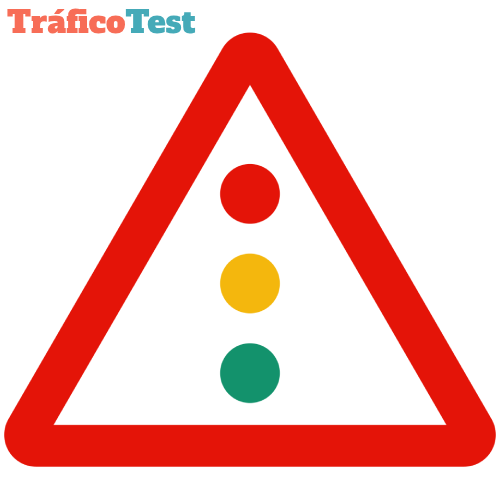 P-3
P-3
Traffic lights
Danger due to proximity to an isolated intersection or section with traffic regulated by traffic lights.
Article 149 (5)
 P-4
P-4
Intersection with rotating traffic
Danger due to the proximity of an intersection where traffic is rotating in the direction of the arrows.
Article 149 (5)
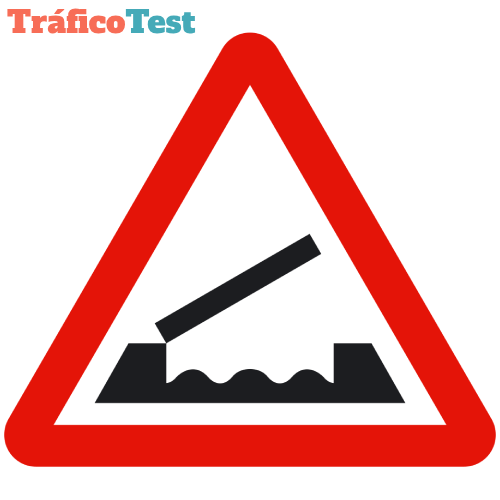 P-5
P-5
Movable bridge
Danger when approaching a bridge that can be raised or rotated, thus temporarily interrupting traffic.
Article 149 (5)
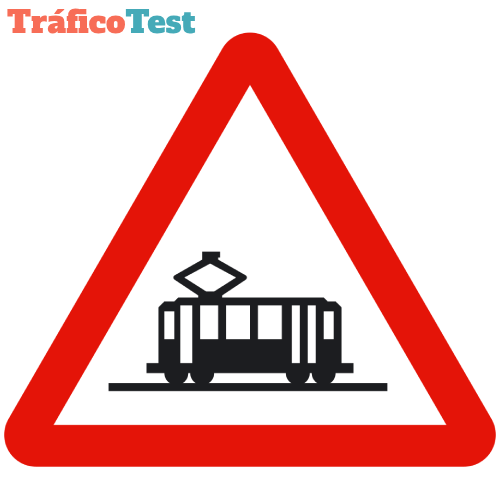 P-6
P-6
Tram crossing
Danger due to proximity to crossing with a tram line, which has priority of passage.
Article 149 (5)
 P-7
P-7
Level crossing with barriers
Danger due to proximity to a level crossing equipped with barriers or semi-barriers.
Article 149 (5)
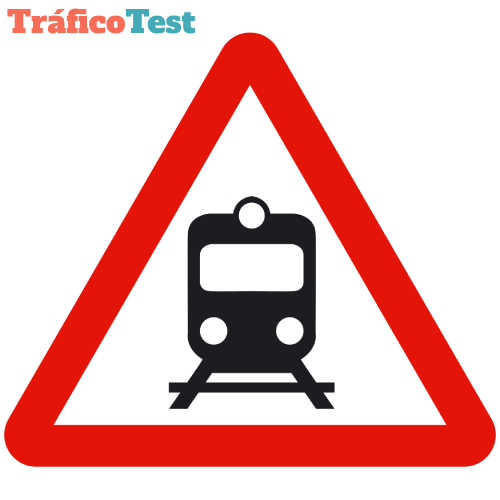 P-8
P-8
Level crossing without barriers
Danger due to the proximity of a level crossing not equipped with barriers or semi-barriers.
Article 149 (5)
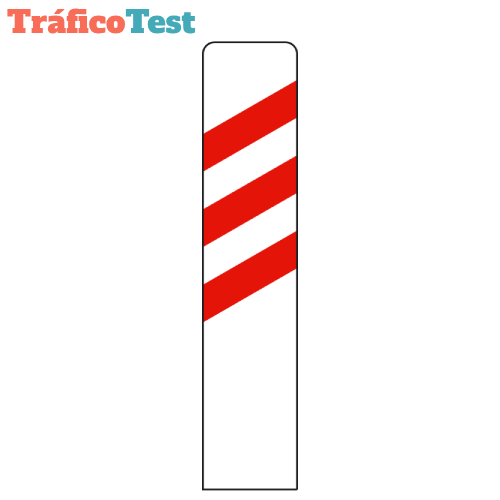 P-9a
P-9a
Proximity of a level crossing, drawbridge or dock (right side)
Indicates, on the right side, the proximity of a signaled danger of a level crossing, drawbridge or dock. This beacon is always accompanied by the signal P-5, P-7, P-8 or P-27. The P-5 sign warns of a level crossing with barriers or gates, indicating that the railway is protected and drivers must stop when the barriers are down or the red lights are flashing. The P-7 sign warns of a level crossing without barriers, meaning there is no physical protection and drivers must make sure no train is approaching before crossing. The P-8 sign is used as an advance warning of a level crossing or tramway crossing, and it usually appears as a series of white panels with red diagonal stripes indicating the remaining distance (three stripes for 300 m, two for 200 m, and one for 100 m). Finally, the P-27 sign warns of the presence of trams crossing the road, and drivers must be especially cautious since trams always have priority.
Article 149 (5)
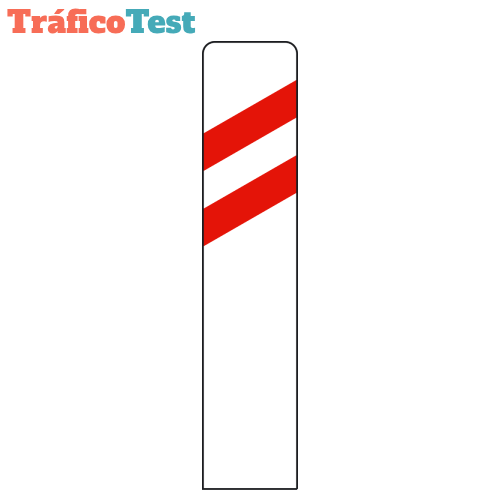 P-9b
P-9b
Approach to a level crossing, drawbridge or pier (right side)
Indicates, on the right side, the approach to a level crossing, drawbridge or pier, which is at least two-thirds of the distance from it to the corresponding danger warning sign.
Article 149 (5)
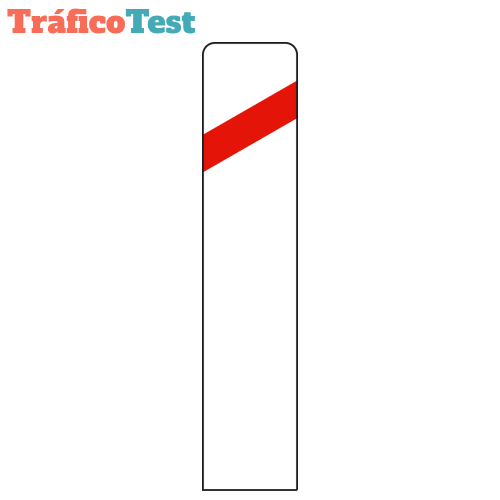 P-9c
P-9c
Proximity of a level crossing, drawbridge or pier (right side)
Indicates, on the right side, the proximity of a level crossing, drawbridge or pier, which is at least one third of the distance from the corresponding danger warning sign.
Article 149 (5)
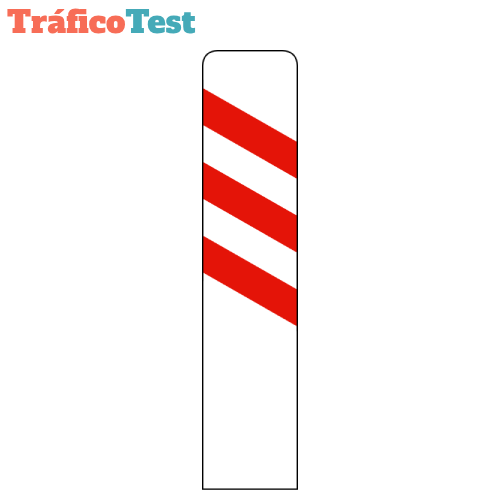 P-10a
P-10a
Proximity of a level crossing, drawbridge or dock (left side)
Indicates, on the left side, the proximity of a signaled danger of a level crossing, drawbridge or dock. This beacon is always accompanied by the signal P-5, P-7, P-8 or P-27.
Article 149 (5)
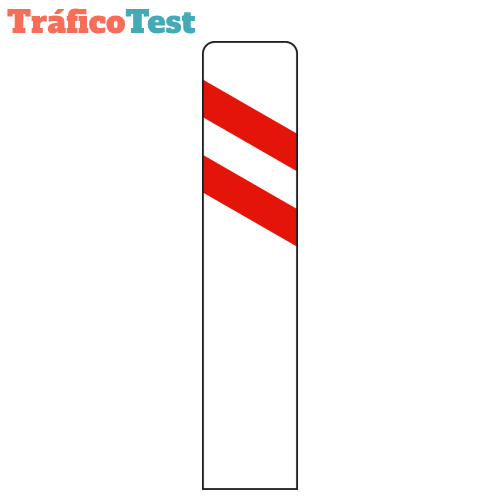 P-10b
P-10b
Approach to a level crossing, drawbridge or pier (left side)
Indicates, on the left side, the approach to a level crossing, drawbridge or pier, which is at least two-thirds of the distance from it to the corresponding danger warning sign.
Article 149 (5)
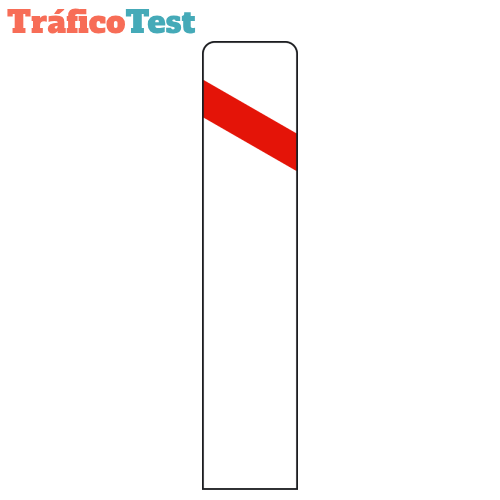 P-10c
P-10c
Proximity of a level crossing, drawbridge or pier (left side)
Indicates, on the left side, the proximity of a level crossing, drawbridge or pier, which is at least one third of the distance from the corresponding danger warning sign.
Article 149 (5)
 P-11
P-11
Situation of a level crossing without barriers
Danger due to the immediate presence of a level crossing without barriers.
Article 149 (5)
 P-11a
P-11a
Situation of a level crossing without barriers with more than one railway track
Danger due to the immediate presence of a level crossing without barriers with more than one railway track.
Article 149 (5)
 P-12
P-12
Airport
Danger due to proximity to a place where aircraft frequently fly at low altitude over the road and may cause unexpected noises.
Article 149 (5)
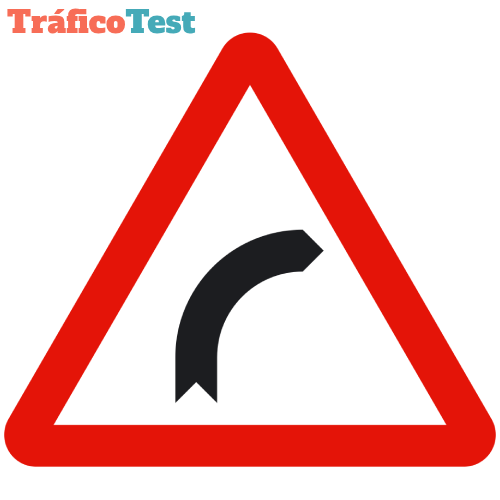 P-13a
P-13a
Dangerous curve to the right
Danger due to the proximity of a dangerous curve to the right.
Article 149 (5)
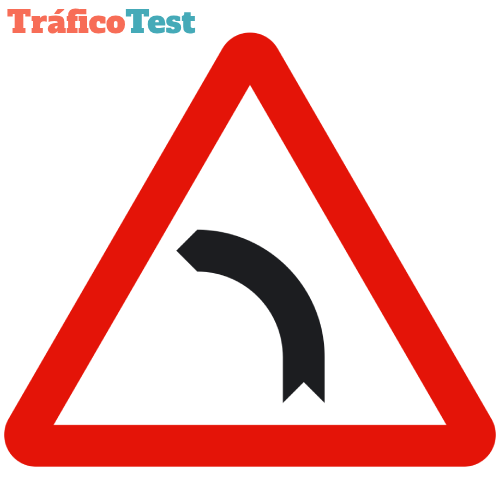 P-13b
P-13b
Dangerous left curve
Danger due to the proximity of a dangerous left curve.
Article 149 (5)
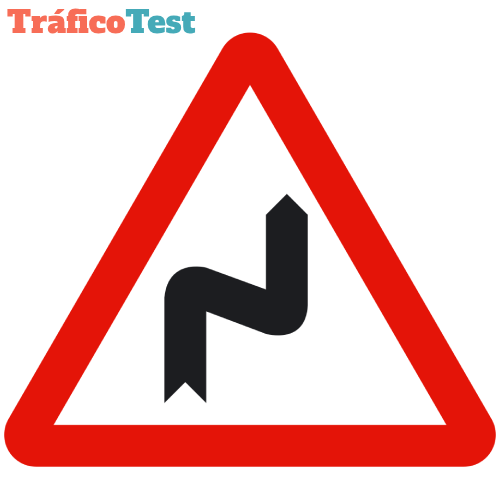 P-14a
P-14a
Dangerous curves to the right
Danger due to the proximity of a succession of curves close to each other; the first one to the right.
Article 149 (5)
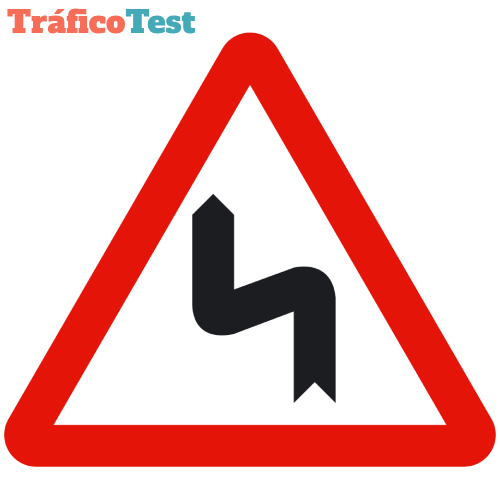 P-14b
P-14b
Dangerous left-hand curves
Danger due to the proximity of a succession of curves close to each other, the first one to the left.
Article 149 (5)
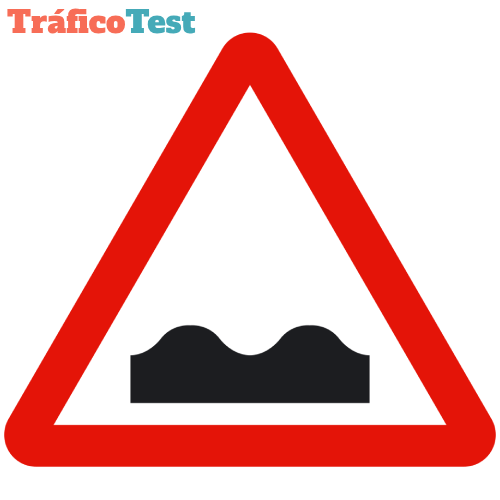 P-15
P-15
Irregular profile
Danger due to proximity to a speed bump or speed bump on the road or poor road surface condition.
Article 149 (5)
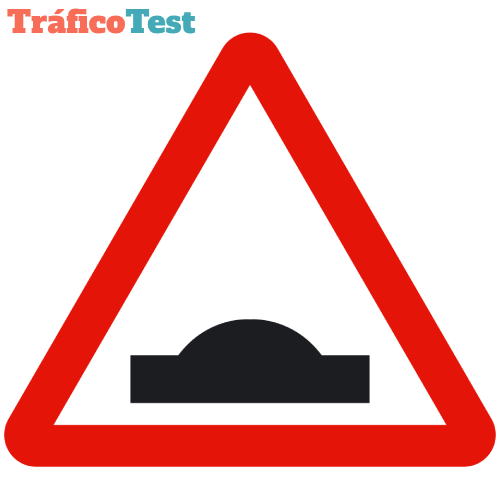 P-15a
P-15a
Speed bump
Danger due to proximity of a speed bump on the road.
Article 149 (5)
 P-15b
P-15b
Speed bump
Danger due to proximity of a speed bump on the road.
Article 149 (5)
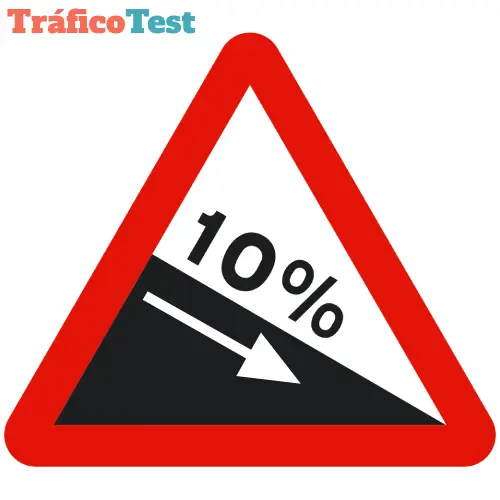 P-16a
P-16a
Steep descent
Danger due to the existence of a section of road with a steep downward slope. The figure indicates the slope as a percentage.
Article 149 (5)
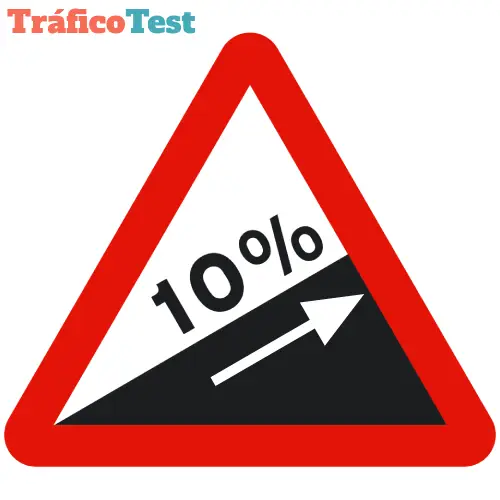 P-16b
P-16b
Steep climb
Danger due to the existence of a section of track with a steep upward slope. The figure indicates the gradient as a percentage.
Article 149 (5)
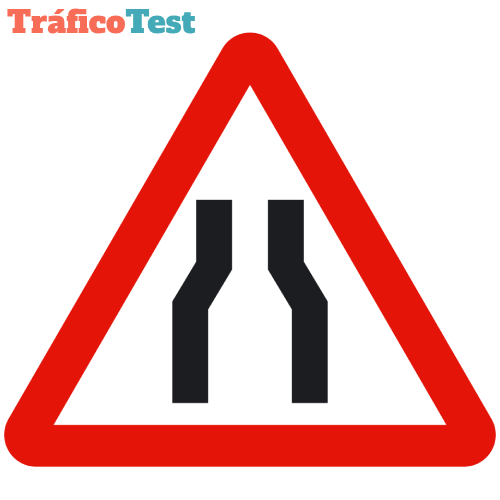 P-17
P-17
Narrowing of the road
Danger due to the possibility of an area of the road where the road narrows.
Article 149 (5)
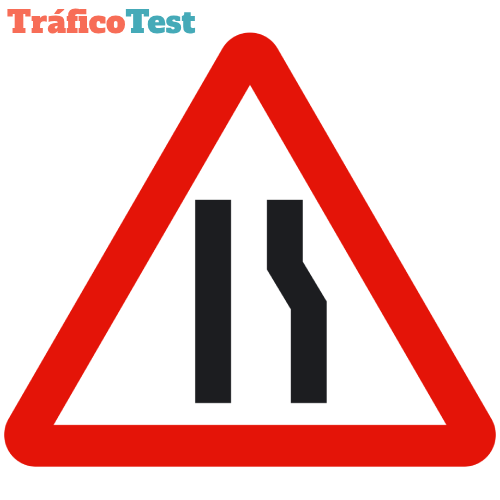 P-17a
P-17a
Narrowing of the road on the right
Danger due to proximity to an area of the road where the carriageway narrows on the right side.
Article 149 (5)
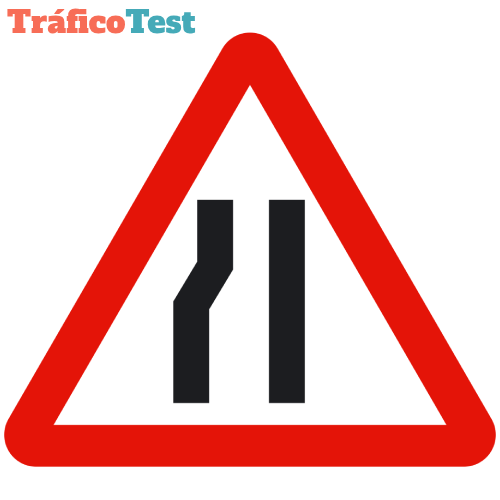 P-17b
P-17b
Narrowing of the road on the left
Danger due to the proximity of an area of the road where the road narrows on the left side.
Article 149 (5)
 P-18
P-18
Works
Danger due to proximity to a section of track under construction.
Article 149 (5)
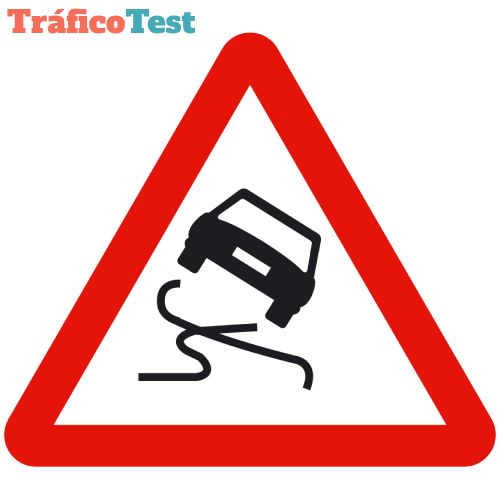 P-19
P-19
Slippery pavement
Danger due to proximity to an area of the road where the pavement may be very slippery.
Article 149 (5)
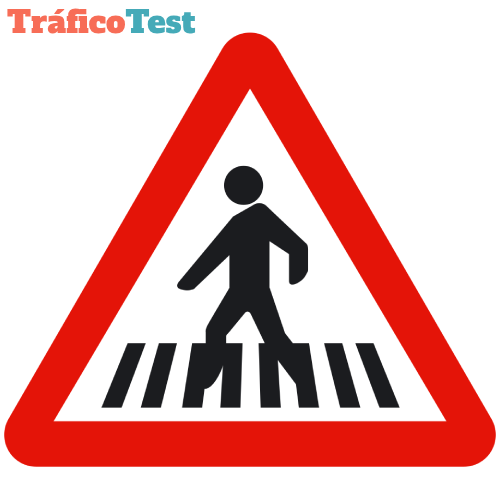 P-20a
P-20a
Pedestrian crossing
Danger due to proximity of one or more pedestrian crossings.
Article 149 (5)
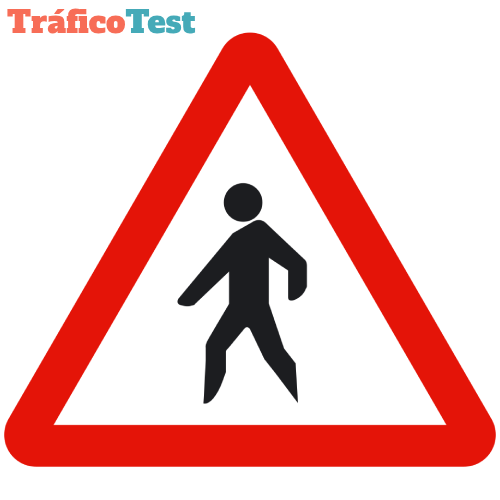 P-20b
P-20b
Pedestrians
Danger due to proximity to a place frequented by pedestrians.
Article 149 (5)
 P-21
P-21
Children
Danger due to proximity to a place frequented by children, such as schools, playgrounds, etc.
Article 149 (5)
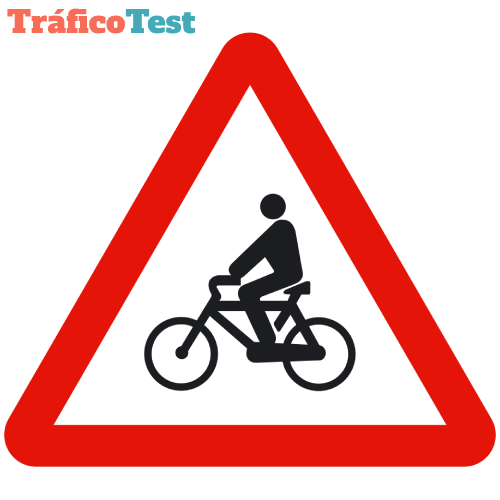 P-22
P-22
Cyclist
Danger due to proximity to a bicycle crossing or a place where cyclists frequently enter or cross the road.
Article 149 (5)
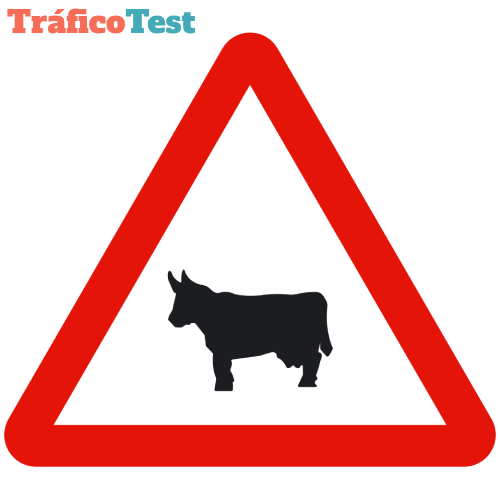 P-23
P-23
Crossing of domestic animals
Danger due to proximity to a place where the road may frequently be crossed by domestic animals.
Article 149 (5)
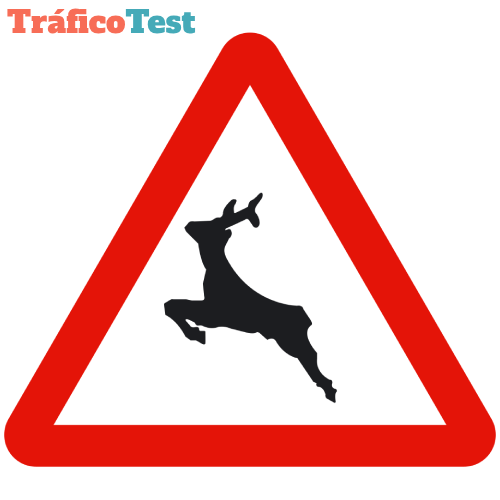 P-24
P-24
Crossing of wild animals
Danger due to proximity to a place where the road can frequently be crossed by wild animals.
Article 149 (5)
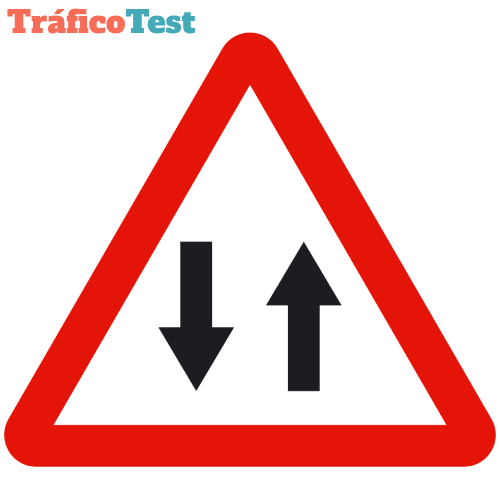 P-25
P-25
Two-way traffic
Danger due to proximity to an area of the road where traffic is temporarily or permanently in both directions.
Article 149 (5)
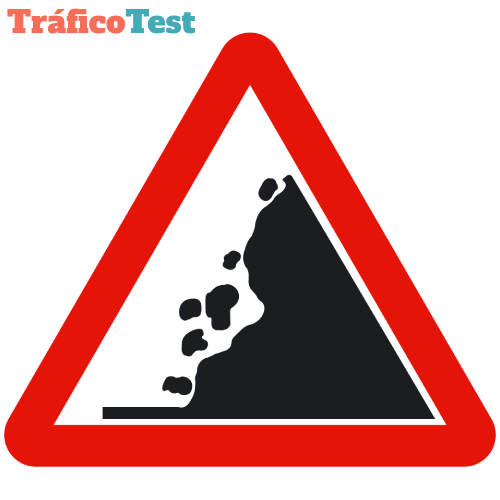 P-26
P-26
Landslide
Danger due to proximity to an area with frequent landslides and the consequent possible presence of obstacles on the road.
Article 149 (5)
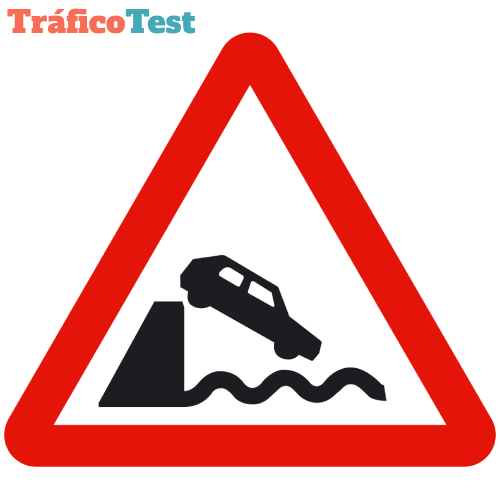 P-27
P-27
Dock
Danger due to the road leading to a dock or a water current.
Article 149 (5)
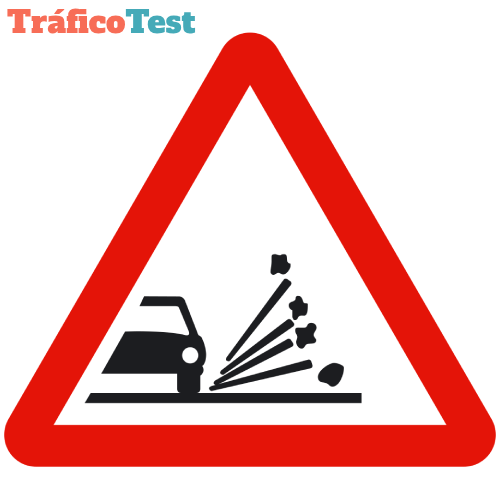 P-28
P-28
Gravel projection
Danger due to proximity to a section of road where there is a risk of gravel being projected when vehicles pass.
Article 149 (5)
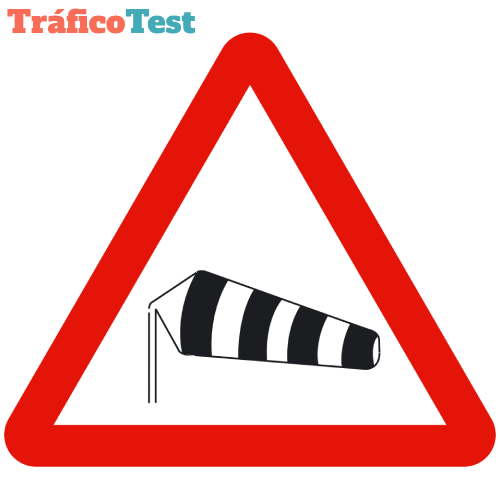 P-29
P-29
Crosswind
Danger due to proximity to an area where strong winds frequently blow in a cross direction.
Article 149 (5)
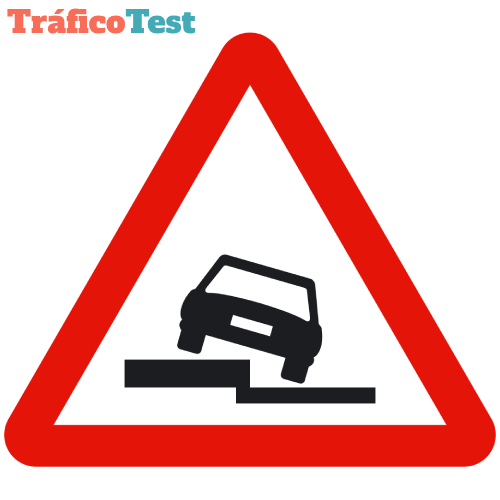 P-30
P-30
Side step
Danger due to the existence of a slope along the track on the side indicated by the symbol.
Article 149 (5)
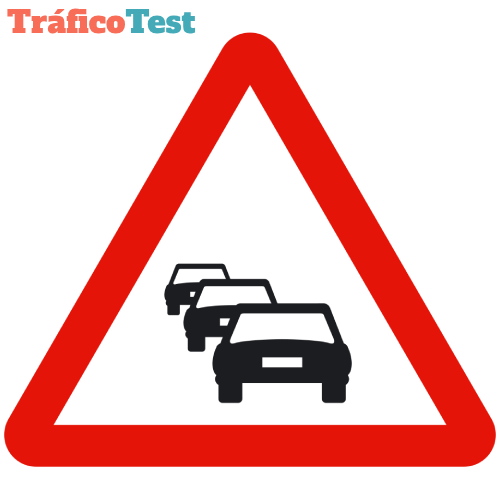 P-31
P-31
Congestion
Danger due to proximity to a section where traffic is stopped or impeded due to traffic congestion.
Article 149 (5)
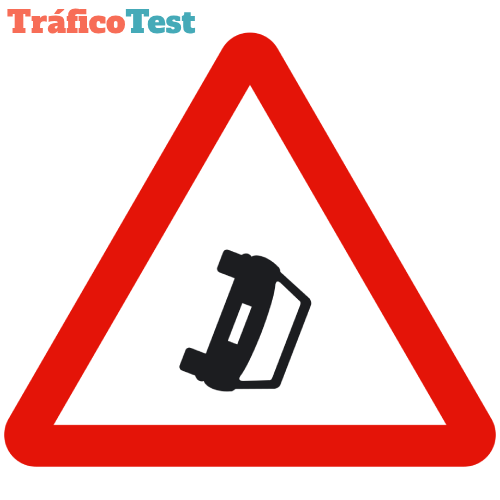 P-32
P-32
Obstruction on the roadway
Danger due to proximity to a place where there are vehicles obstructing the roadway due to a breakdown, accident or other causes.
Article 149 (5)
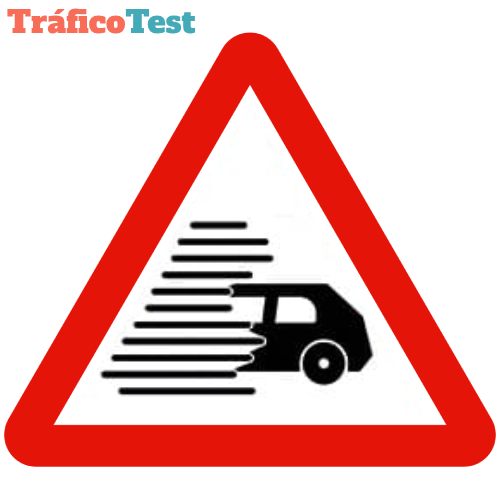 P-33
P-33
Reduced visibility
Danger due to proximity to a section where traffic is hampered by a significant loss of visibility due to fog, rain, snow, smoke, etc.
Article 149 (5)
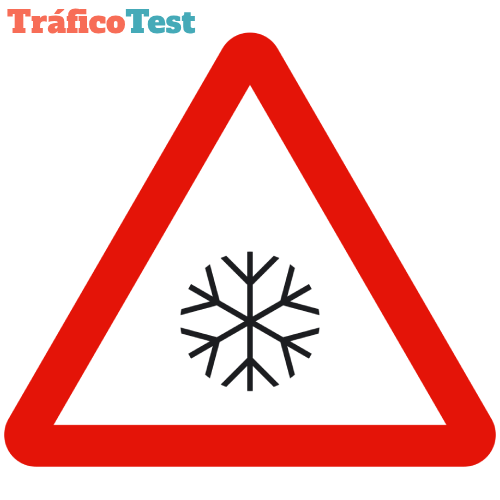 P-34
P-34
Slippery pavement due to ice or snow
Danger due to the proximity of a road area where the pavement may be particularly slippery due to ice or snow.
Article 149 (5)
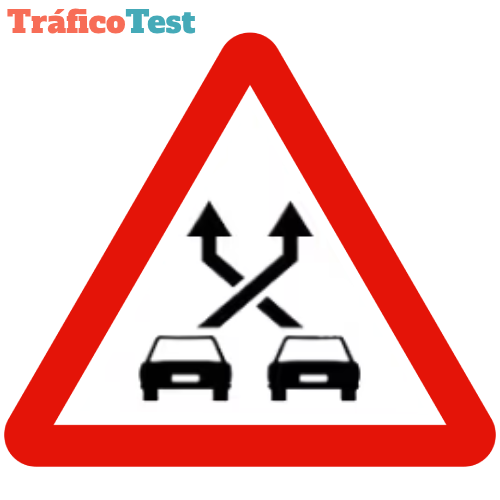 P-35
P-35
Weaving Section
Danger due to the proximity of a road segment between a merge and a divergence, where multiple lane-changing movements occur, causing vehicle paths to intersect and increasing the risk of collisions.
Article 149 (5)
 P-50
P-50
Other hazards
Indicates the proximity of a hazard other than those warned by other signs.
Article 149 (5)
❓ Frequently asked questions
What are «Hazard warning signs» signs?
How many signs does this group include?
Do these signs appear in the DGT theory exam?
🚦 Practise with DGT tests
Already recognise these signs? Test yourself with official exam-style questions.
📝 Start with TraficoTest