

Driving on motorways, dual carriageways and other roads is one of the topics in the Vehicle movement block of the Spanish DGT theory. How vehicles must move on the road: direction of travel, position on the carriageway, speed and distances. Understanding this section well helps you answer the theory-exam questions on this topic with confidence.
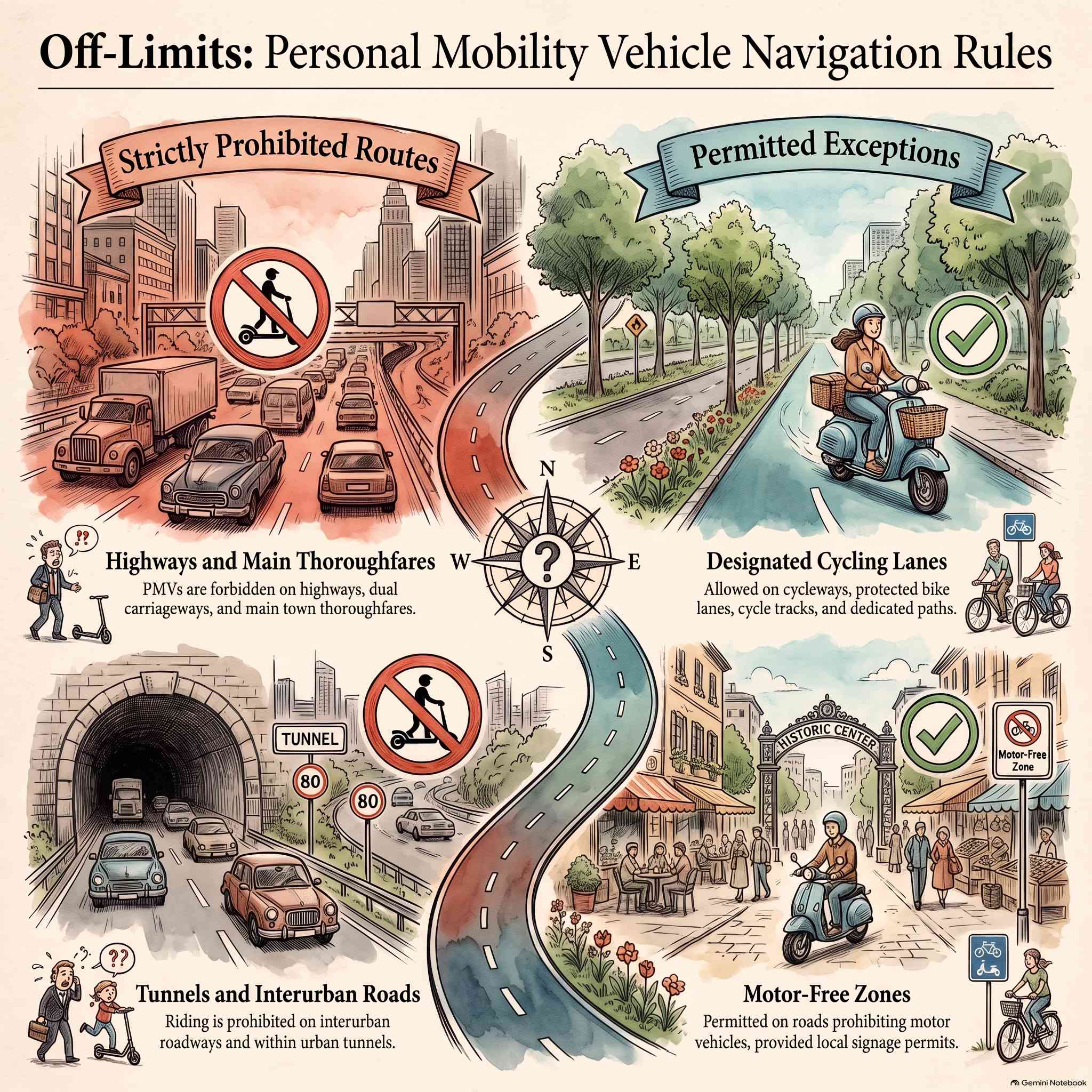
In simple terms, this point of the DGT theory establishes that driving personal mobility vehicles is prohibited: a) On motorways and dual carriageways. b) On through-roads (travesías). c) On interurban roads and in urban tunnels, unless they are cycle routes, cycle lanes, protected cycle lanes, cycle tracks, shared-use cycle paths or roads on which motor-vehicle traffic is prohibited,…
Questions here combine speed, lane position and distances: always check whether the road is urban or interurban.
Driving personal mobility vehicles is prohibited:
a) On motorways and dual carriageways.
b) On through-roads (travesías).
c) On interurban roads and in urban tunnels, unless they are cycle routes, cycle lanes, protected cycle lanes, cycle tracks, shared-use cycle paths or roads on which motor-vehicle traffic is prohibited, provided this is not prohibited by signage.
🔗 Read the official text on the BOE (Spanish General Traffic Regulations)❓ Frequently asked questions
What is driving on motorways, dual carriageways and other roads?
Does this topic appear in the DGT theory exam?
Where is it regulated (Article 38 (4))?
🚦 Practise with DGT tests
Already studied the theory? Test yourself with official exam-style questions.
📝 Start with TraficoTest