The signs in the «Signs indicating the end of a prohibition or restriction» group belong to the VII. Vertical traffic signs block of the Spanish DGT theory. It is a regulatory sign (prohibition, restriction or obligation): circular in shape.

On this page you have the complete catalogue of these signs with their image, official code and meaning, exactly as they may appear in the driving-licence theory exam.

The nomenclature and meaning of the end of prohibition or restriction signs are as follows:
R‐507. End of mandatory carriageway for automobiles, except two-wheeled motorcycles. Indicates the point where a previous mandatory carriageway sign for automobiles, except two-wheeled motorcycles, ceases to apply.
R‐508. End of mandatory carriageway for two-wheeled motorcycles. Indicates the point where a previous mandatory carriageway sign for two-wheeled motorcycles ceases to apply.
R-509. End of mandatory carriageway for trucks, tractor-trailers, and vans. Indicates the point where a previous mandatory carriageway sign for trucks, tractor-trailers, and vans ceases to apply.
R‐510. End of a lane reserved for and compulsory for mopeds. Indicates the point where a previous sign indicating a lane reserved for and compulsory for mopeds ceases to apply.
R‐511. End of mandatory road for animal-drawn vehicles. Indicates the point where a previous mandatory road sign for animal-drawn vehicles ceases to apply.
R‐512. End of a road reserved and obligatory for riding animals. Indicates the place where a previous sign indicating a road reserved and obligatory for riding animals ceases to apply.
R‐513. End of a pedestrian path. Indicates the point where a previous sign indicating a pedestrian path is no longer applicable.
R‐514. End of mandatory tractor lane. Indicates the point where a previous mandatory tractor lane sign ceases to apply.
R‐515. End of reserved and mandatory lane for personal mobility vehicles. Indicates the point where a previous sign indicating a reserved and mandatory lane for personal mobility vehicles ceases to apply.
R‐516. End of reserved and compulsory lane for bicycles and personal mobility vehicles. Indicates the point where a previous sign indicating a reserved and compulsory lane for bicycles and personal mobility vehicles ceases to apply.

💡 In the exam you will be shown the image of the sign and must recognise its meaning: look at the shape and colour to work out which group it belongs to.
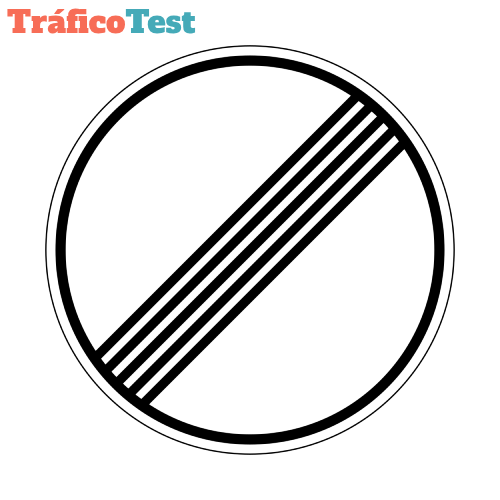
R-500 End of prohibitions R-500

End of prohibitions

Indicates the place from which all specific prohibitions indicated by previous prohibition signs for moving vehicles cease to apply.

Article 156
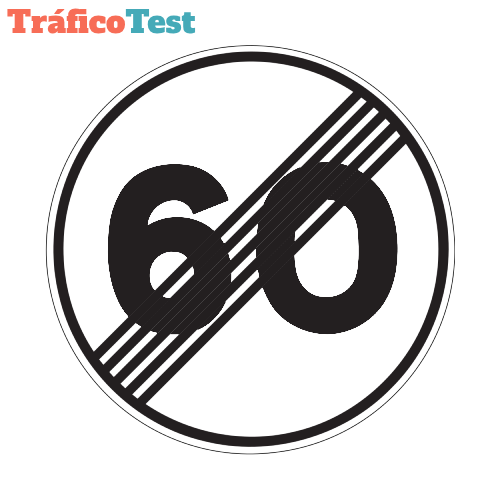
R-501 End of speed limit R-501

End of speed limit

Indicates the place where a previous maximum speed sign ceases to apply.

Article 156
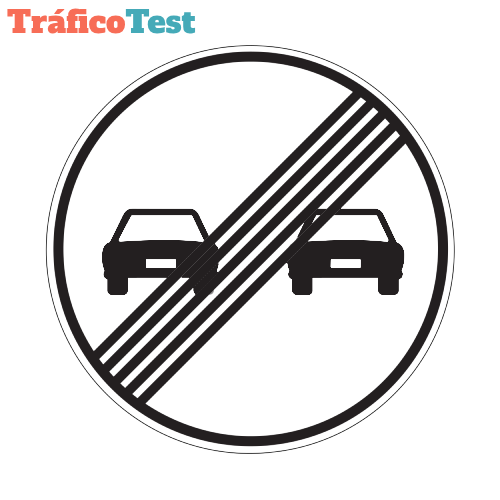
R-502 End of the no-passing sign R-502

End of the no-passing sign

Indicates the point where a previous no-passing sign ceases to apply.

Article 156
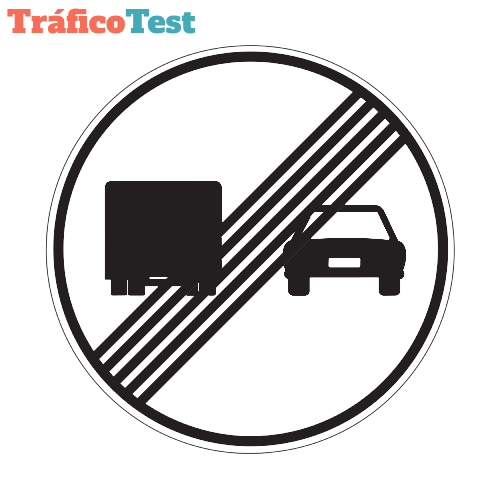
R-503 End of the prohibition of overtaking for trucks R-503

End of the prohibition of overtaking for trucks

Indicates the place from which a previous sign prohibiting overtaking for trucks ceases to apply.

Article 156
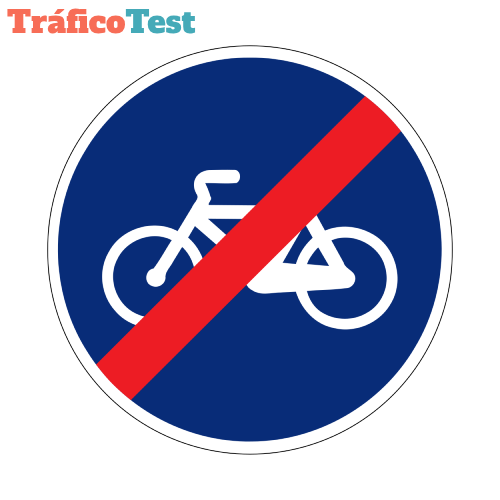
R-505 End of reserved lane for cycles R-505

End of reserved lane for cycles

Indicates the place where a previous reserved lane sign is no longer applicable.

Article 156
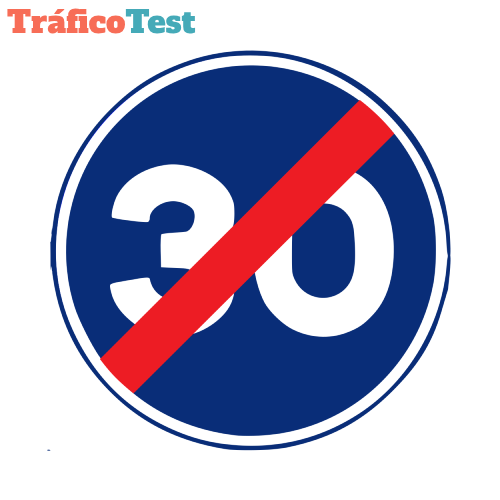
R-506 End of minimum speed limit R-506

End of minimum speed limit

Indicates the point where a previous minimum speed sign ceases to apply.

Article 156

📜 Reference legal text — Article 156 🔗 Read the official text on the BOE (Spanish General Traffic Regulations)

❓ Frequently asked questions

What are «Signs indicating the end of a prohibition or restriction» signs?
They are the signs from the «Vertical traffic signs» block of the Spanish DGT theory. It is a regulatory sign (prohibition, restriction or obligation): circular in shape. This group brings together 6 signs with their official meaning.
How many signs does this group include?
This group gathers 6 road signs, each with its image, code and meaning on this same page.
Do these signs appear in the DGT theory exam?
Yes. Recognising signs is a central part of the theory exam. To practise with real questions, go to the TraficoTest platform.

🚦 Practise with DGT tests

Already recognise these signs? Test yourself with official exam-style questions.

📝 Start with TraficoTest