

The signs in the «Other signs» group belong to the VII. Vertical traffic signs block of the Spanish DGT theory. It is an information sign: rectangular or square, usually with a blue background.
On this page you have the complete catalogue of these signs with their image, official code and meaning, exactly as they may appear in the driving-licence theory exam.
💡 In the exam you will be shown the image of the sign and must recognise its meaning: look at the shape and colour to work out which group it belongs to.
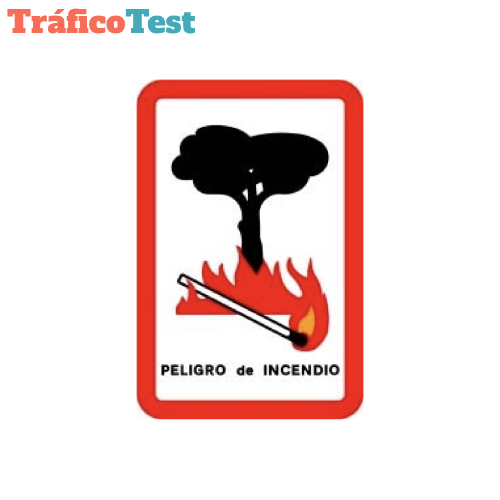 S-900
S-900
Fire hazard
Warns of the danger of starting a fire.
Article 164
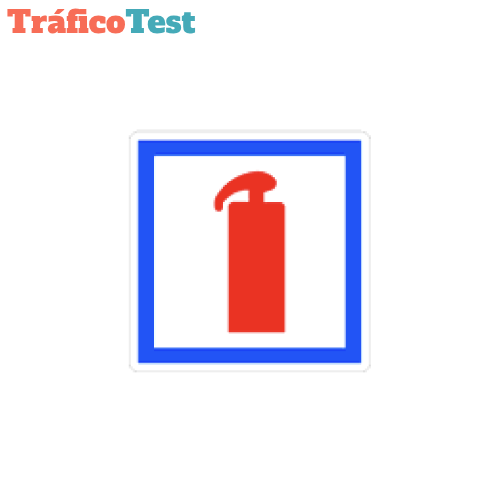 S-910
S-910
Fire Extinguisher
Indicates the location of a fire extinguisher.
Article 164
 S-920
S-920
Entry into Spain
Indicates that you have entered Spanish territory via a road from another country.
Article 164
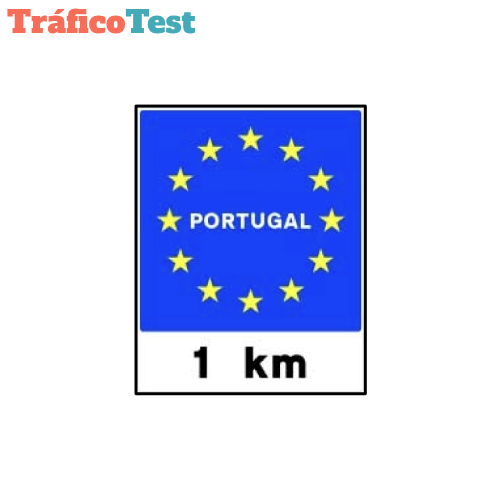 S-930
S-930
Country confirmation
Indicates the name of the country to which the road is heading. The number at the bottom indicates the distance to the border.
Article 164
 S-940
S-940
Speed limits in Spain
Indicates the generic speed limits on different types of roads and in urban areas in Spain.
Article 164
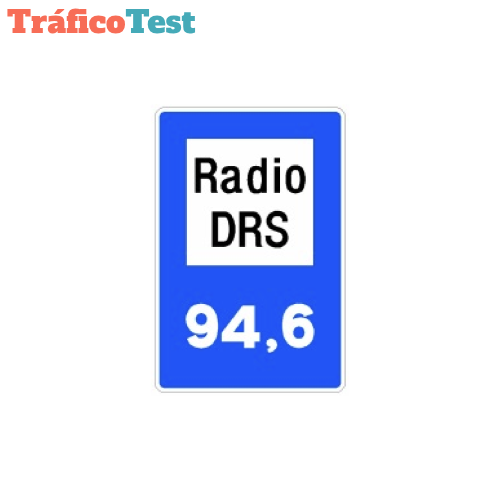 S-950
S-950
Specific road information radio frequency
Indicates the frequency to which the radio frequency receiver must be connected in order to receive information.
Article 164
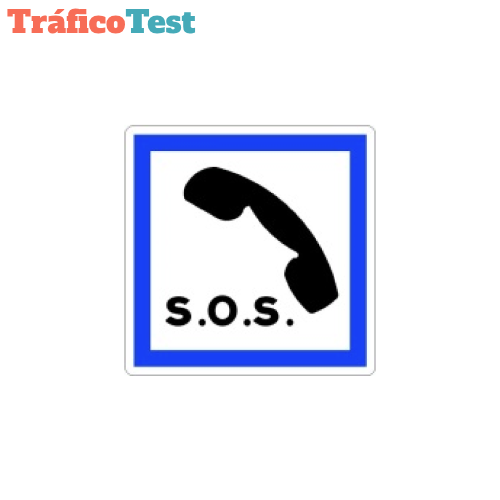 S-960
S-960
Emergency telephone
Indicates the location of an emergency telephone.
Article 164
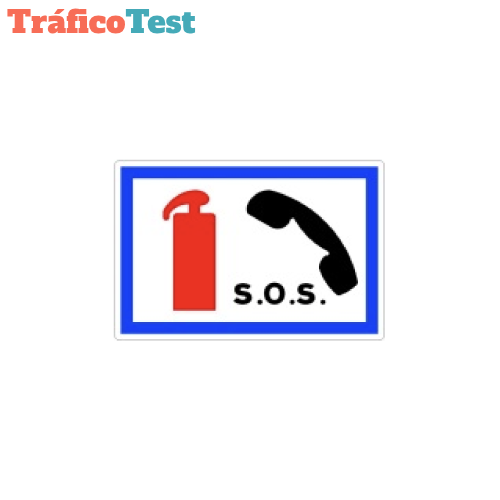 S-970
S-970
Fire Extinguisher Siding
Indicates the location of a fire extinguisher and emergency telephone number in a fire extinguisher siding.
Article 164
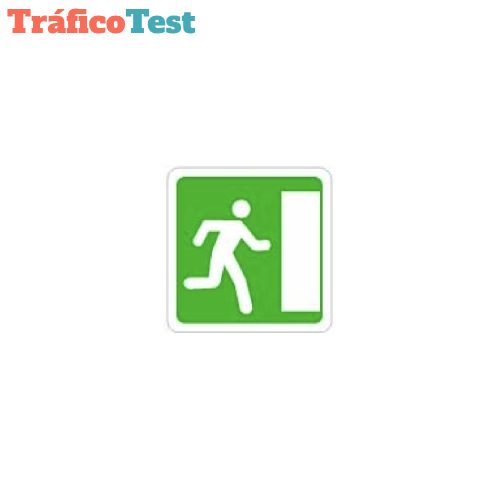 S-980
S-980
Emergency exit
Indicates the location of an emergency exit.
Article 164
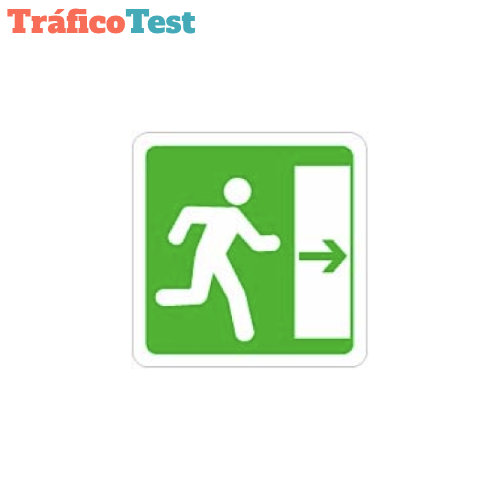 S-980a
Nearby emergency exit
Indicates the position of the nearest emergency exit.
Article 164
 S-980b
Nearby emergency exit
Indicates the position of the nearest emergency exit.
Article 164
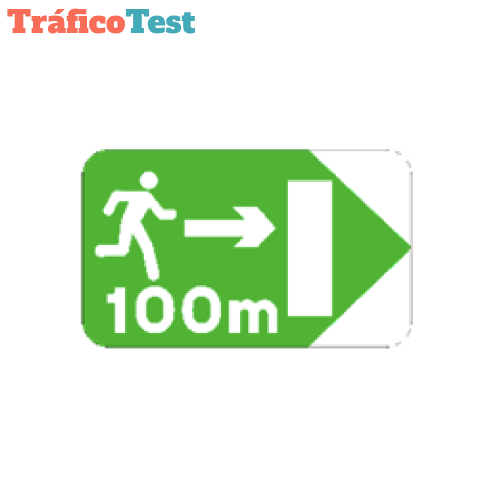 S-990a
Upcoming emergency exit
Indicates the direction of the nearest emergency exit and the remaining distance to reach it.
Article 164
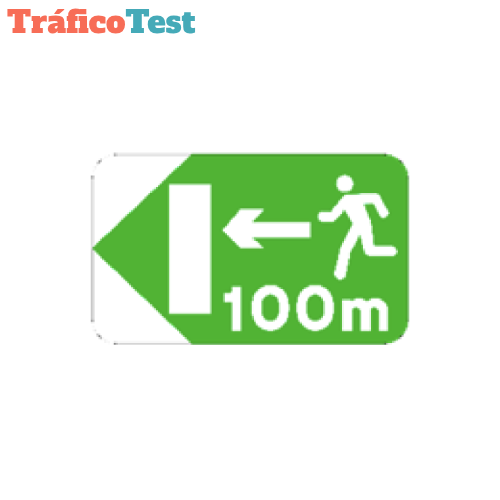 S-990b
Upcoming emergency exit
Indicates the direction of the nearest emergency exit and the remaining distance to reach it.
Article 164
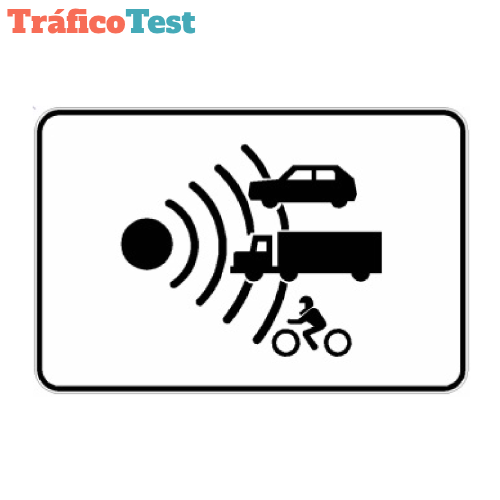 S-991a
Speed control on conventional or multi-lane roads
Indicates the location of a speed control installation at a point or along a section of a conventional or multi-lane road. It may include an R-301 sign showing the applicable speed limit, and upper or lower sub-panels with additional information may also be added.
Article 164
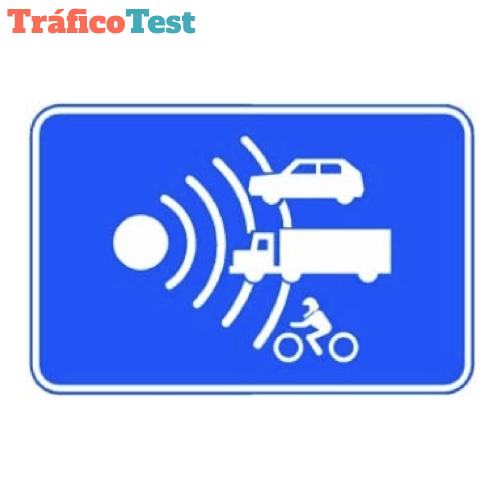 S-991b
Speed control on motorways or dual carriageways
Indicates the location of a speed control installation at a point or along a section of a motorway or dual carriageway. It may include an R-301 sign showing the applicable speed limit, and upper or lower sub-panels with additional information may also be added.
Article 164
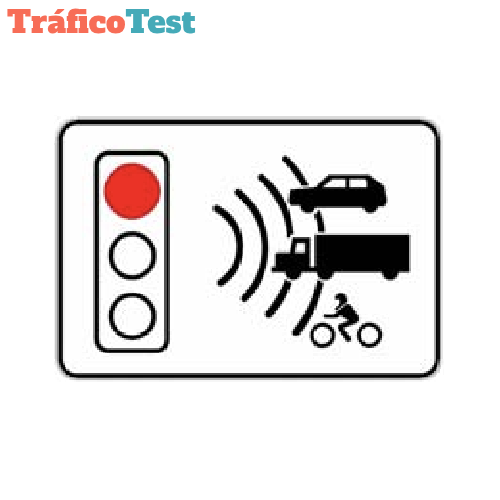 S-991c
Red light signal control
Indicates the location of a red light-controlled checkpoint. Upper or lower sub-panels with additional information may be added.
Article 164
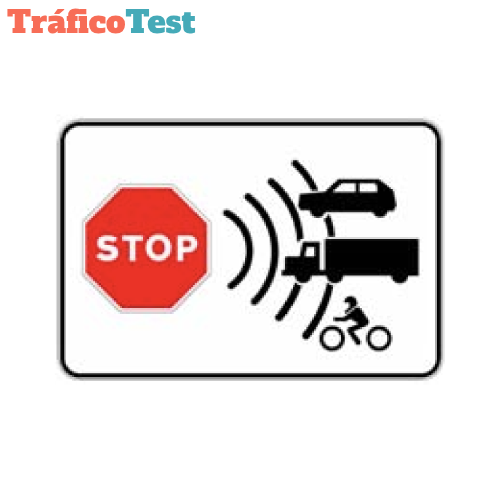 S-991d
STOP sign control
Indicates the location of a checkpoint controlled by a STOP sign. Upper or lower sub-panels with additional information may be added.
Article 164
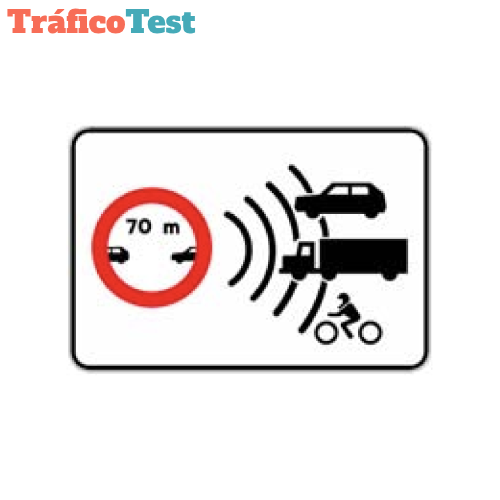 S-991e
Minimum distance control on conventional or multi-lane roads
Indicates the location of a control point for ensuring minimum distance between vehicles on a conventional or multi-lane road. Upper or lower sub-panels with additional information may be added.
Article 164
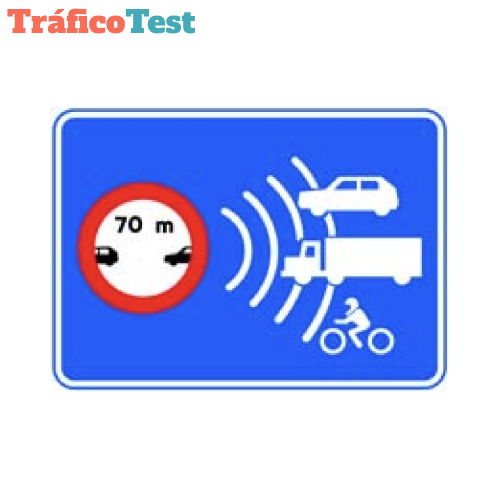 S-991f
Minimum distance control on motorways or dual carriageways
Indicates the location of a control point for ensuring minimum distance between vehicles on a motorway or dual carriageway. Upper or lower sub-panels with additional information may be added.
Article 164
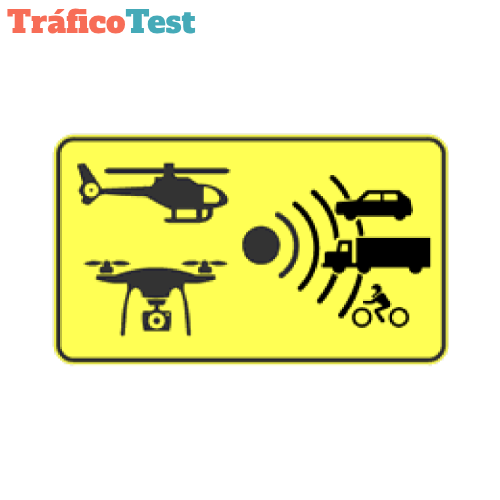 S-991g
Speed control by aerial means
Indicates the possible presence of speed checks in the section using aerial methods, such as helicopters or drones. If these controls are specifically targeted at a particular type of vehicle, the sign may include only the corresponding pictogram.
Article 164
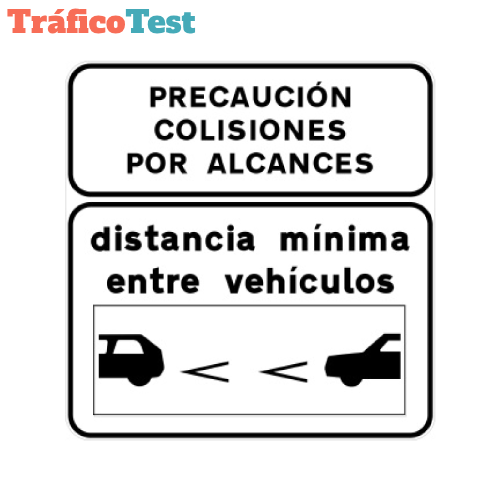 S-992a
Informative sign on minimum distance between vehicles on conventional or multi-lane roads
Indicates, on a section of a conventional or multi-lane road where rear-end collisions frequently occur, the number of chevron road markings a vehicle must keep between itself and the one ahead.
Article 164
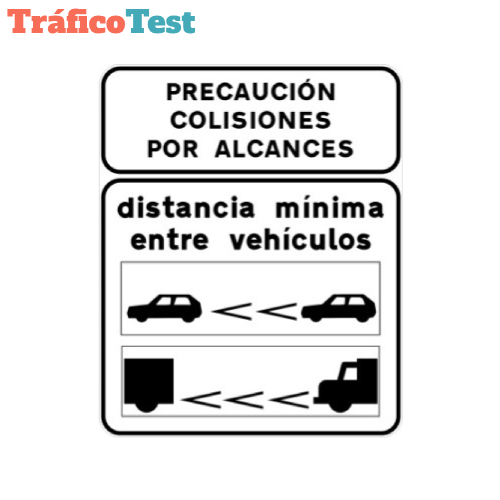 S-992b
Informative sign on minimum distance between vehicles inside a tunnel on conventional or m
ulti-lane roads. Indicates the number of chevron road markings a vehicle must keep between itself and the one ahead inside a tunnel on a conventional or multi-lane road.
Article 164
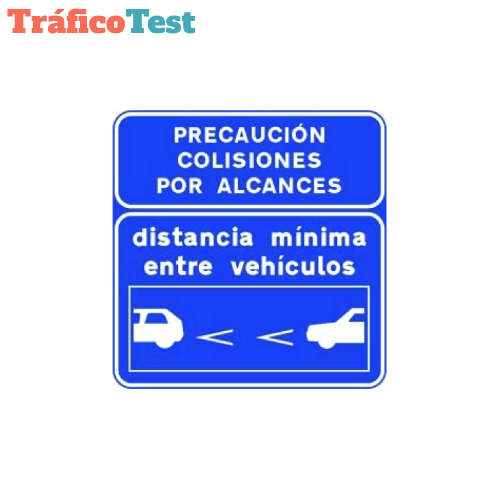 S-992c
Informative sign on minimum distance between vehicles on motorways or dual carriageways
Indicates, on a section of a motorway or dual carriageway where rear-end collisions frequently occur, the number of chevron road markings a vehicle must keep between itself and the one ahead.
Article 164
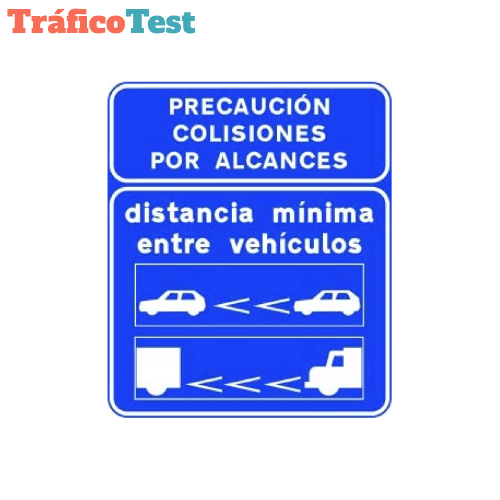 S-992d
Informative sign on minimum distance between vehicles inside a tunnel on motorways or dual
carriageways. Indicates the number of chevron road markings a vehicle must keep between itself and the one ahead inside a tunnel on a motorway or dual carriageway.
Article 164
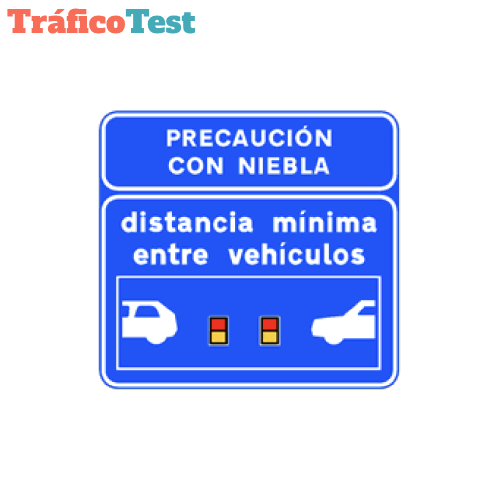 S-992e
Informative sign on minimum distance between vehicles indicated by illuminated beacons
Indicates, on a section where visibility is often reduced due to fog, the number of illuminated beacons a vehicle must keep between itself and the one ahead.]
Article 164
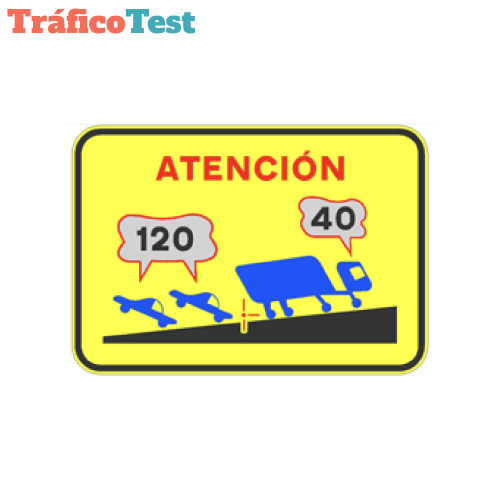 S-993
S-993
Warning of rear-end collision risk on uphill section of motorway or dual carriageway
Warns of the risk of rear-end collisions on a motorway or dual carriageway section where an uphill slope causes trucks to travel significantly slower than passenger cars.
Article 164
❓ Frequently asked questions
What are «Other signs» signs?
How many signs does this group include?
Do these signs appear in the DGT theory exam?
🚦 Practise with DGT tests
Already recognise these signs? Test yourself with official exam-style questions.
📝 Start with TraficoTest