

The signs in the «Lane signs» group belong to the VII. Vertical traffic signs block of the Spanish DGT theory. It is an information sign: rectangular or square, usually with a blue background.
On this page you have the complete catalogue of these signs with their image, official code and meaning, exactly as they may appear in the driving-licence theory exam.
💡 In the exam you will be shown the image of the sign and must recognise its meaning: look at the shape and colour to work out which group it belongs to.
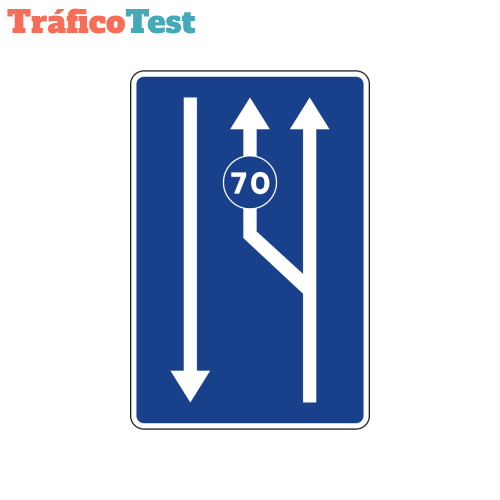 S-50
S-50
a, b, c, d and e
Lanes reserved for traffic based on the posted speed. Indicates that the lane on which the minimum speed sign is located may only be used by vehicles travelling at a speed equal to or greater than that indicated, although if circumstances permit they must travel in the right-hand lane. The end of the mandatory minimum speed will be established by sign S-52 or R-506.
Article 160
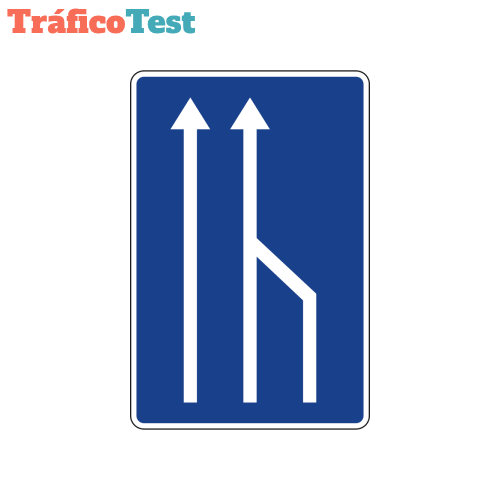 S-52
S-52
End of lane designated for traffic
It pre-signals the lane that will soon cease to be usable, indicating the required lane change.
Article 160
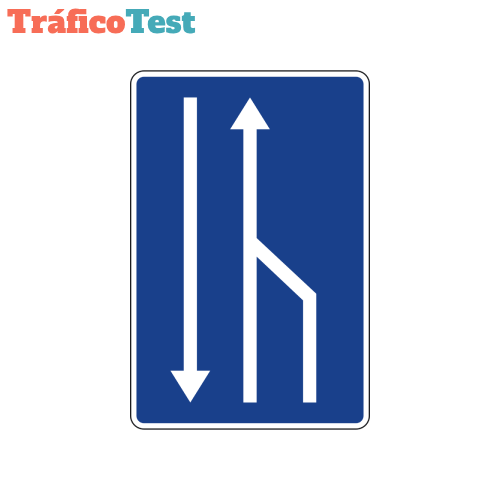 S-52
S-52
a, b, c, d, e, f, g and h
End of lane intended for traffic. On a two-way road, it indicates the lane that is about to cease to be usable and indicates the required lane change.
Article 160
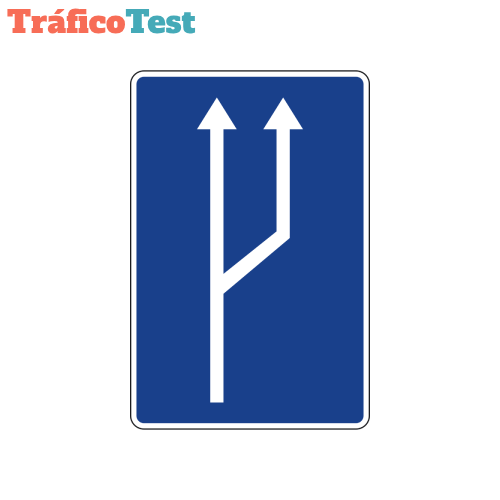 S-53
S-53
Change from one to two lanes of traffic
Indicates, in a section with only one lane in one direction of traffic, that in the next section there will be a change to two lanes in the same direction of traffic.
Article 160
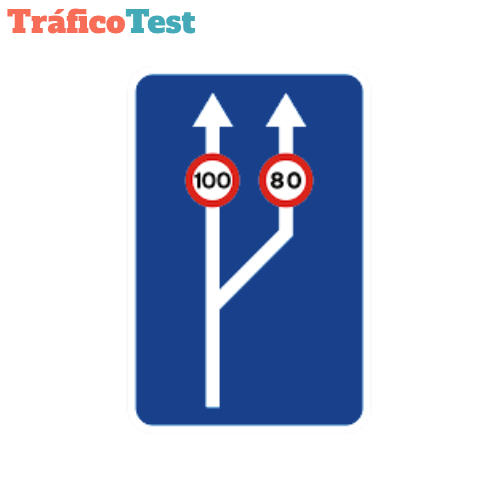 S-53a
S-53a
Change from one to two lanes of traffic with a specification of the maximum speed in each
of them. Indicates, in a section with only one lane of traffic in one direction, that in the next section there will be a change to two lanes in the same direction of traffic. It also indicates the maximum speed that is permitted in each of them.
Article 160
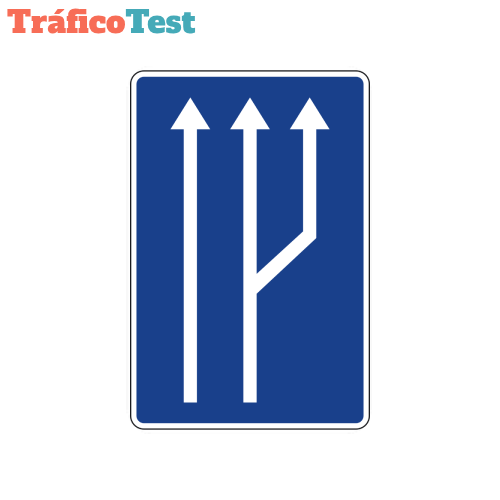 S-53b
S-53b
Change from two to three lanes of traffic
Indicates, in a section with two lanes in one direction of traffic, that in the next section there will be a change to three lanes in the same direction of traffic.
Article 160
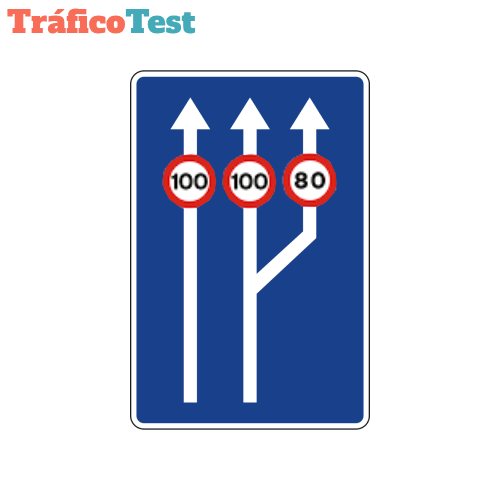 S-53c
S-53c
Change from two to three lanes with a specification of the maximum speed for each lane
Indicates, in a section with two lanes in one direction of traffic, that in the next section there will be a change to three lanes in the same direction of traffic. It also indicates the maximum speed that is permitted in each of them.
Article 160
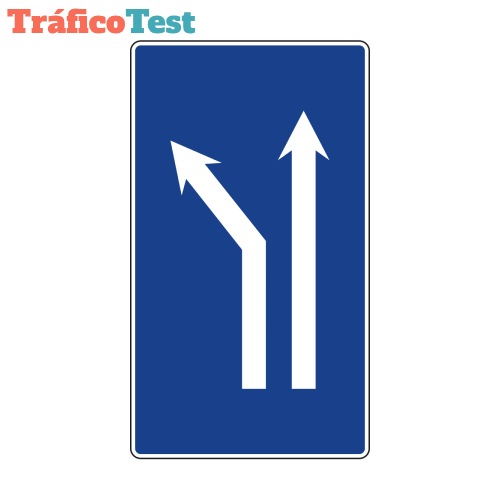 S-60a
S-60a
Left fork on two-lane road
Indicates, on a road with two lanes of traffic in the same direction, that in the next section the left lane will fork to that same side.
Article 160
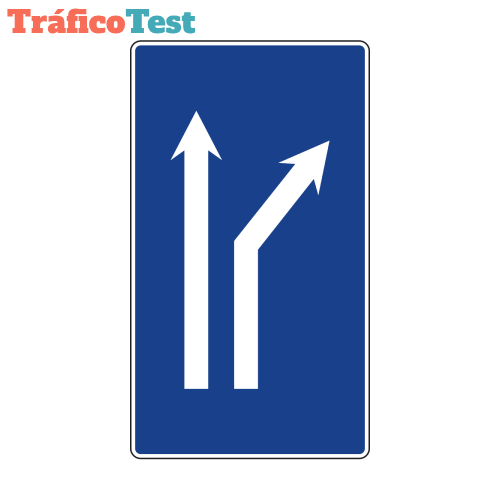 S-60b
S-60b
Right fork on a two-lane roadway
On a two-lane roadway, this sign indicates that the right lane will fork to the right side of the road in the next section.
Article 160
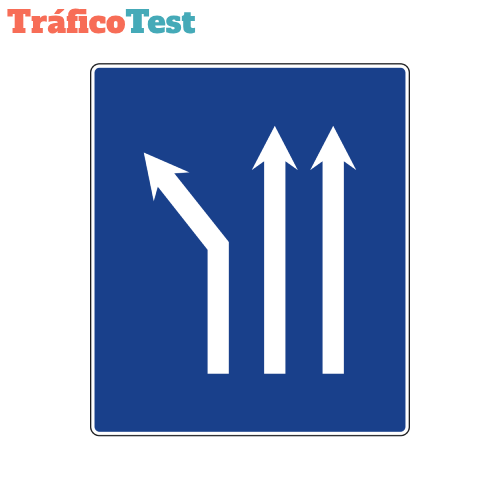 S-61a
S-61a
Left fork on a three-lane roadway
On a roadway with three lanes of traffic traveling in the same direction, this sign indicates that the left lane will fork to the same side in the next section.
Article 160
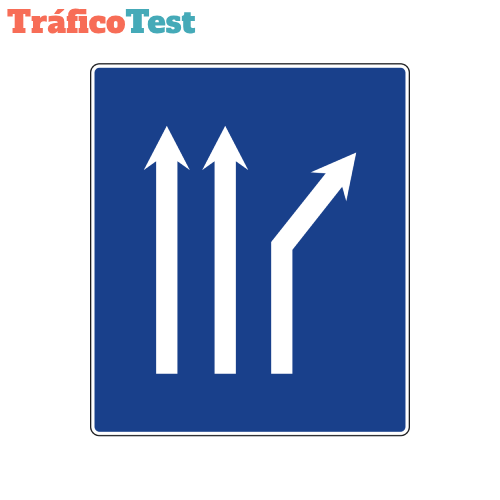 S-61b
S-61b
Right fork on a three-lane roadway
On a roadway with three lanes of traffic moving in the same direction, this sign indicates that the right lane will fork to the right side of the road in the next section.
Article 160
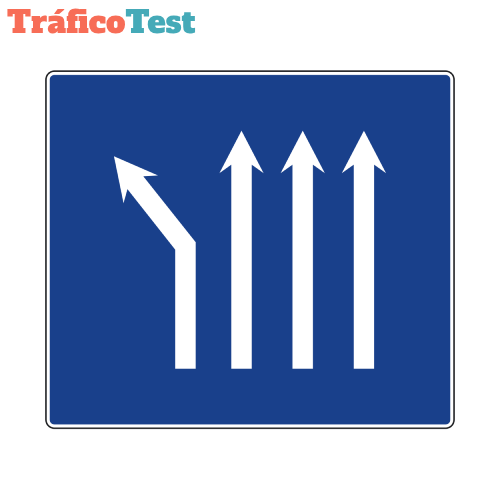 S-62a
S-62a
Left fork on a four-lane roadway
On a roadway with four lanes of traffic traveling in the same direction, this sign indicates that the left lane will fork to the same side in the next section.
Article 160
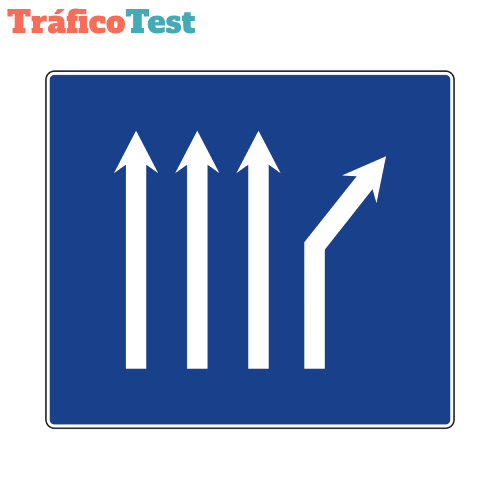 S-62b
S-62b
Right fork on a four-lane roadway
On a roadway with four lanes of traffic traveling in the same direction, this sign indicates that the right lane will fork to the right side of the road in the next section.
Article 160
❓ Frequently asked questions
What are «Lane signs» signs?
How many signs does this group include?
Do these signs appear in the DGT theory exam?
🚦 Practise with DGT tests
Already recognise these signs? Test yourself with official exam-style questions.
📝 Start with TraficoTest