

Drivers required to use it is one of the topics in the Vehicle movement block of the Spanish DGT theory. How vehicles must move on the road: direction of travel, position on the carriageway, speed and distances. Understanding this section well helps you answer the theory-exam questions on this topic with confidence.
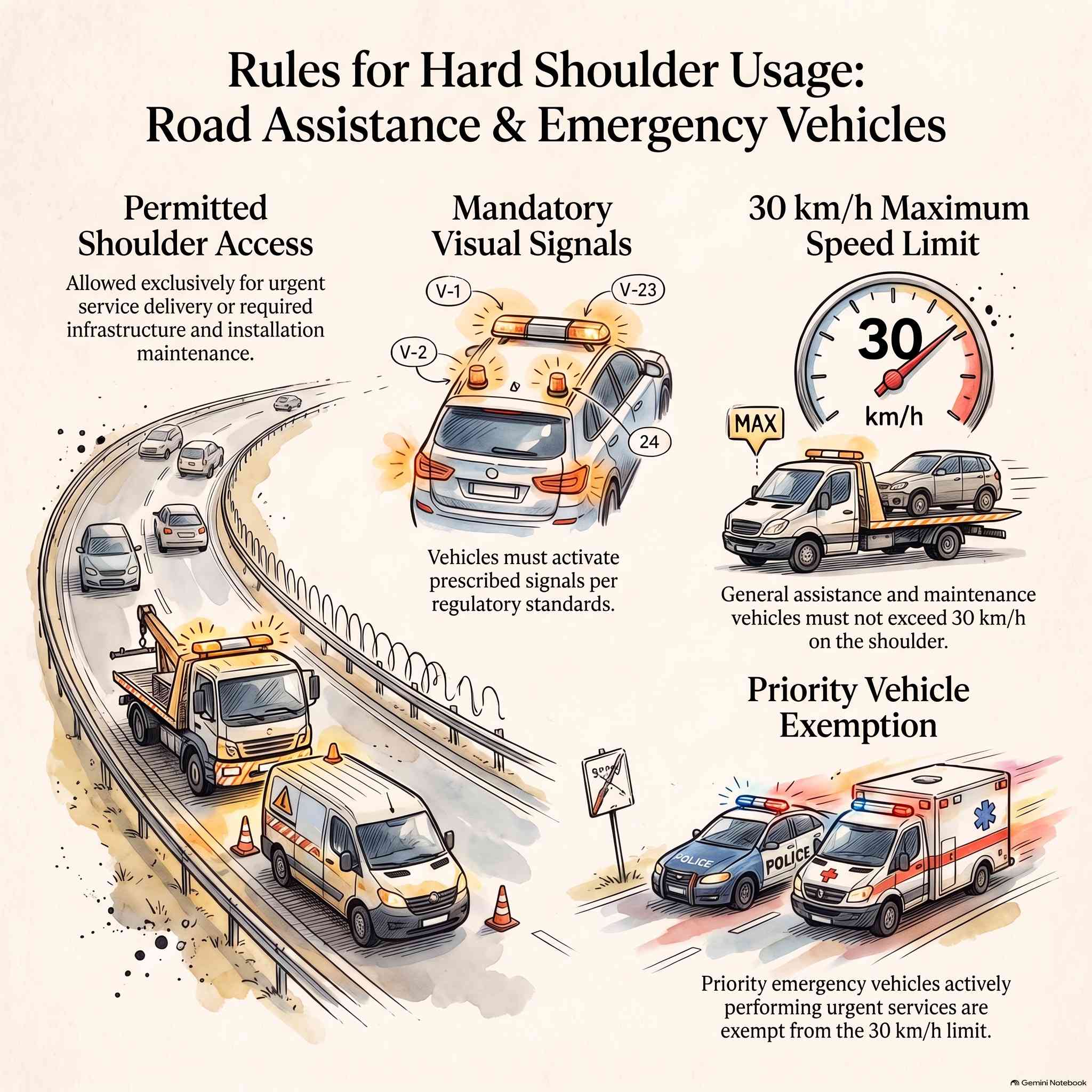
In simple terms, this point of the DGT theory establishes that the vehicles listed in section 2.c) of the previous article, as well as roadside assistance vehicles, may use the hard shoulder to reach an emergency service or when necessary for the maintenance of infrastructure and installations, provided that: a) They use the corresponding V-1, V-2, V-23 and 24 signs, in accordance with…
Questions here combine speed, lane position and distances: always check whether the road is urban or interurban.
The vehicles listed in section 2.c) of the previous article, as well as roadside assistance vehicles, may use the hard shoulder to reach an emergency service or when necessary for the maintenance of infrastructure and installations, provided that:
a) They use the corresponding V-1, V-2, V-23 and 24 signs, in accordance with what is required by the specific regulations.
b) They do not travel at a speed exceeding 30 km/h, except priority vehicles on emergency service.
🔗 Read the official text on the BOE (Spanish General Traffic Regulations)❓ Frequently asked questions
What is drivers required to use it?
Does this topic appear in the DGT theory exam?
Where is it regulated (Article 36 (4))?
🚦 Practise with DGT tests
Already studied the theory? Test yourself with official exam-style questions.
📝 Start with TraficoTest