

Drivers required to use it is one of the topics in the Vehicle movement block of the Spanish DGT theory. How vehicles must move on the road: direction of travel, position on the carriageway, speed and distances. Understanding this section well helps you answer the theory-exam questions on this topic with confidence.
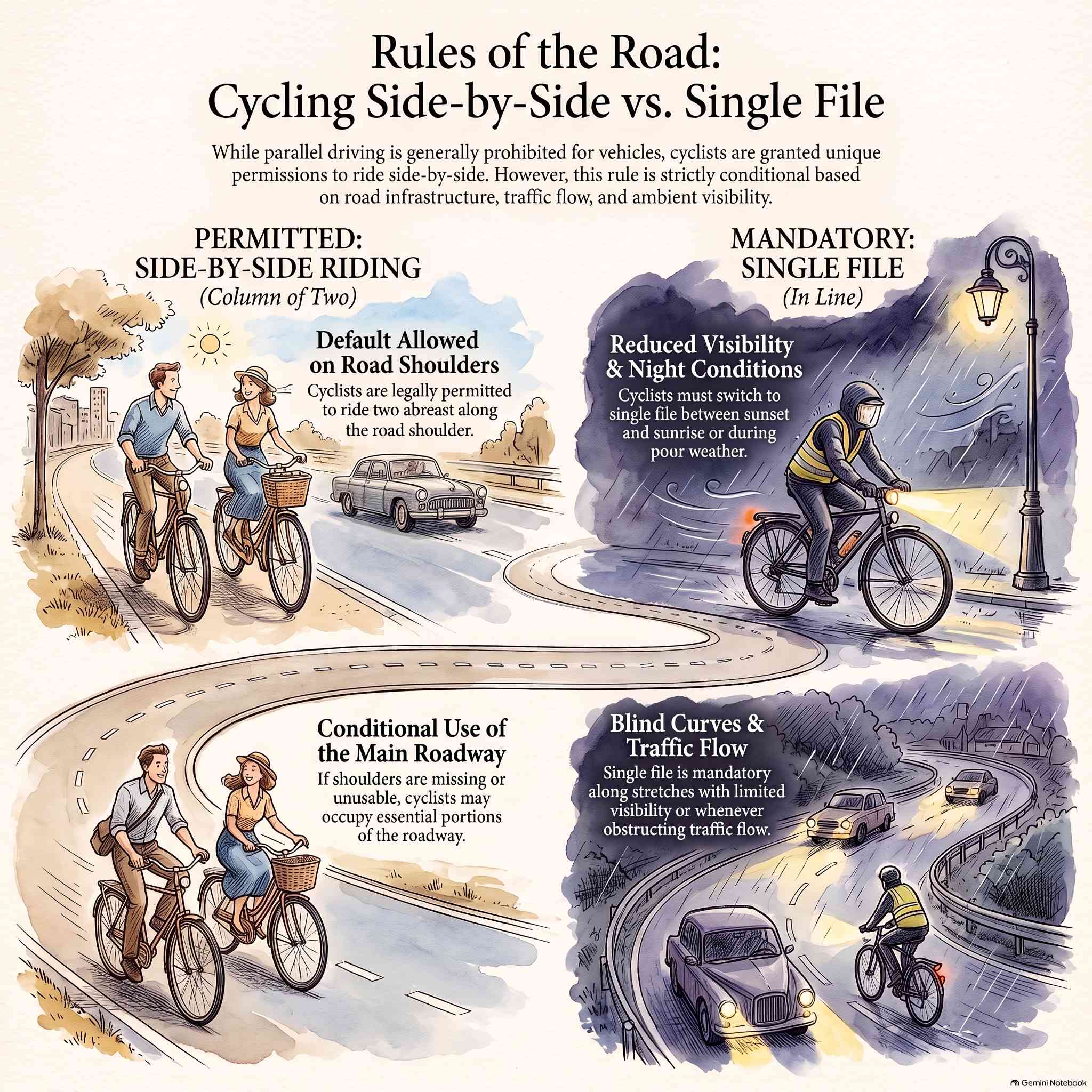
In simple terms, this point of the DGT theory establishes that drivers of the vehicles listed in the first paragraph of the previous section are prohibited from travelling in a parallel position. Notwithstanding the previous paragraph, cyclists may ride two abreast on the hard shoulder. If there is no hard shoulder or it is not passable and sufficient, they may ride two abreast on the…
Questions here combine speed, lane position and distances: always check whether the road is urban or interurban.
Drivers of the vehicles listed in the first paragraph of the previous section are prohibited from travelling in a parallel position.
Notwithstanding the previous paragraph, cyclists may ride two abreast on the hard shoulder. If there is no hard shoulder or it is not passable and sufficient, they may ride two abreast on the strictly necessary part of the roadway, although they must ride in single file on stretches without visibility, when they affect the flow of traffic, or when riding between sunset and sunrise or in weather or environmental conditions that significantly reduce visibility.
🔗 Read the official text on the BOE (Spanish General Traffic Regulations)❓ Frequently asked questions
What is drivers required to use it?
Does this topic appear in the DGT theory exam?
Where is it regulated (Article 36 (2))?
🚦 Practise with DGT tests
Already studied the theory? Test yourself with official exam-style questions.
📝 Start with TraficoTest