

Visibility in the vehicle is one of the topics in the General rules block of the Spanish DGT theory. Defines who the traffic rules apply to and where, the basic definitions and the principles behind the whole theory. Understanding this section well helps you answer the theory-exam questions on this topic with confidence.
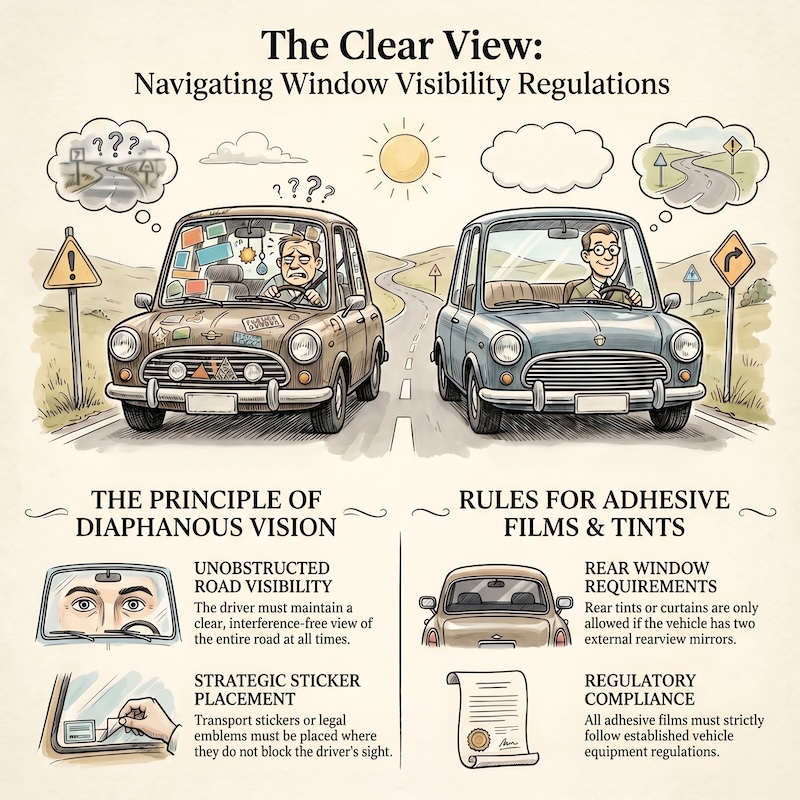
In simple terms, this point of the DGT theory establishes that the glass surface of the vehicle must, in all cases, allow the driver to have clear visibility over the entire road on which he is travelling, without interference from films or adhesives. Only adhesive films or sun blinds on the rear windows will be permitted if the vehicle has two exterior rearview mirrors that meet the necessary technical specifications.
The exam often asks where and to whom these rules apply; read the options carefully, as they frequently change a single word.
The glass surface of the vehicle must, in all cases, allow the driver to have clear visibility over the entire road on which he is travelling, without interference from films or adhesives.
Only adhesive films or sun blinds on the rear windows will be permitted if the vehicle has two exterior rearview mirrors that meet the necessary technical specifications.
However, the use of adhesive films on vehicles will be permitted under the conditions established in the vehicle regulations.
The placement of the signs provided for in transport legislation or other provisions must be done in such a way that they do not impede the driver's correct vision.
🔗 Read the official text on the BOE (Spanish General Traffic Regulations)❓ Frequently asked questions
What is visibility in the vehicle?
Does this topic appear in the DGT theory exam?
Where is it regulated (Article 19 (1))?
🚦 Practise with DGT tests
Already studied the theory? Test yourself with official exam-style questions.
📝 Start with TraficoTest