

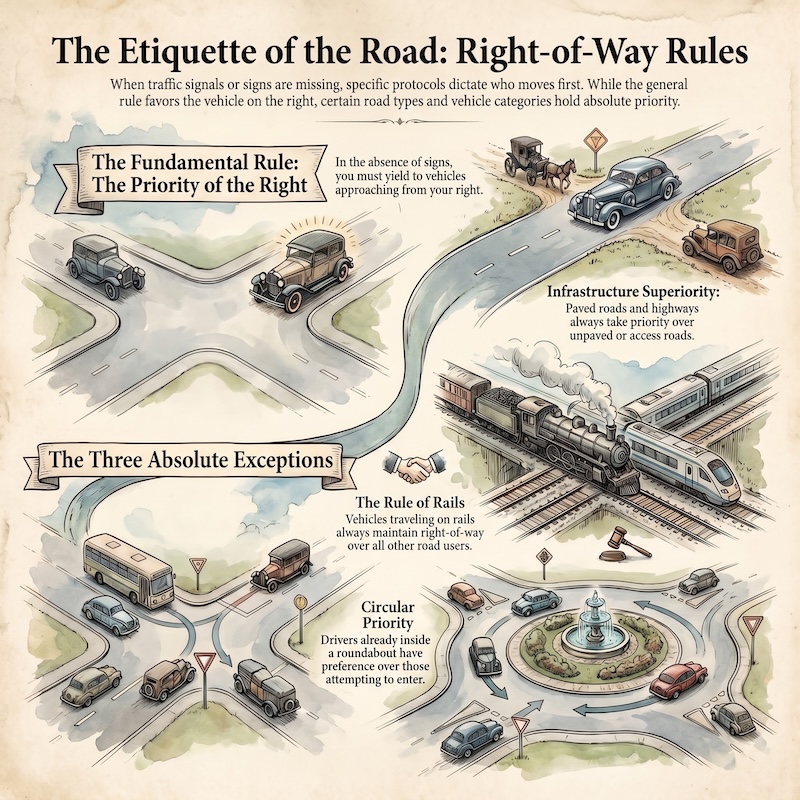
Unmarked intersections is one of the topics in the Priority block of the Spanish DGT theory. Who goes first: right-of-way rules at junctions, roundabouts, narrow sections and special cases. Understanding this section well helps you answer the theory-exam questions on this topic with confidence.
In practice, this comes down to the following:
- Vehicles traveling on a paved road will have the right of way over those traveling on an unpaved road.
- Vehicles traveling on rails have priority over other users.
- In roundabouts, those within the circular road will have priority over those attempting to access them.
- Vehicles travelling on a motorway or highway will have priority over those attempting to access it.
In short, the rule makes sure every road user knows what to expect in this situation.
Priority questions use concrete situations (junctions, roundabouts, narrow sections): first work out who has right of way and why.
In the absence of a sign regulating right of way, the driver is obliged to yield to vehicles approaching from the right, except in the following cases:
- Vehicles traveling on a paved road will have the right of way over those traveling on an unpaved road.
- Vehicles traveling on rails have priority over other users.
- In roundabouts, those within the circular road will have priority over those attempting to access them.
- Vehicles travelling on a motorway or highway will have priority over those attempting to access it.
❓ Frequently asked questions
What is unmarked intersections?
Does this topic appear in the DGT theory exam?
Where is it regulated (Article 57 (1))?
🚦 Practise with DGT tests
Already studied the theory? Test yourself with official exam-style questions.
📝 Start with TraficoTest