

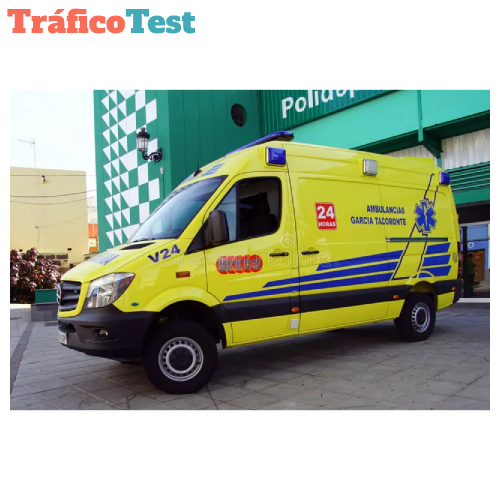
Rules and conditions of circulation of special vehicles and vehicles under special transport regime is one of the topics in the Other rules block of the Spanish DGT theory. Complementary rules on specific traffic situations that complete the theory. Understanding this section well helps you answer the theory-exam questions on this topic with confidence.
In simple terms, this point of the DGT theory establishes that the rules and conditions of circulation for special vehicles and vehicles operating under special transport regime are grouped and systematized as follows: Section 1. Common traffic conditions for groups 1, 2 and 3 1.
These are specific rules that round off the theory; read them closely, as the nuance often decides the correct answer.
The rules and conditions of circulation for special vehicles and vehicles operating under special transport regime are grouped and systematized as follows:
Section 1. Common traffic conditions for groups 1, 2 and 3
- Maintain a minimum distance of 50 m from the vehicle in front and allow and facilitate overtaking by faster-moving vehicles, stopping if necessary, without in any case forcing drivers of other vehicles to abruptly change their speed or trajectory.
- Stopping and parking will be carried out off the roadway and shoulder.
- The pilot vehicle is authorized to use the V-2 signal while providing service, which must be visible both to the front and rear and will be disconnected at the end of the service.
Radio and telephone communications must be possible between the personnel in the pilot vehicle and those in the cabin of the special vehicle or special transport vehicle in a language known to both parties.
- Special vehicles and vehicles operating under special transport regulations, in addition to the signaling devices determined by the General Vehicle Regulations for the vehicle category in question, must have V-2 light signals distributed in such a way that the contour of the cross-section of the vehicles is clearly defined, on their front and rear ends, as well as V-4, V-5 (V-4 being optional), V-6, V-16, V-20 signals and those contemplated in Article 15.6 and 7 of the General Traffic Regulations, where applicable. They must also permanently use dipped beam headlights.
- At all times, traffic restrictions specifically established, those marked on the road, or those indicated by traffic enforcement officers must be complied with.
❓ Frequently asked questions
What is rules and conditions of circulation of special vehicles and vehicles under special transport regime?
Does this topic appear in the DGT theory exam?
Where is it regulated (ANEXO III. Sección 1)?
🚦 Practise with DGT tests
Already studied the theory? Test yourself with official exam-style questions.
📝 Start with TraficoTest