

Obedience to the signs is one of the topics in the Traffic signage block of the Spanish DGT theory. How signage works: types of signs, the order of priority between them and the duty to obey them. Understanding this section well helps you answer the theory-exam questions on this topic with confidence.
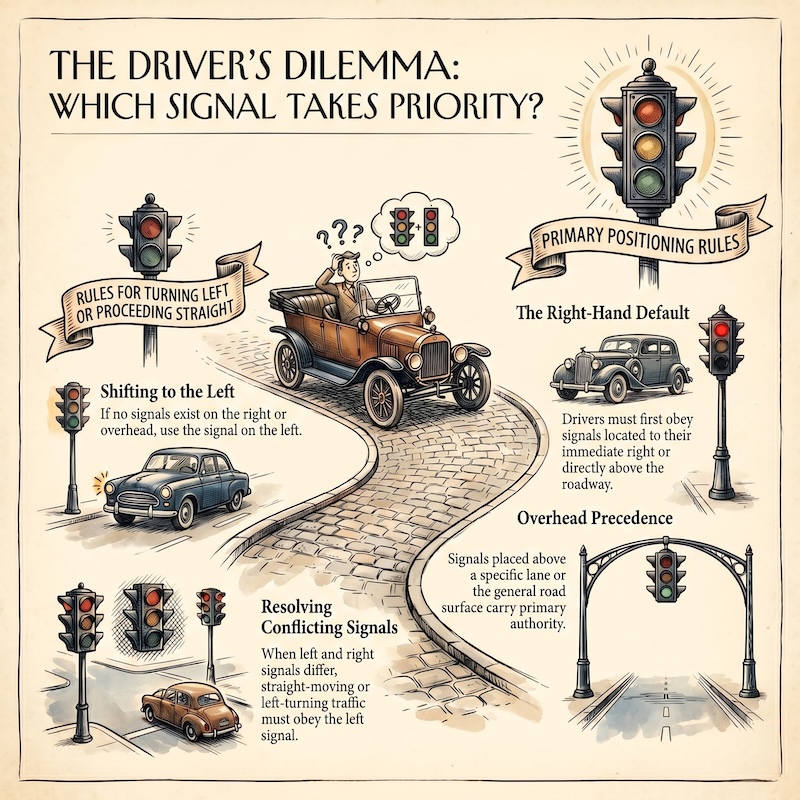
In simple terms, this point of the DGT theory establishes that users must obey the traffic lights and vertical traffic signs located immediately to their right, above the roadway or above their lane, and if they do not exist in the above-mentioned locations and they intend to turn left or continue straight, those located immediately to their left. If there are traffic lights or vertical traffic signs with different…
The order of priority between signs (officer, traffic light, vertical sign, road marking) is key; many questions are solved just by recalling it.
Users must obey the traffic lights and vertical traffic signs located immediately to their right, above the roadway or above their lane, and if they do not exist in the aforementioned locations and they intend to turn left or continue straight, those located immediately to their left.
If there are traffic lights or vertical traffic signs with different indications to the right and to the left, those who intend to turn left or continue straight must only obey those located immediately to their left.
🔗 Read the official text on the BOE (Spanish General Traffic Regulations)❓ Frequently asked questions
What is obedience to the signs?
Does this topic appear in the DGT theory exam?
Where is it regulated (Article 132 (3))?
🚦 Practise with DGT tests
Already studied the theory? Test yourself with official exam-style questions.
📝 Start with TraficoTest