

Obedience to the signs is one of the topics in the Traffic signage block of the Spanish DGT theory. How signage works: types of signs, the order of priority between them and the duty to obey them. Understanding this section well helps you answer the theory-exam questions on this topic with confidence.
In simple terms, this point of the DGT theory establishes that all users of the roads covered by the law are obliged to obey traffic signs that establish an obligation or a prohibition and to adapt their behaviour to the message of the rest of the regulatory signs found on the roads on which they travel. For these purposes, when the sign imposes an obligation to stop, the driver of the vehicle thus stopped may not…
The order of priority between signs (officer, traffic light, vertical sign, road marking) is key; many questions are solved just by recalling it.
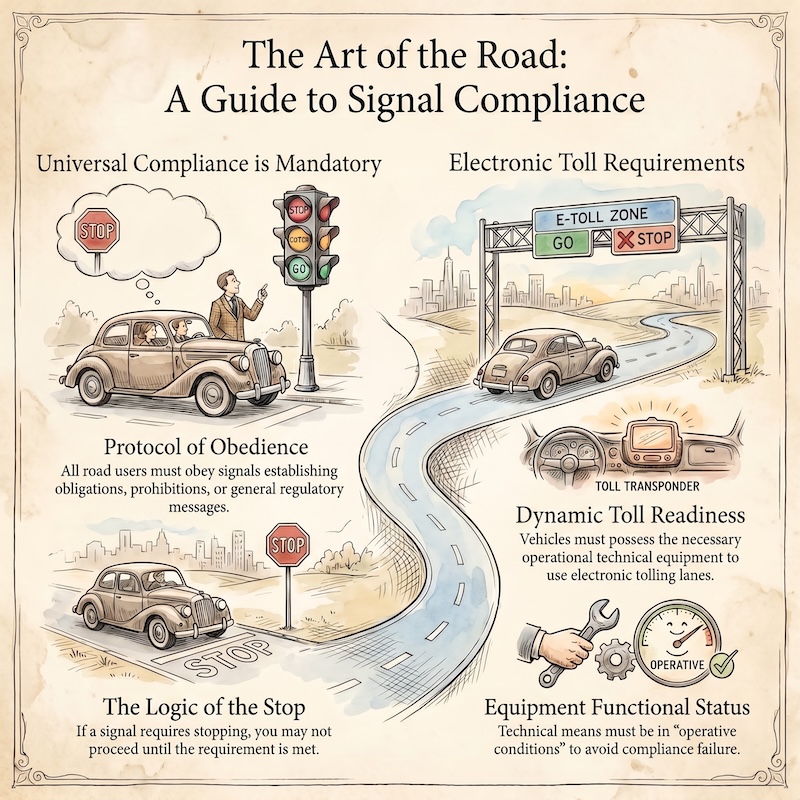
All users of the roads covered by the law are obliged to obey traffic signs that establish an obligation or a prohibition and to adapt their behaviour to the message of the rest of the regulatory signs found on the roads on which they travel.
For these purposes, when the sign imposes an obligation to stop, the driver of the vehicle thus stopped may not resume driving until the prescription established by the sign has been fulfilled.
In dynamic or electronic tolls, vehicles using them must be equipped with the technical means that enable their use under operational conditions.
🔗 Read the official text on the BOE (Spanish General Traffic Regulations)❓ Frequently asked questions
What is obedience to the signs?
Does this topic appear in the DGT theory exam?
Where is it regulated (Article 132 (2))?
🚦 Practise with DGT tests
Already studied the theory? Test yourself with official exam-style questions.
📝 Start with TraficoTest