

Concept is one of the topics in the Traffic signage block of the Spanish DGT theory. How signage works: types of signs, the order of priority between them and the duty to obey them. Understanding this section well helps you answer the theory-exam questions on this topic with confidence.
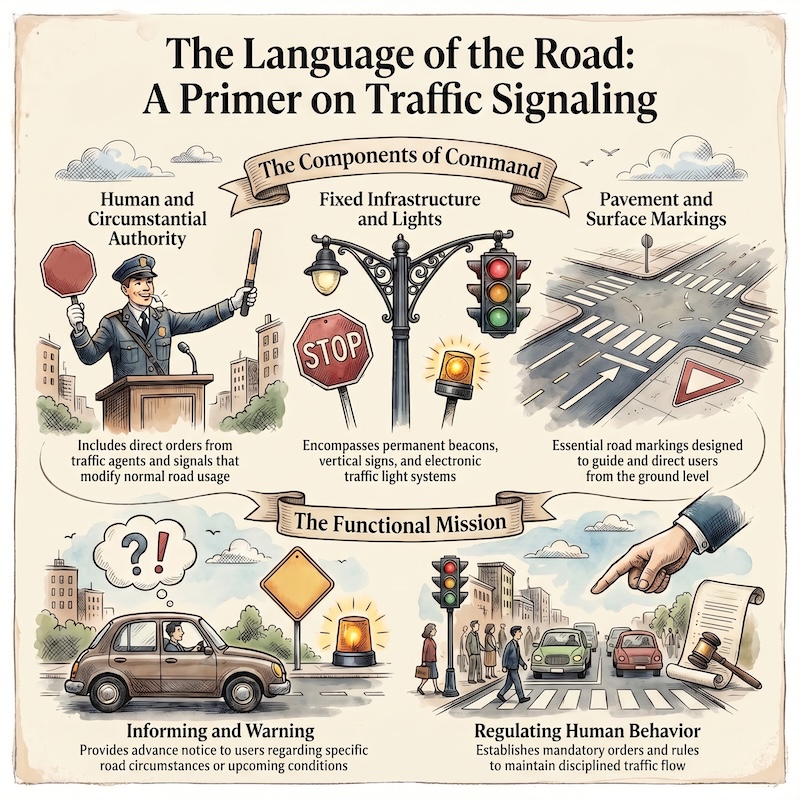
In simple terms, this point of the DGT theory establishes that signalling is the set of signals and orders from traffic agents, circumstantial signals that modify the normal regime of use of the road and fixed beaconing signals, traffic lights, vertical traffic signs and road markings, intended for road users and whose mission is to warn and inform them or order or regulate their behaviour with the necessary advance…
The order of priority between signs (officer, traffic light, vertical sign, road marking) is key; many questions are solved just by recalling it.
Signalling is the set of signals and orders from traffic agents, circumstantial signals that modify the normal regime of use of the road and fixed beaconing signals, traffic lights, vertical traffic signs and road markings, intended for road users and whose mission is to warn and inform them or order or regulate their behaviour with the necessary advance notice of certain circumstances of the road or traffic.
🔗 Read the official text on the BOE (Spanish General Traffic Regulations)❓ Frequently asked questions
What is concept?
Does this topic appear in the DGT theory exam?
Where is it regulated (Article 131)?
🚦 Practise with DGT tests
Already studied the theory? Test yourself with official exam-style questions.
📝 Start with TraficoTest