

Maximum and minimum speeds is one of the topics in the Vehicle movement block of the Spanish DGT theory. How vehicles must move on the road: direction of travel, position on the carriageway, speed and distances. Understanding this section well helps you answer the theory-exam questions on this topic with confidence.
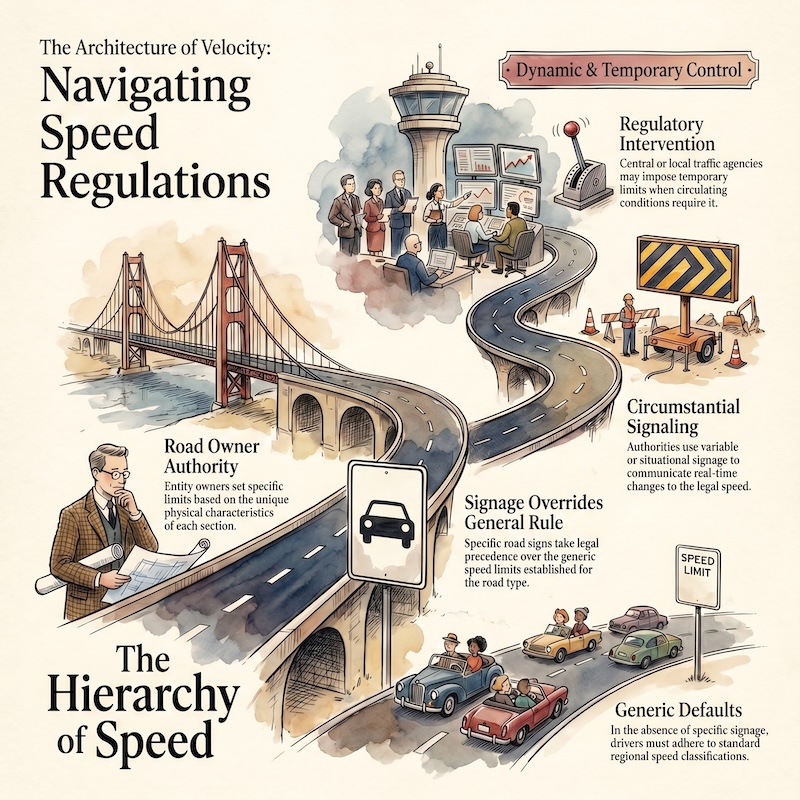
In simple terms, this point of the DGT theory establishes that the owners of the road must establish, by means of the appropriate signage, the specific speed limits that correspond to the characteristics of the section of road. In the absence of specific signage, the generic signage established for each road must be complied with.
Questions here combine speed, lane position and distances: always check whether the road is urban or interurban.
The owners of the road shall establish, by means of the appropriate signage, the specific speed limits that correspond to the characteristics of the section of road. In the absence of specific signage, the generic signage established for each road shall be complied with.
The autonomous body, the Central Traffic Headquarters, or, where appropriate, the autonomous or local authority responsible for regulating and controlling traffic, when the conditions under which traffic is carried out so advise, may set temporary speed limits by means of the corresponding circumstantial or variable signage.
🔗 Read the official text on the BOE (Spanish General Traffic Regulations)❓ Frequently asked questions
What is maximum and minimum speeds?
Does this topic appear in the DGT theory exam?
Where is it regulated (Article 47)?
🚦 Practise with DGT tests
Already studied the theory? Test yourself with official exam-style questions.
📝 Start with TraficoTest