

Load arrangement is one of the topics in the General rules block of the Spanish DGT theory. Defines who the traffic rules apply to and where, the basic definitions and the principles behind the whole theory. Understanding this section well helps you answer the theory-exam questions on this topic with confidence.
In practice, this comes down to the following:
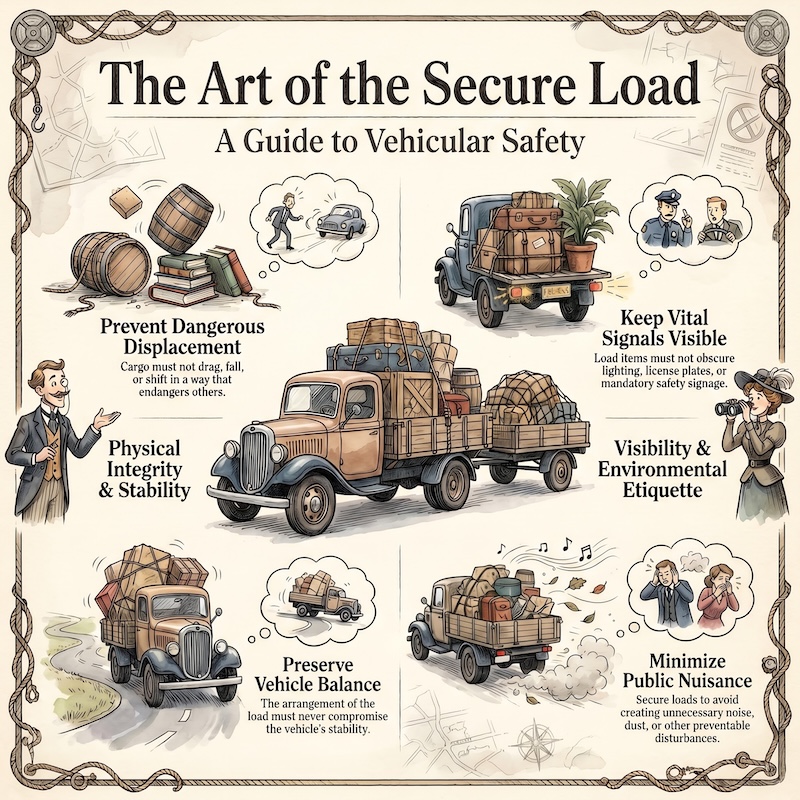
- Drag, fall totally or partially or move in a dangerous manner.
- Compromise the stability of the vehicle.
- Produce noise, dust or other disturbances that can be avoided.
- Conceal lighting or light signaling devices, mandatory plates or badges and manual warnings from drivers.
In short, the rule makes sure every road user knows what to expect in this situation.
The exam often asks where and to whom these rules apply; read the options carefully, as they frequently change a single word.
The load transported in a vehicle, as well as the accessories used for its conditioning or protection, must be arranged and, if necessary, secured in such a way that they cannot:
- Drag, fall totally or partially or move in a dangerous manner.
- Compromise the stability of the vehicle.
- Produce noise, dust or other disturbances that can be avoided.
- Conceal lighting or light signaling devices, mandatory plates or badges and manual warnings from drivers.
❓ Frequently asked questions
What is load arrangement?
Does this topic appear in the DGT theory exam?
Where is it regulated (Article 14 (1))?
🚦 Practise with DGT tests
Already studied the theory? Test yourself with official exam-style questions.
📝 Start with TraficoTest