

Lanes used in the opposite direction to the usual direction is one of the topics in the Vehicle movement block of the Spanish DGT theory. How vehicles must move on the road: direction of travel, position on the carriageway, speed and distances. Understanding this section well helps you answer the theory-exam questions on this topic with confidence.
In simple terms, this point of the DGT theory establishes that when the roads have more than one lane of traffic in each direction of travel, the authority responsible for traffic regulation may, for reasons of traffic flow, create lanes for use in the opposite direction to that normally used, duly marked in accordance with the rules of Article 144. The use of lanes designated for traffic in the opposite direction to…
Questions here combine speed, lane position and distances: always check whether the road is urban or interurban.
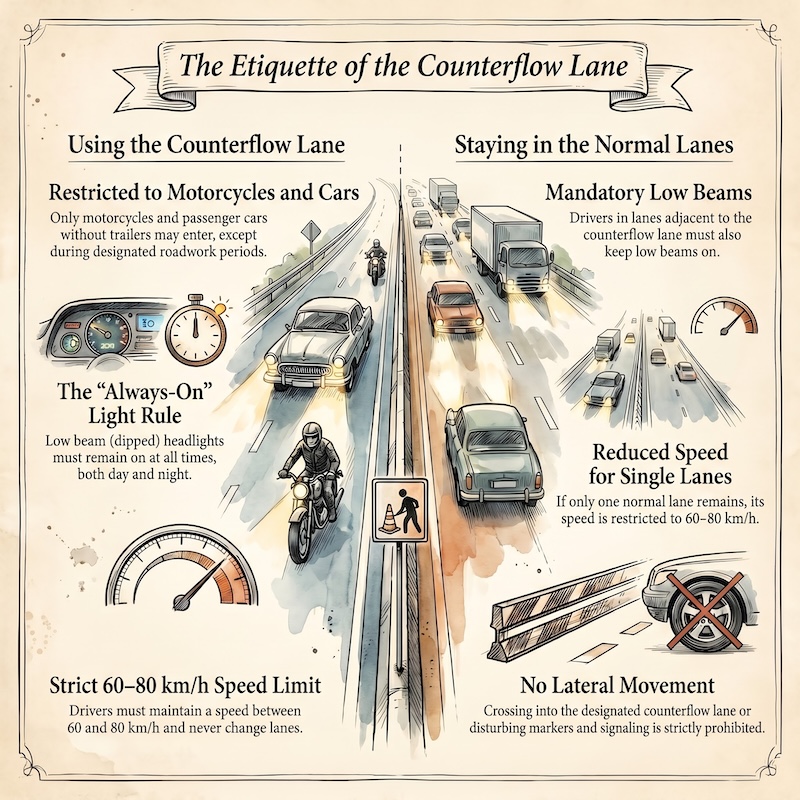
When the roads have more than one lane of traffic in each direction of travel, the authority responsible for traffic regulation may, for reasons of traffic flow, create lanes for use in the opposite direction to that normally used, duly marked in accordance with the provisions of Article 144.
The use of lanes designated for traffic in the opposite direction to normal is limited to motorcycles and cars, and is therefore prohibited for other vehicles, including cars with trailers. Users of these types of lanes must always travel with at least their low beam or dipped headlights on, both during the day and at night, at a maximum speed of 80 kilometres per hour and a minimum of 60, or less if so established or specifically indicated, and they may not move sideways invading the lane or lanes designated for normal traffic, not even to overtake.
Drivers of vehicles travelling on lanes intended for the normal direction of traffic, adjacent to the lane designated for traffic in the opposite direction to normal, may not move laterally, encroaching on lanes designated for use in the opposite direction to normal; they must have their low beam or dipped headlights on, at least, both day and night; and, in addition, if they have only one lane in their direction of traffic, they will do so at a maximum speed of 80 kilometres per hour and a minimum of 60, or lower if so established or specifically signposted, and if they have more than one lane in their direction of traffic, they will do so at the speeds established in articles 48.1.a).1.ª and 2.a, 49 and 50. These users and drivers will take special care to avoid altering permanent or mobile beaconing elements.
The authority owning the road may also create lanes for use in the opposite direction to normal, in agreement with the autonomous body Central Traffic Headquarters or, where appropriate, with the autonomous authority responsible for traffic, when the execution of work on the roadway makes it necessary, and, in this case, all types of vehicles that are authorised to circulate on the road under construction may circulate on said lanes, unless expressly prohibited, under the same conditions established in the previous paragraphs.
🔗 Read the official text on the BOE (Spanish General Traffic Regulations)❓ Frequently asked questions
What is lanes used in the opposite direction to the usual direction?
Does this topic appear in the DGT theory exam?
Where is it regulated (Article 41 (1))?
🚦 Practise with DGT tests
Already studied the theory? Test yourself with official exam-style questions.
📝 Start with TraficoTest