

Emission of disturbances and pollutants is one of the topics in the General rules block of the Spanish DGT theory. Defines who the traffic rules apply to and where, the basic definitions and the principles behind the whole theory. Understanding this section well helps you answer the theory-exam questions on this topic with confidence.
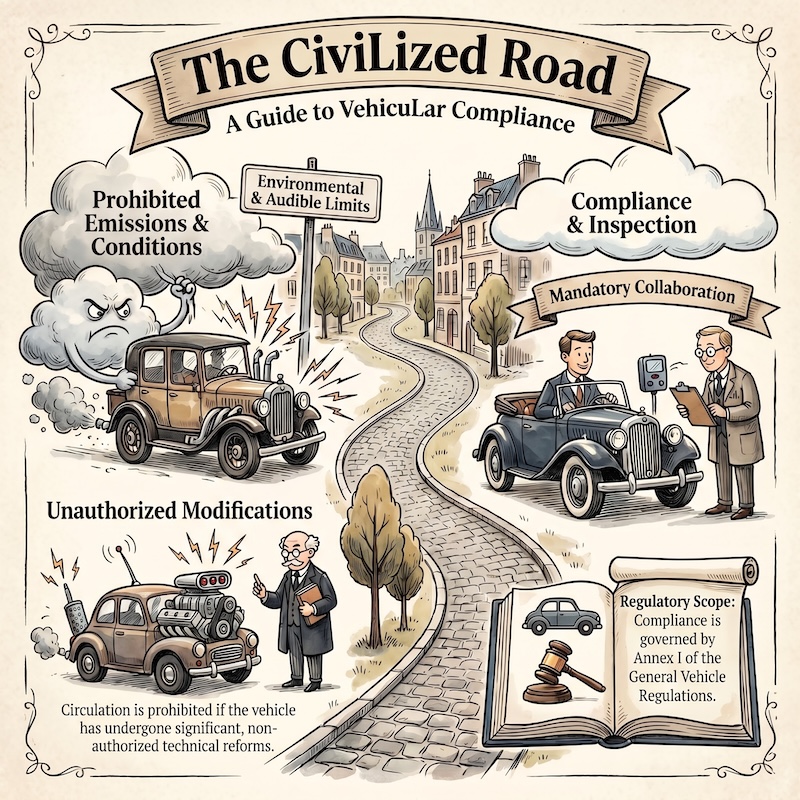
In simple terms, this point of the DGT theory establishes that vehicles may not circulate on roads or land subject to legislation on traffic, motor vehicle circulation and road safety if they emit electromagnetic disturbances, with noise emission levels higher than the limits established by the regulations specifically governing the matter, nor may they emit gases or fumes in values higher than the established limits…
The exam often asks where and to whom these rules apply; read the options carefully, as they frequently change a single word.
Vehicles may not circulate on roads or land subject to legislation on traffic, motor vehicle circulation and road safety if they emit electromagnetic disturbances, with noise emission levels higher than the limits established by the regulations specifically governing the matter, nor may they emit gases or fumes in values higher than the established limits or in the event of having been subject to an unauthorized major reform, all in accordance with the provisions of Annex I of the General Vehicle Regulations.
All drivers are required to participate in detection tests to verify any deficiencies indicated.
🔗 Read the official text on the BOE (Spanish General Traffic Regulations)❓ Frequently asked questions
What is emission of disturbances and pollutants?
Does this topic appear in the DGT theory exam?
Where is it regulated (Article 7 (1))?
🚦 Practise with DGT tests
Already studied the theory? Test yourself with official exam-style questions.
📝 Start with TraficoTest