

Collective transportation of people is one of the topics in the General rules block of the Spanish DGT theory. Defines who the traffic rules apply to and where, the basic definitions and the principles behind the whole theory. Understanding this section well helps you answer the theory-exam questions on this topic with confidence.
In practice, this comes down to the following:
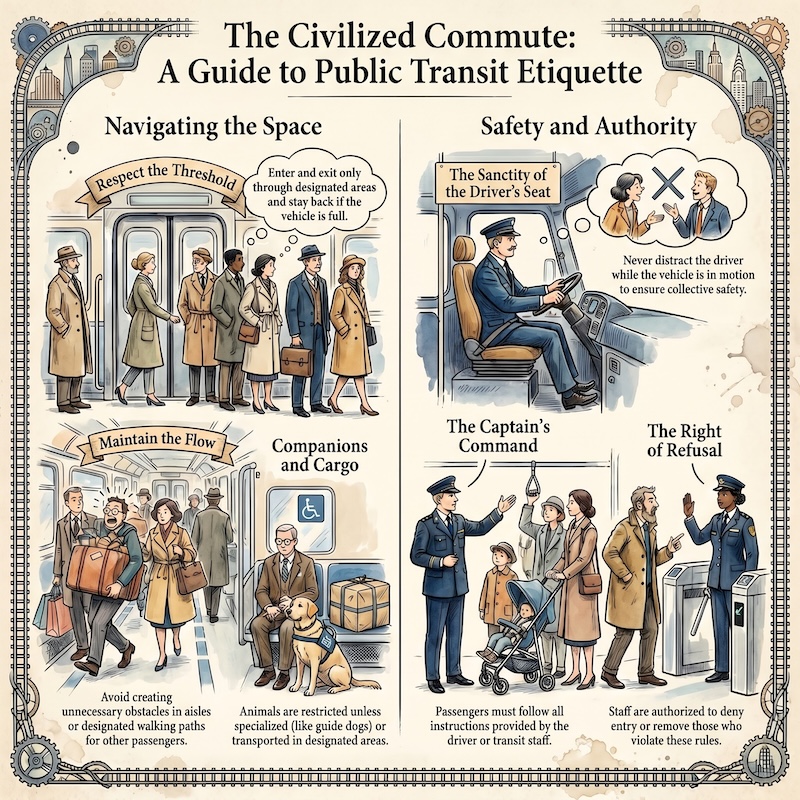
- Distract the driver while the vehicle is moving.
- Entering or exiting the vehicle through places other than those designated, respectively, for these purposes.
- Enter the vehicle when the warning has been given that it is full.
- Unnecessarily impede passage in places intended for the transit of people.
- Carry any animal with you, unless there is a designated place in the vehicle for its transport. Blind people accompanied by dogs specially trained as guide dogs are exempt from this prohibition, always under their own…
- Carrying dangerous materials or objects in conditions other than those set out in the specific regulations on the matter.
In short, the rule makes sure every road user knows what to expect in this situation.
The exam often asks where and to whom these rules apply; read the options carefully, as they frequently change a single word.
In vehicles intended for public transport services for people, passengers are prohibited from:
- Distract the driver while the vehicle is moving.
- Entering or exiting the vehicle through places other than those designated, respectively, for these purposes.
- Enter the vehicle when the warning has been given that it is full.
- Unnecessarily impede passage in places intended for the transit of people.
- Carry any animal with you, unless there is a designated place in the vehicle for its transport. Blind people accompanied by dogs specially trained as guide dogs are exempt from this prohibition, always under their own responsibility.
- Carrying dangerous materials or objects in conditions other than those established in the specific regulations on the matter.
- Disregarding the service instructions given by the driver or the person in charge of the vehicle.
The driver and, where applicable, the person in charge of vehicles intended for public transport services for people must prohibit the entry and order the exit of passengers who fail to comply with the precepts established in this section.
🔗 Read the official text on the BOE (Spanish General Traffic Regulations)❓ Frequently asked questions
What is collective transportation of people?
Does this topic appear in the DGT theory exam?
Where is it regulated (Article 11 (2))?
🚦 Practise with DGT tests
Already studied the theory? Test yourself with official exam-style questions.
📝 Start with TraficoTest