

Adapting speed to circumstances is one of the topics in the Vehicle movement block of the Spanish DGT theory. How vehicles must move on the road: direction of travel, position on the carriageway, speed and distances. Understanding this section well helps you answer the theory-exam questions on this topic with confidence.
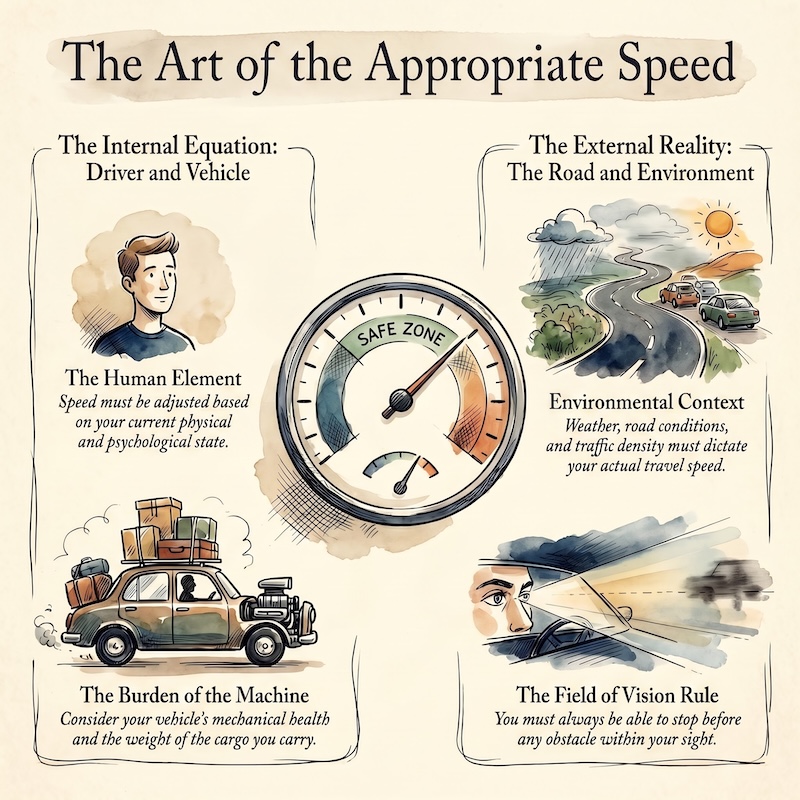
In simple terms, this point of the DGT theory establishes that every driver is obliged to respect the established speed limits and to take into account, in addition, his own physical and mental conditions, the characteristics and condition of the road, the vehicle and its load, the weather, environmental and traffic conditions, and, in general, any circumstances that may occur at any given time, in order to adapt the…
Questions here combine speed, lane position and distances: always check whether the road is urban or interurban.
Every driver is obliged to respect the established speed limits and to take into account, in addition, his own physical and mental conditions, the characteristics and condition of the road, the vehicle and its load, the weather, environmental and traffic conditions, and, in general, any circumstances that may occur at any given time, in order to adapt the speed of his vehicle to them, so that he can always stop it within the limits of his field of vision and in the face of any obstacle that may arise (article 19.1 of the consolidated text).
🔗 Read the official text on the BOE (Spanish General Traffic Regulations)❓ Frequently asked questions
What is adapting speed to circumstances?
Does this topic appear in the DGT theory exam?
Where is it regulated (Article 45)?
🚦 Practise with DGT tests
Already studied the theory? Test yourself with official exam-style questions.
📝 Start with TraficoTest