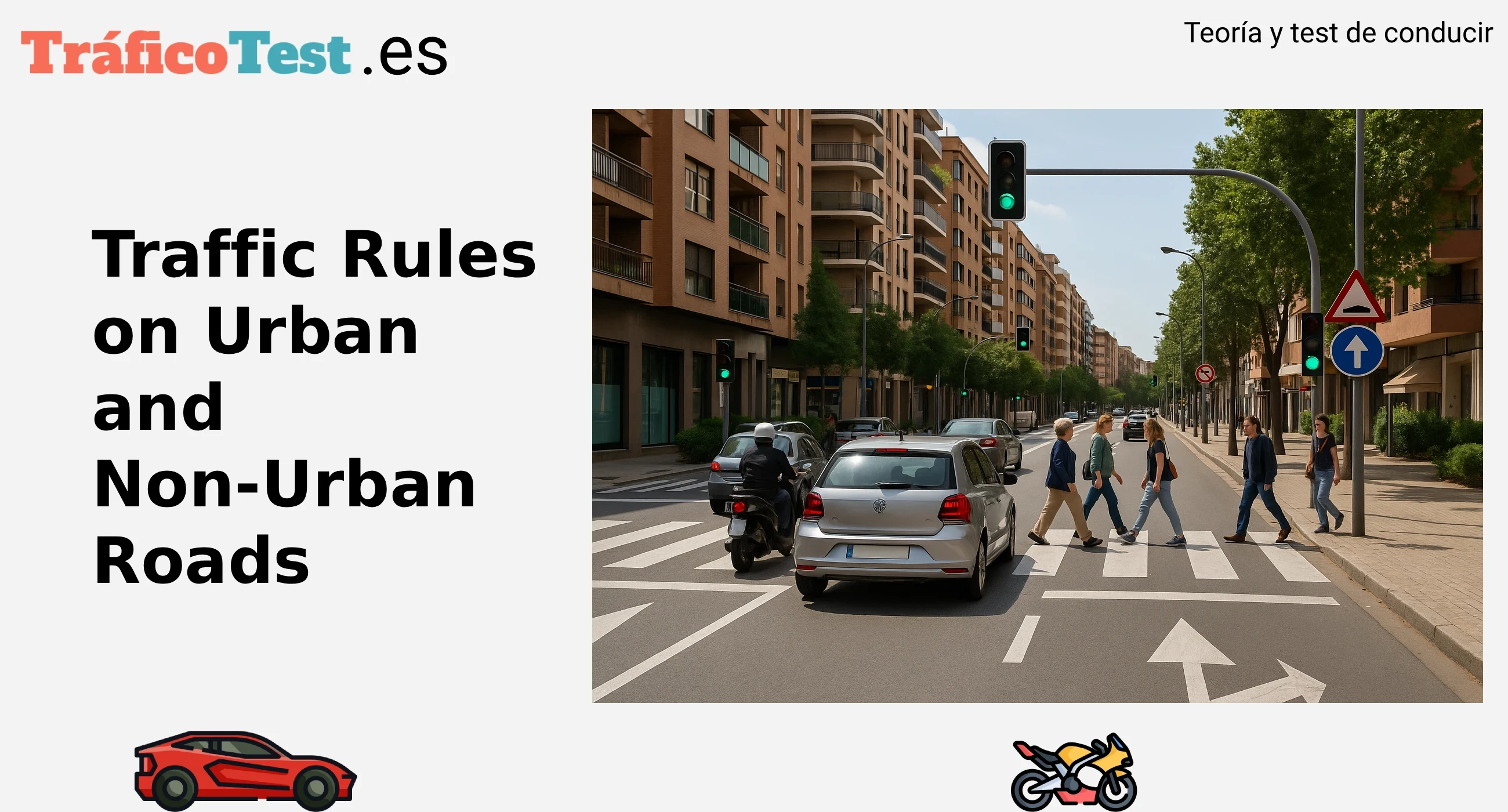
Safe driving depends on the responsible behavior of all users. Here we explain the key rules and road types you need to know to drive correctly inside and outside urban areas. 🛣️🚗
🚫 1. General Prohibitions
- ❌ Do not throw, abandon, or leave objects on the road that could cause fires, pollution, or danger.
- 📵 Using mobile devices without a hands-free system or with earphones is prohibited. Exception (since 1 October 2026, RD 518/2026): certified or type-approved wireless intercoms integrated in the helmet, used only for intercommunication or navigation.
- 🔧 Do not modify the vehicle to evade controls or to warn others.
✅ 2. General Obligations
- 🛑 Take safety measures when stopping or when approaching the roadway.
- 👀 Keep a clear field of view and constant attention.
- 💤 Avoid distractions from screens or devices.
- ⛽ Switch off the engine and devices when refueling.
- 🔍 License plates must always be visible and legible.
📌 Obligations of the Vehicle Owner
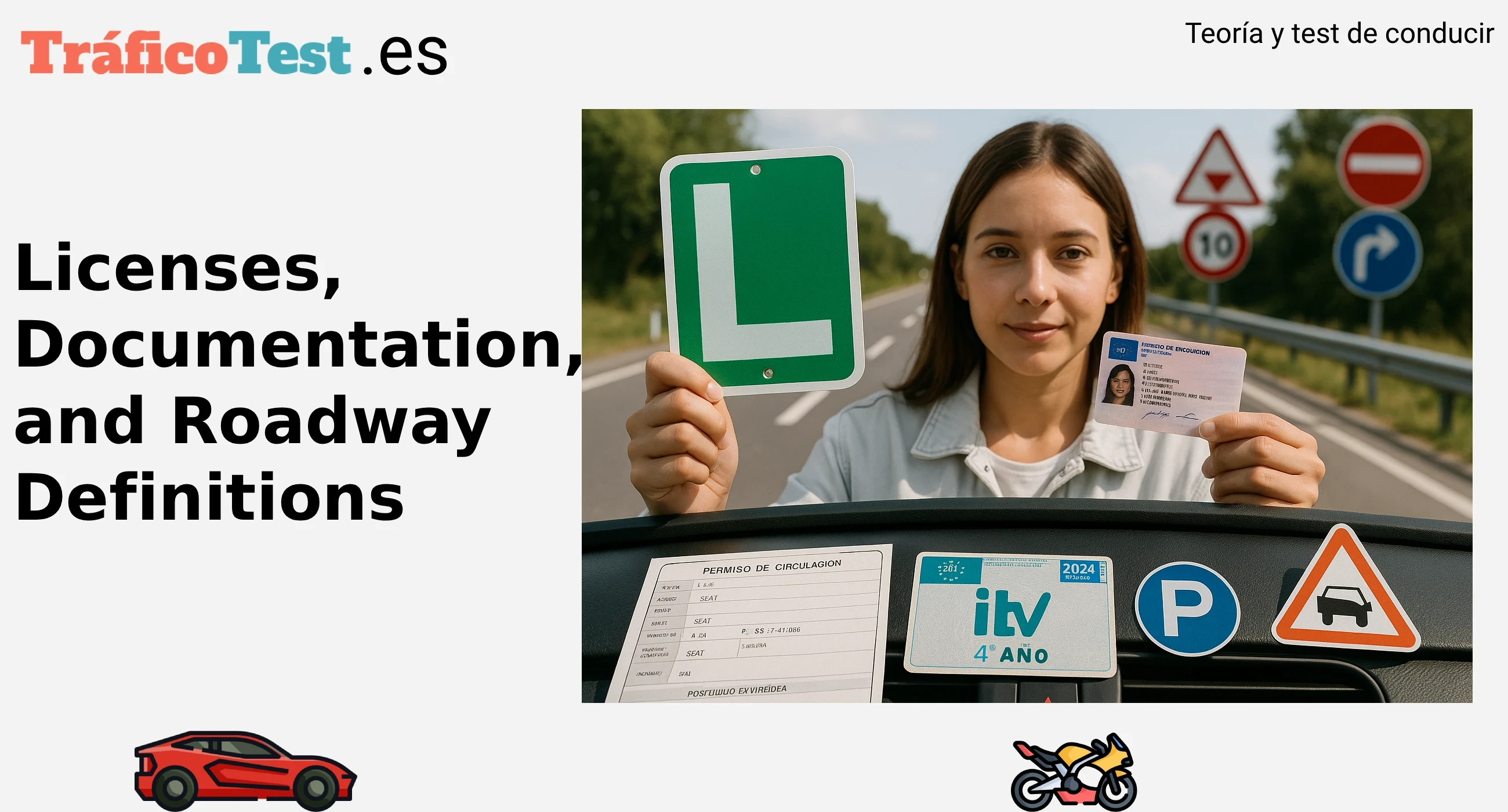
- 🧾 Keep the vehicle in roadworthy condition according to ITV requirements.
- 🚫 Do not allow driving without valid licenses.
- 👤 May designate a regular driver with the DGT.
🛣️ 3. Road Classification
| Location | Road Type | Description |
|---|---|---|
| 🏘️ Within built-up areas | Urban roads | Streets within towns/cities |
| 🏞️ Outside built-up areas | Interurban roads | Roads connecting towns |
🚗 4. Special Road Types
- 🛣️ Motorways and Expressways: No level crossings, limited access.
- 🚘 Roads for motor vehicles: Motor vehicles only.
- 🚜 Conventional roads: No special requirements.
- 🚴 Cyclist facilities: Cycle lane, cycle track, cycle path.
⚖️ 5. Rules for Mopeds
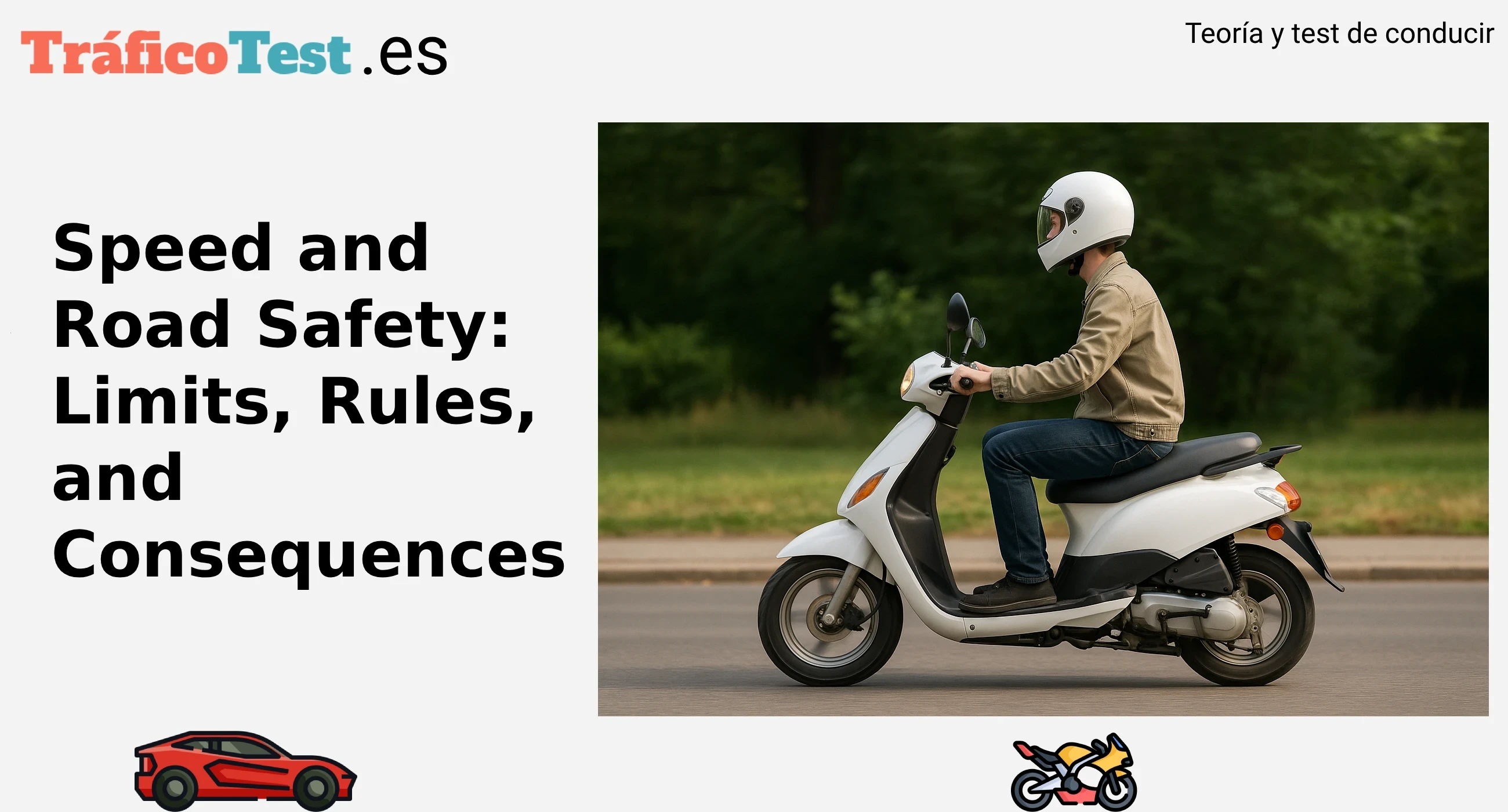
- ➡️ Ride on the right-hand shoulder if possible.
- 👬 Always in single file: since 1 October 2026 (RD 518/2026) mopeds may no longer ride two abreast, not even on the hard shoulder. Only bicycles may ride in pairs.
- 🚫 Riding on sidewalks or bike lanes is prohibited.
🔁 Rules at Intersections
- 🛑 Keep to the right in roundabouts and junctions.
- ➡️ Always use the right-hand lane unless otherwise indicated.
🚦 6. Types of Lanes
- 🧍♂️ HOV: For vehicles with multiple occupants only.
- ↔️ Reversible: Direction changes. Low beams are mandatory.
- ➕ Additional lanes: Limited to 60–80 km/h. Mopeds only if expressly allowed.
- ⛔ Opposite-direction lanes: Mopeds prohibited except due to roadworks.
📏 7. Safety Distances
- 🚘💨 Maintain a distance sufficient to avoid collisions.
- 🧍♂️💥 In tunnels, leave at least 100 meters or 4 seconds.
🚶♂️ 8. Rules for Pedestrians
🏙️ Pedestrian Areas
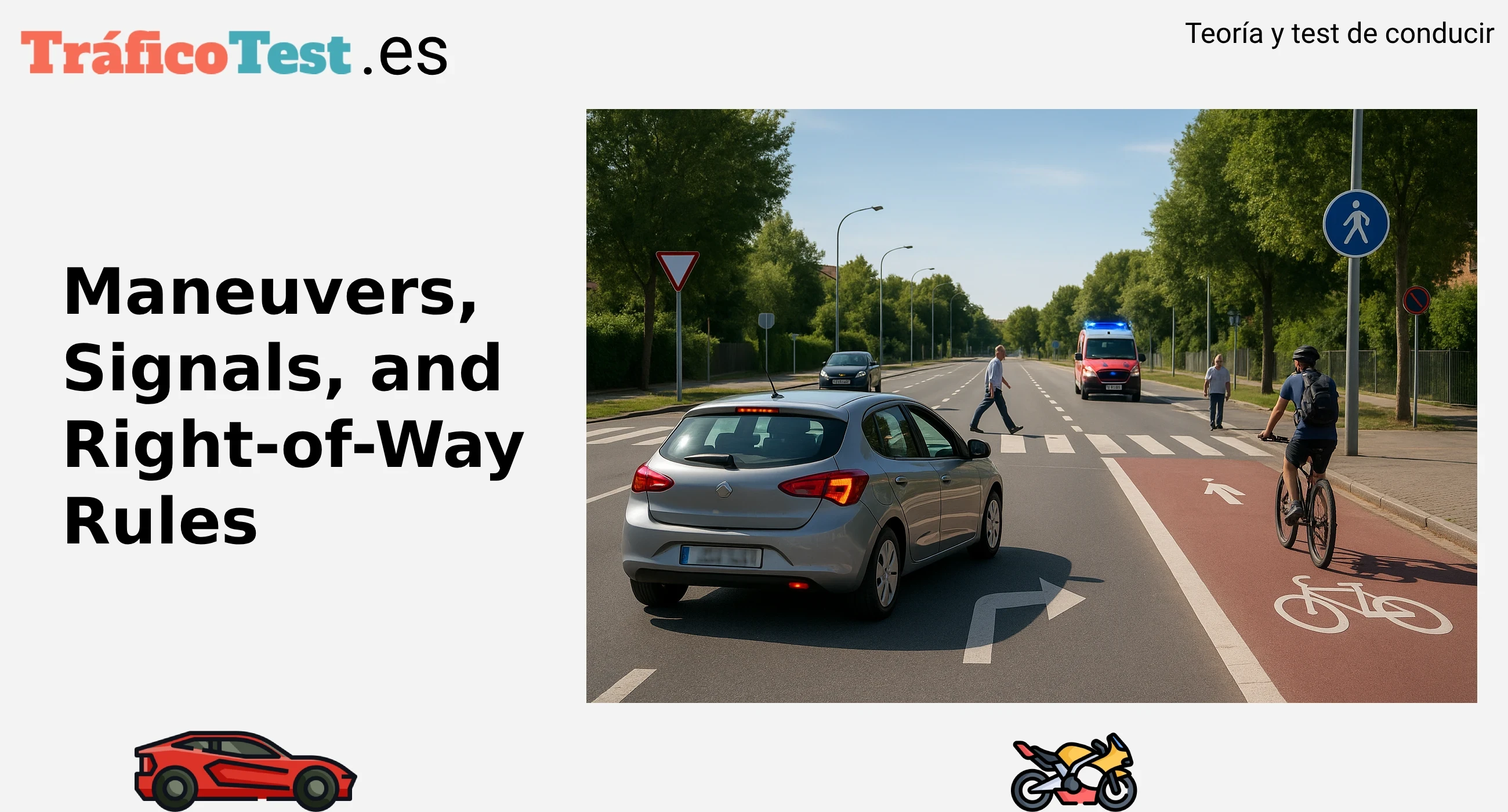
- 🚶 Sidewalks are reserved for pedestrians, who have priority of passage and presence; the old rule requiring pedestrians to keep to the right-hand side of the sidewalk was repealed on 1 October 2026 (RD 518/2026).
- 🦽 People using wheelchairs or pushing carts may use the carriageway if there is no sidewalk.
🌄 Non-Pedestrian Areas
- 🚶 Where there is no usable pedestrian area: on the left-hand shoulder (or, failing that, the carriageway), as far from traffic as possible. The right-hand side is used only for safety reasons, by groups led by a person, or when pushing a bicycle, moped or e-scooter (since 1 October 2026, RD 518/2026).
- 🚦 Obey signs and walk in single file when visibility is low.
⛔ Prohibited Behaviors
- 🚷 They may not travel on motorways/expressways.
- 🛹 Skateboards, roller skates and e-scooters (VMP): the municipal by-law sets the roads and areas where they may be used and under what conditions; e-scooters may never use the sidewalk (since 1 October 2026, RD 518/2026).
🌫️ Low Visibility
- 💡 Use reflective elements visible from 150 m.
- 👥 Groups must be marked with white/yellow at the front and red at the rear.
🌀 9. Curves and the Road Factor
- 🌀 Curves involve centrifugal force ➡️ more dangerous with higher speed and weight.
- ⚙️ Tips: decelerate before entering, lean gently, accelerate on exit.
- 🚫 Do not brake sharply inside curves.
🔑 Conclusion
Road safety depends on respecting the rules, staying attentive, and acting responsibly as a driver or pedestrian. Adapting to the environment, road type, and conditions is essential to prevent accidents. ⚠️🚦
Take the test