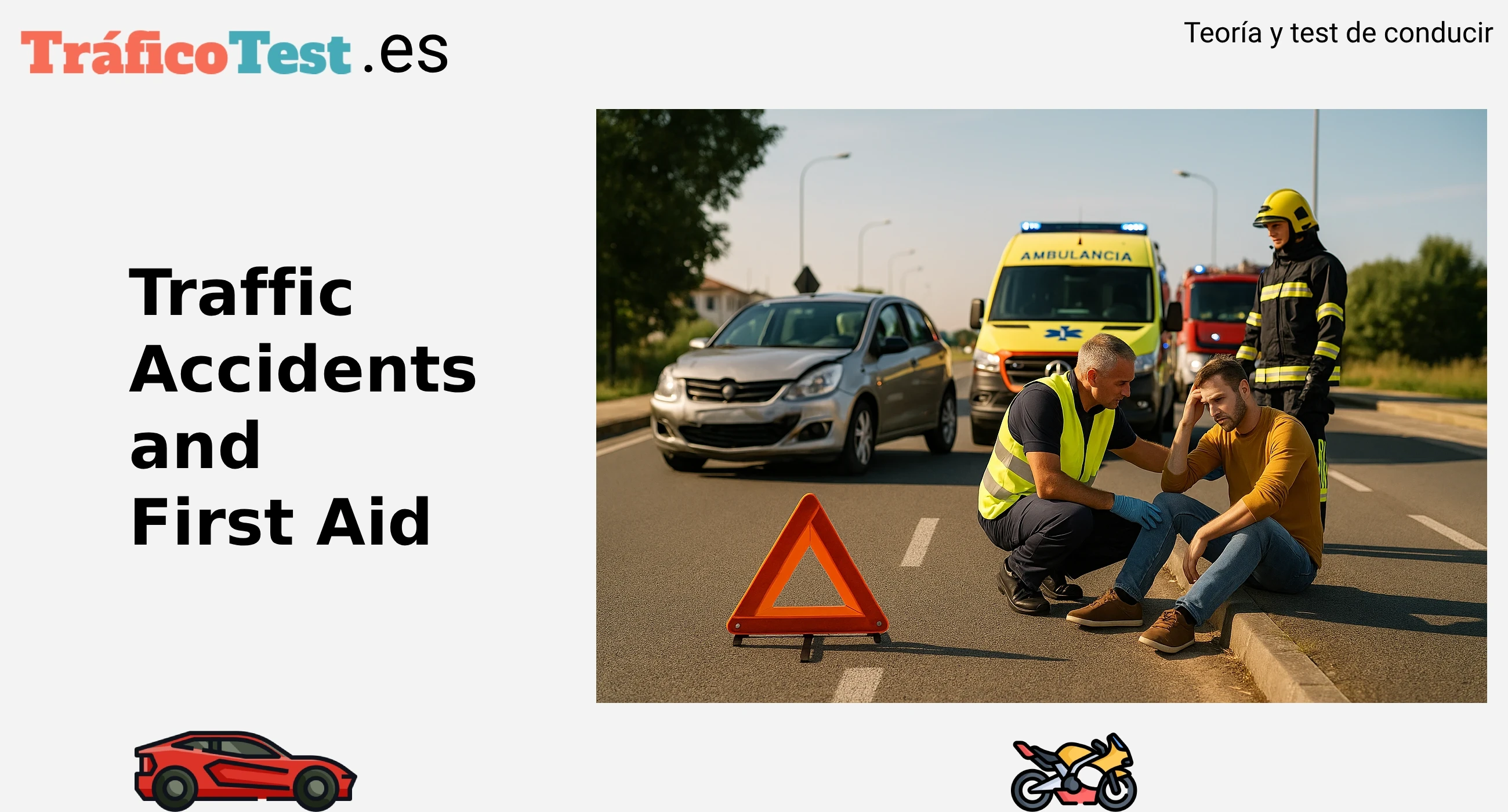
Traffic accidents are a leading cause of death and generate major social and economic costs. Here you’ll learn how to prevent them and how to act in an emergency. 🧠💡
📉 1. Main Causes of Accidents
- 🧍♂️ Human factor: Responsible for 70%–90% of accidents.
- 🛣️ Road and environment: Causes 10%–35% of accidents.
- 🚗 Vehicle condition: Involved in 4%–13% of crashes.
🚸 2. Vulnerable Groups
👶 2.1 Young drivers
- High crash rates between ages 14 and 29.
- Frequent accidents during nightlife and commuting.
- Risk factors: alcohol, drugs, inexperience, speeding.
👴 2.2 Older drivers
Reflexes, vision, hearing, and reaction time decrease. Higher risk at intersections and when merging.
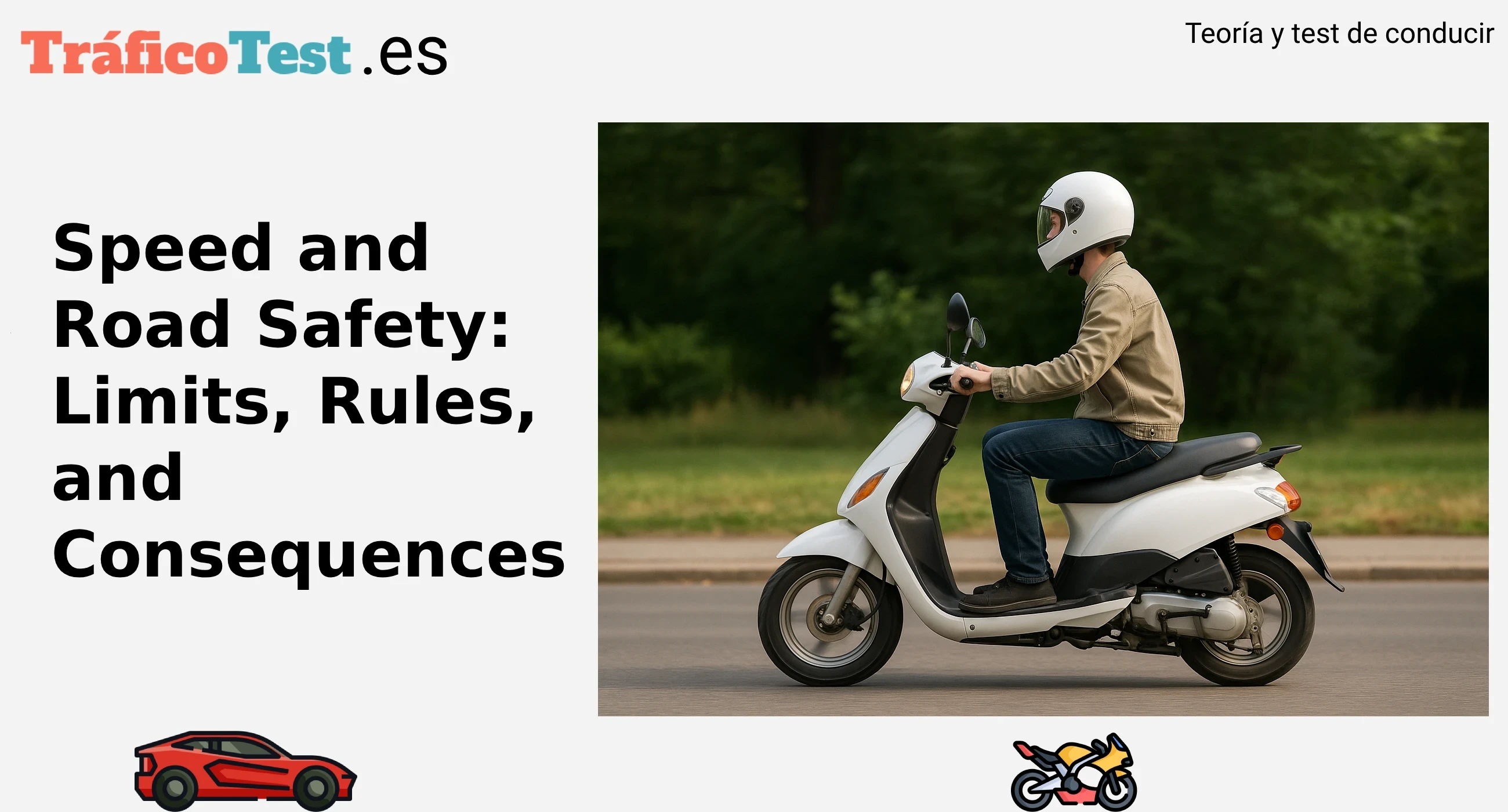
🏍️ 2.3 Mopeds and motorcycles
Higher fatality risk. Issues: violations, no helmet, lower visibility.
🚴 2.4 Cyclists
Risk on weekends and conventional roads. Head injuries are more severe. Use caution when overtaking.
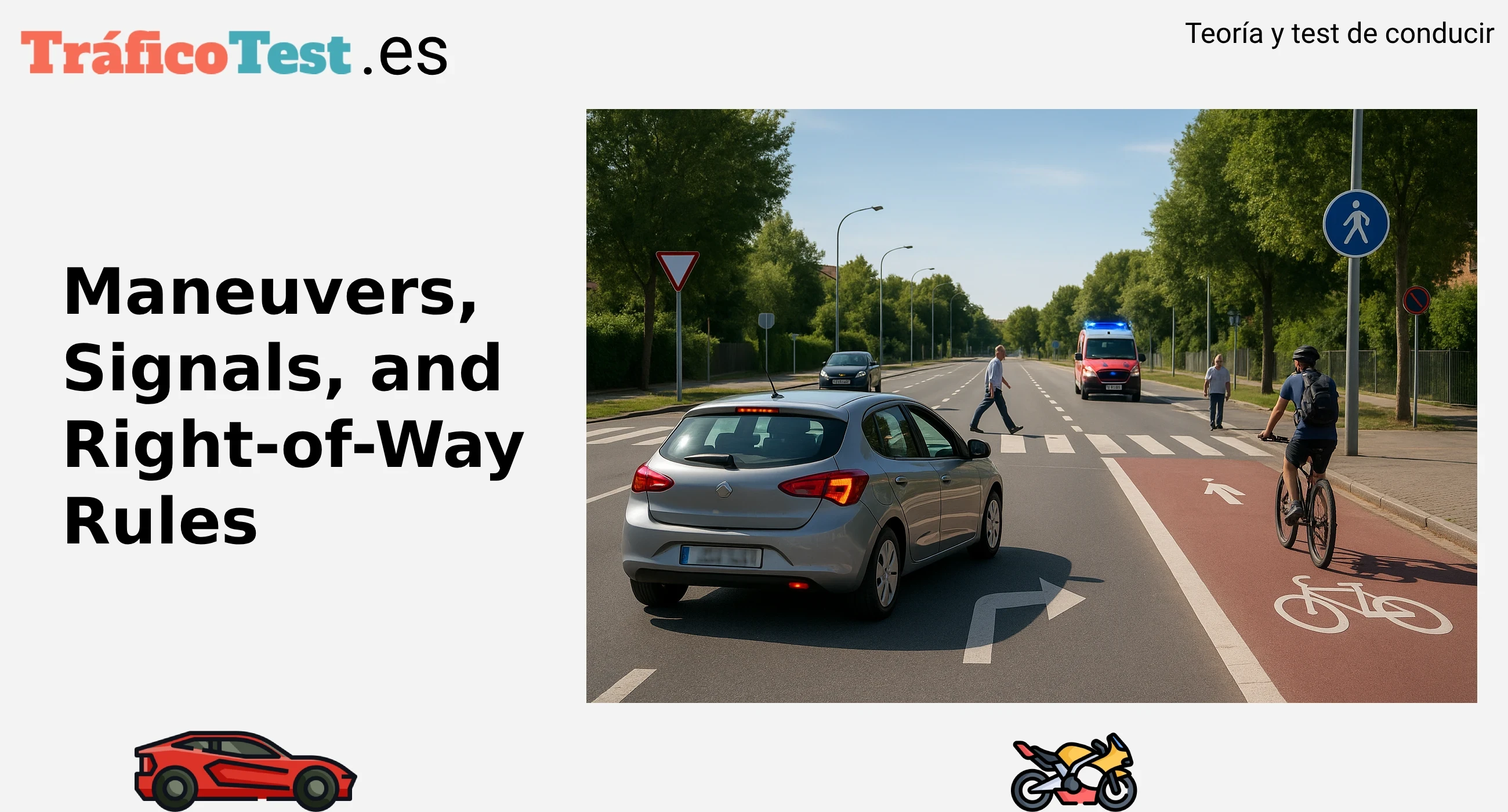
🚶 2.5 Pedestrians
Higher risk on interurban roads. Extra care with older adults and children (limited field of view, less attention, perception errors).
✅ 2.6 How to avoid pedestrian collisions
- Reduce speed in school areas, near buses, and at garage exits.
- Don’t signal pedestrians to cross if it isn’t safe.
- Avoid stopping on the sidewalk.
🤝 3. Duty to Assist
You must help, reduce risks, and cooperate with the authorities. Do not alter evidence unless there’s danger. The first 60 minutes are crucial! 🕒
🆘 4. What to Do at an Accident (PAS)
🛡️ 4.1 Protect
- Stop the vehicle in a safe place.
- Wear a reflective vest, switch off the engine, avoid smoking.
- Do not move the injured unless there is a greater risk.
📞 4.2 Alert
- Call 112 and report: location, number of injured, hazards, your identity.
💊 4.3 Help
- Prioritize the unconscious, those with bleeding, or breathing difficulties.
- Do not give liquids or medication. Keep the injured person calm.
❤️ 5. First Aid
🔎 5.1 Initial Assessment – ABC Technique
| Letter | Meaning |
|---|---|
| A | Open the airway (head-tilt / chin-lift) |
| B | Look, listen, and feel for breathing |
| C | Check circulation and possible bleeding |
🚑 CPR – Cardiopulmonary Resuscitation
- 30 chest compressions + 2 rescue breaths.
- For children under 2 years, use only two fingers.
💉 Bleeding
- Press, elevate, compress the artery.
- Tourniquet only as a last resort. Record the time applied.
- ⚠️ Do not cover external signs of internal bleeding.
💀 Shock
- Pale skin, confusion, weak pulse.
- Place in anti-shock position (legs elevated).
🔥 Burns
- Do not touch the area or remove burned clothing.
- Cool with cold water and cover with moist gauze.
📋 6. Dealing with the Authorities
Identify yourself, cooperate, and take tests if requested. Provide your details in accidents even if you weren’t directly involved.
🚐 7. Moving and Transporting the Injured
- Only move the injured in extreme urgency.
- Transport in a suitable vehicle, keeping head–neck–torso aligned.
Take the test