

Stopping a vehicle at a level crossing, drawbridge or tunnel is one of the topics in the Driving maneuvers block of the Spanish DGT theory. Overtaking, changes of direction, stopping, parking, lighting and warnings. Understanding this section well helps you answer the theory-exam questions on this topic with confidence.
In practice, this comes down to the following:
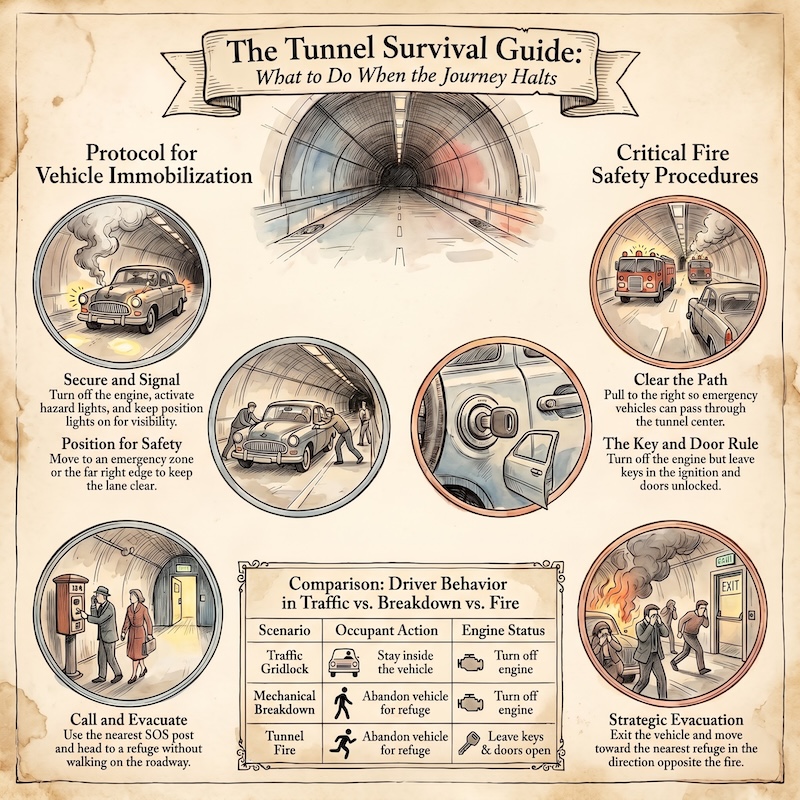
- Turn off the engine, turn on the emergency signal and keep the parking lights on.
- If possible, direct the vehicle towards the nearest emergency zone in the direction of travel. If there is no such zone, stop the vehicle as close as possible to the right edge of the road.
- Place and activate the danger pre-signaling light device.
- Request assistance without delay through the nearest emergency post (SOS post), if one exists, and follow the instructions sent to you through it.
- Both the driver and the other occupants will leave the vehicle, heading quickly to the nearest shelter or exit, without under any circumstances driving on the road if there are areas excluded from vehicle traffic.
- If the fault allows the vehicle to move, you must continue to the exit of the tunnel or underpass and, if this is not possible, to an area reserved for emergencies.
In short, the rule makes sure every road user knows what to expect in this situation.
Manoeuvres are tested with practical cases; remember the correct order: observe, signal and only then carry out the manoeuvre.
If for emergency reasons a driver is immobilized with his vehicle inside a tunnel or underpass, he must:
- Turn off the engine, turn on the emergency signal and keep the parking lights on.
- If possible, direct the vehicle towards the nearest emergency zone in the direction of travel. If there is no such zone, stop the vehicle as close as possible to the right edge of the road.
- Place and activate the danger pre-signaling light device.
- Request assistance without delay through the nearest emergency post (SOS post), if one exists, and follow the instructions sent to you through it.
- Both the driver and the other occupants will leave the vehicle, heading quickly to the nearest shelter or exit, without under any circumstances driving on the road if there are areas excluded from vehicle traffic.
- If the fault allows the vehicle to move, you must continue to the exit of the tunnel or underpass and, if this is not possible, to an area reserved for emergencies.
In the event of a fire, the driver will move his vehicle as close to the right as possible so as not to obstruct the passage of emergency vehicles. He will turn off the engine and leave the key in the ignition and the doors open. Both the driver and the other occupants will leave the vehicle and head quickly to the nearest shelter or exit, in the opposite direction to the fire, without under any circumstances driving on the road if there are areas where vehicles are prohibited from driving.
If a vehicle is stopped inside a tunnel or underpass due to traffic conditions, the driver and passengers must not leave the vehicle. In this case, the emergency signal must be temporarily activated to warn other drivers behind, the parking lights must be kept on and the engine must be switched off. The driver must stop as far away as possible from the vehicle in front.
🔗 Read the official text on the BOE (Spanish General Traffic Regulations)❓ Frequently asked questions
What is stopping a vehicle at a level crossing, drawbridge or tunnel?
Does this topic appear in the DGT theory exam?
Where is it regulated (Article 97 (3))?
🚦 Practise with DGT tests
Already studied the theory? Test yourself with official exam-style questions.
📝 Start with TraficoTest