

Obligations of the driver is one of the topics in the Driving maneuvers block of the Spanish DGT theory. Overtaking, changes of direction, stopping, parking, lighting and warnings. Understanding this section well helps you answer the theory-exam questions on this topic with confidence.
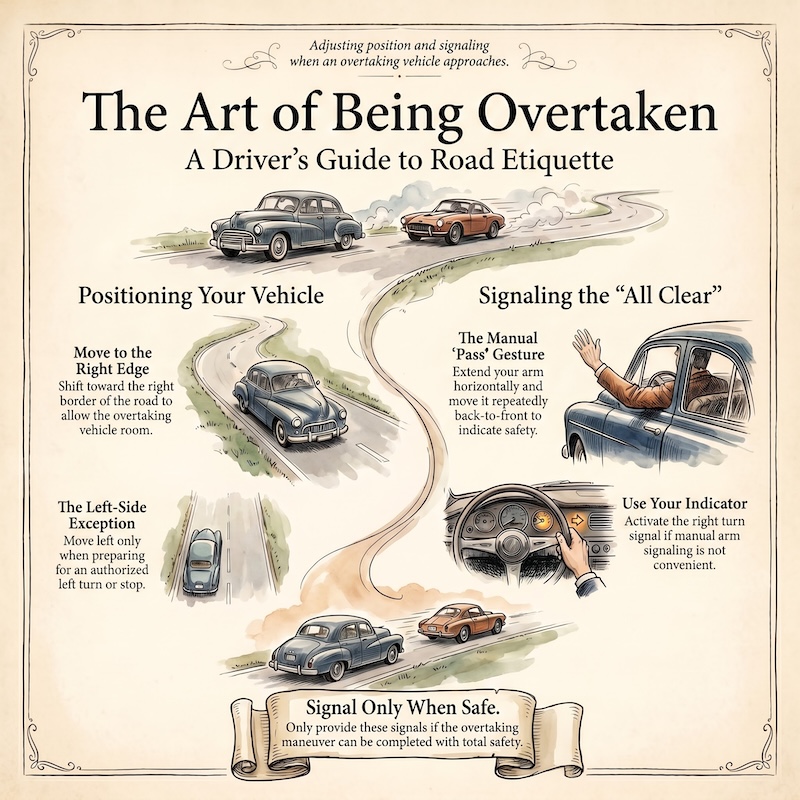
In simple terms, this point of the DGT theory establishes that a driver who notices another vehicle behind intending to overtake must move as close as possible to the right edge of the road. However, if making a left turn, changing direction, or stopping on the left side, as mentioned in Article 82.2, the driver must move as far left as possible, without interfering with vehicles traveling in the opposite direction.
Manoeuvres are tested with practical cases; remember the correct order: observe, signal and only then carry out the manoeuvre.
A driver who notices another vehicle behind intending to overtake must move as close as possible to the right edge of the road. However, if making a left turn, changing direction, or stopping on the left side, as mentioned in Article 82.2, the driver must move as far left as possible, without interfering with vehicles traveling in the opposite direction.
If it is not possible to move fully to the right, but overtaking can still be done safely, the driver of a vehicle mentioned in section 3 must signal the possibility of overtaking by either extending their arm horizontally and moving it repeatedly from back to front with the palm facing backward, or by activating the right turn signal if using a hand signal is not practical.
🔗 Read the official text on the BOE (Spanish General Traffic Regulations)❓ Frequently asked questions
What is obligations of the driver?
Does this topic appear in the DGT theory exam?
Where is it regulated (Article 86 (1))?
🚦 Practise with DGT tests
Already studied the theory? Test yourself with official exam-style questions.
📝 Start with TraficoTest