

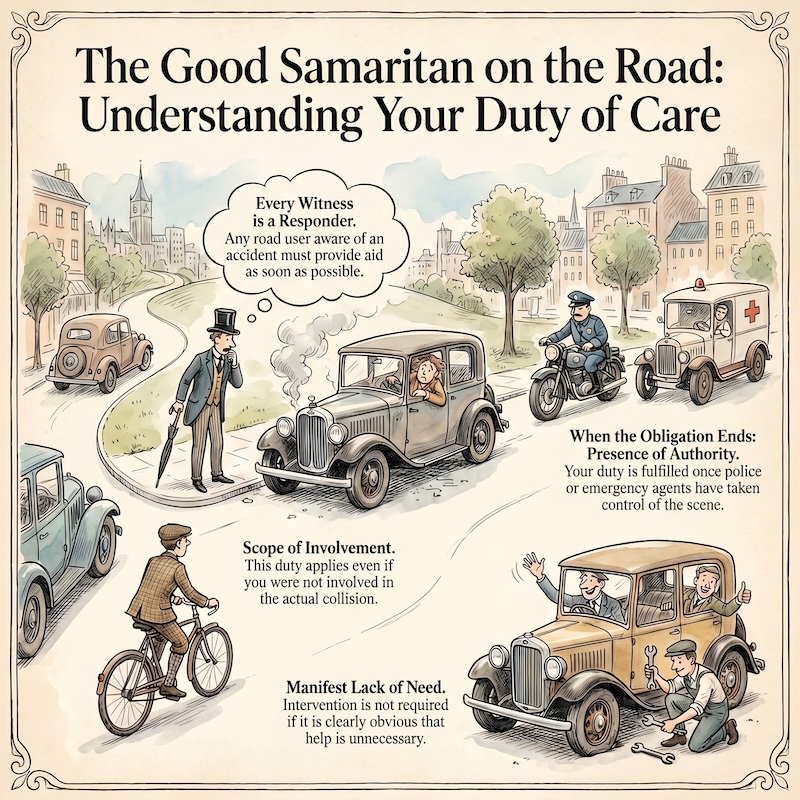
Obligation to assist is one of the topics in the Safety block of the Spanish DGT theory. Elements and behaviours that protect life: seat belt, helmet, restraint systems and pedestrian behaviour. Understanding this section well helps you answer the theory-exam questions on this topic with confidence.
In simple terms, this point of the DGT theory establishes that except in cases where their collaboration is clearly not necessary, any road user who notices that a traffic accident has occurred, without being involved in it, must comply, as soon as possible and as far as they are concerned, with the requirements set out in the previous section, unless the authority or its agents have appeared at the scene of the…
Seat belt, helmet and restraint systems come with exceptions: learn both the general duty and the cases where it does not apply.
Except in cases where their collaboration is clearly not necessary, any road user who notices that a traffic accident has occurred, without being involved in it, must comply, as soon as possible and as far as they are concerned, with the requirements established in the previous section, unless the authority or its agents have appeared at the scene of the accident.
🔗 Read the official text on the BOE (Spanish General Traffic Regulations)❓ Frequently asked questions
What is obligation to assist?
Does this topic appear in the DGT theory exam?
Where is it regulated (Article 129 (3))?
🚦 Practise with DGT tests
Already studied the theory? Test yourself with official exam-style questions.
📝 Start with TraficoTest