

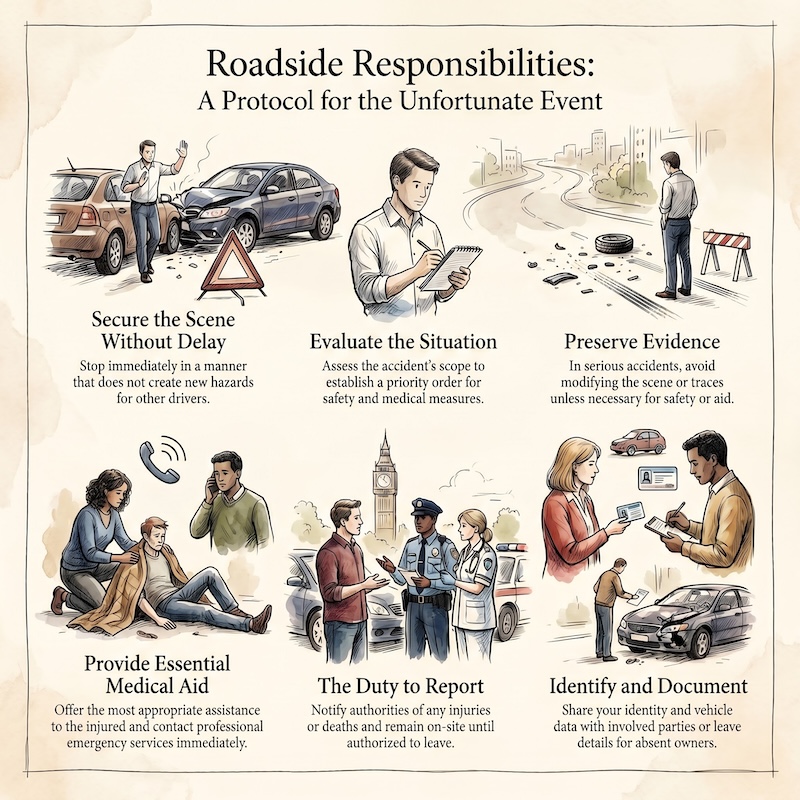
Obligation to assist is one of the topics in the Safety block of the Spanish DGT theory. Elements and behaviours that protect life: seat belt, helmet, restraint systems and pedestrian behaviour. Understanding this section well helps you answer the theory-exam questions on this topic with confidence.
In practice, this comes down to the following:
- Stop in a way that does not create a new danger to traffic.
- Obtain an overall idea of the circumstances and consequences of the accident, which will enable you to establish an order of preference, depending on the situation, regarding the measures to be adopted to guarantee…
- Strive to restore or maintain traffic safety and, if it appears that a person has been killed or seriously injured or the authorities or their agents have been notified, avoid altering the state of things and any traces…
- Provide the injured with the most appropriate assistance, depending on the circumstances, and, especially, obtain medical assistance from the services that may exist for this purpose.
- In any case, communicate your identity to other persons involved in the accident, if they so request; when only material damage has been caused and no affected party is present, take the appropriate measures to provide…
- Provide vehicle data to other persons involved in the accident, if they request it.
In short, the rule makes sure every road user knows what to expect in this situation.
Seat belt, helmet and restraint systems come with exceptions: learn both the general duty and the cases where it does not apply.
Every road user involved in a traffic accident must, as far as possible:
- Stop in a way that does not create a new danger to traffic.
- Obtain an overall idea of the circumstances and consequences of the accident, which will enable you to establish an order of preference, depending on the situation, regarding the measures to be adopted to guarantee traffic safety, assist the victims, facilitate their identification and collaborate with the authorities or their agents.
- Strive to restore or maintain traffic safety and, if it appears that a person has been killed or seriously injured or the authorities or their agents have been notified, avoid altering the state of things and any traces or other evidence that may be useful in determining responsibility, unless this would jeopardize the safety of the injured or traffic.
- Provide the injured with the most appropriate assistance, depending on the circumstances, and, especially, obtain medical assistance from the services that may exist for this purpose.
(e) Notify the authorities or their agents if it appears that a person has been injured or killed, and remain or return to the scene of the accident until they arrive, unless they have authorised them to leave the scene or must provide assistance to the injured or be treated themselves; however, it will not be necessary to notify the authorities or their agents, or remain at the scene of the accident, if only clearly minor injuries have occurred, traffic safety has been restored and none of the persons involved in the accident requests it.
- In any case, communicate your identity to other persons involved in the accident, if they so request; when only material damage has been caused and no affected party is present, take the appropriate measures to provide them, as soon as possible, with your name and address, either directly or, failing that, through the agents of law.
- Provide vehicle data to other persons involved in the accident, if they request it.
❓ Frequently asked questions
What is obligation to assist?
Does this topic appear in the DGT theory exam?
Where is it regulated (Article 129 (2))?
🚦 Practise with DGT tests
Already studied the theory? Test yourself with official exam-style questions.
📝 Start with TraficoTest