

Low beam or dipped beam lighting is one of the topics in the Driving maneuvers block of the Spanish DGT theory. Overtaking, changes of direction, stopping, parking, lighting and warnings. Understanding this section well helps you answer the theory-exam questions on this topic with confidence.
In practice, this comes down to the following:
- Not having long-range lighting.
- Driving at a speed not exceeding 40 kilometres per hour and not using high-beam lighting.
- Possibility of causing glare to other road users.
In short, the rule makes sure every road user knows what to expect in this situation.
Manoeuvres are tested with practical cases; remember the correct order: observe, signal and only then carry out the manoeuvre.
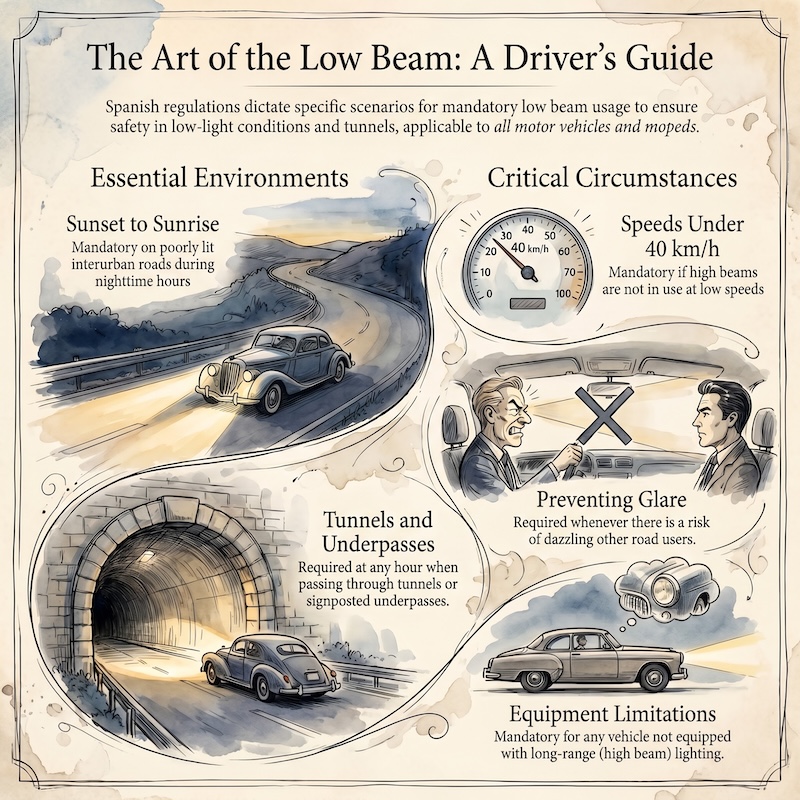
All motor vehicles and mopeds must have their low beam or dipped headlights on when travelling between sunset and sunrise on poorly lit interurban roads or at any time of day in tunnels, underpasses and other sections affected by the "Tunnel" sign that are poorly lit, when any of the following circumstances occur:
- Not having long-range lighting.
- Driving at a speed not exceeding 40 kilometres per hour and not using high-beam lighting.
- Possibility of causing glare to other road users.
❓ Frequently asked questions
What is low beam or dipped beam lighting?
Does this topic appear in the DGT theory exam?
Where is it regulated (Article 101 (2))?
🚦 Practise with DGT tests
Already studied the theory? Test yourself with official exam-style questions.
📝 Start with TraficoTest