

Crossing bridges or marked crossing works is one of the topics in the Priority block of the Spanish DGT theory. Who goes first: right-of-way rules at junctions, roundabouts, narrow sections and special cases. Understanding this section well helps you answer the theory-exam questions on this topic with confidence.
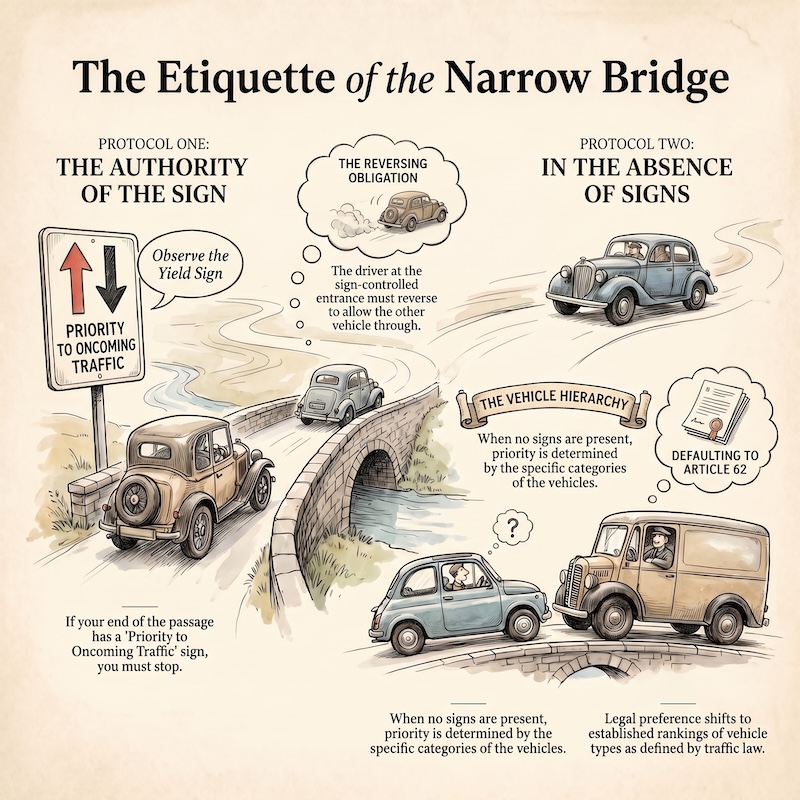
In simple terms, this point of the DGT theory establishes that if two vehicles meet on a bridge or crossing structure where passing is not possible, and a priority sign or yield sign is placed at one end, the vehicle approaching from that end must reverse to allow the other vehicle to pass. In the absence of signage, the priority order among different types of vehicles must follow the rules of Article 62.
Priority questions use concrete situations (junctions, roundabouts, narrow sections): first work out who has right of way and why.
If two vehicles meet on a bridge or crossing structure where passing is not possible, and a priority sign or yield sign is placed at one end, the vehicle approaching from that end must reverse to allow the other vehicle to pass. In the absence of signage, the priority order among different types of vehicles shall follow the provisions of Article 62.
🔗 Read the official text on the BOE (Spanish General Traffic Regulations)❓ Frequently asked questions
What is crossing bridges or marked crossing works?
Does this topic appear in the DGT theory exam?
Where is it regulated (Article 61 (2))?
🚦 Practise with DGT tests
Already studied the theory? Test yourself with official exam-style questions.
📝 Start with TraficoTest