

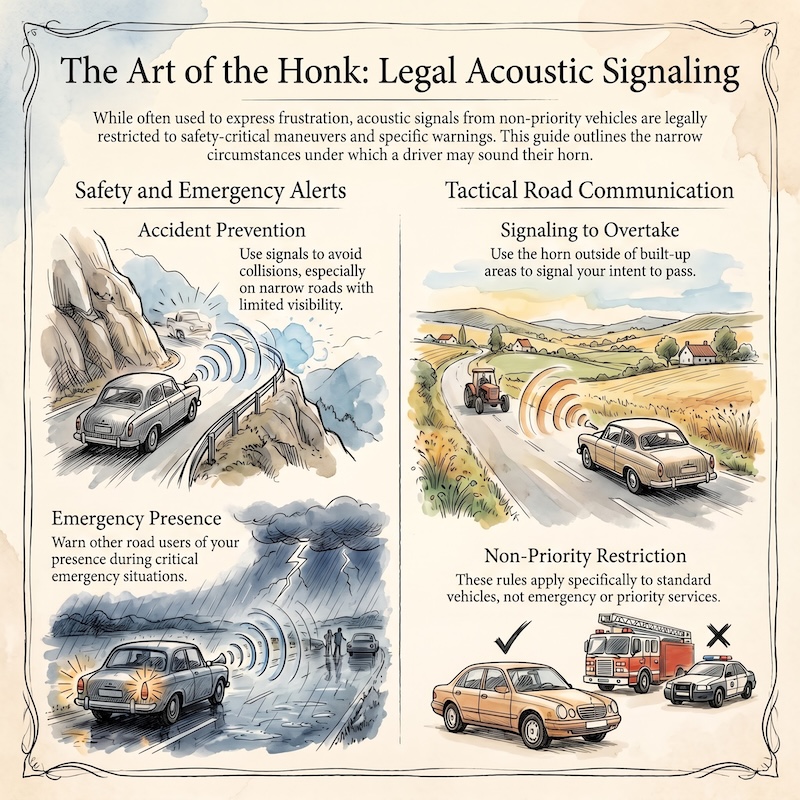
Acoustic warnings is one of the topics in the Driving maneuvers block of the Spanish DGT theory. Overtaking, changes of direction, stopping, parking, lighting and warnings. Understanding this section well helps you answer the theory-exam questions on this topic with confidence.
In practice, this comes down to the following:
- To avoid a possible accident, especially on narrow roads with many curves.
- To warn, outside of town, the driver of another vehicle of the intention to overtake.
- To warn other road users of their presence, in accordance with the rules of Article 70.
In short, the rule makes sure every road user knows what to expect in this situation.
Manoeuvres are tested with practical cases; remember the correct order: observe, signal and only then carry out the manoeuvre.
📜 Reference legal text — Article 110 (2)
Acoustic warnings may only be made by drivers of non-priority vehicles:
- To avoid a possible accident, especially on narrow roads with many curves.
- To warn, outside of town, the driver of another vehicle of the intention to overtake.
- To warn other road users of their presence, in accordance with the provisions of Article 70.
❓ Frequently asked questions
What is acoustic warnings?
Acoustic warnings is a DGT theory topic within the «Driving maneuvers» block, governed by Artículo 110 (2) of the Spanish General Traffic Regulations. Above you will find a simple explanation and the reference legal text.
Does this topic appear in the DGT theory exam?
Yes. Every section of the General Traffic Regulations can appear in the theory exam. To practise with real questions, go to the TraficoTest platform.
Where is it regulated (Article 110 (2))?
This content comes from Article 110 (2) of the Spanish traffic regulations. You can read the official text on the BOE.
🚦 Practise with DGT tests
Already studied the theory? Test yourself with official exam-style questions.
📝 Start with TraficoTest