

- 🔧 Metal structure: Structural framework on which the components are mounted.
- 🧍♂️ Bodywork: Protects occupants and cargo.
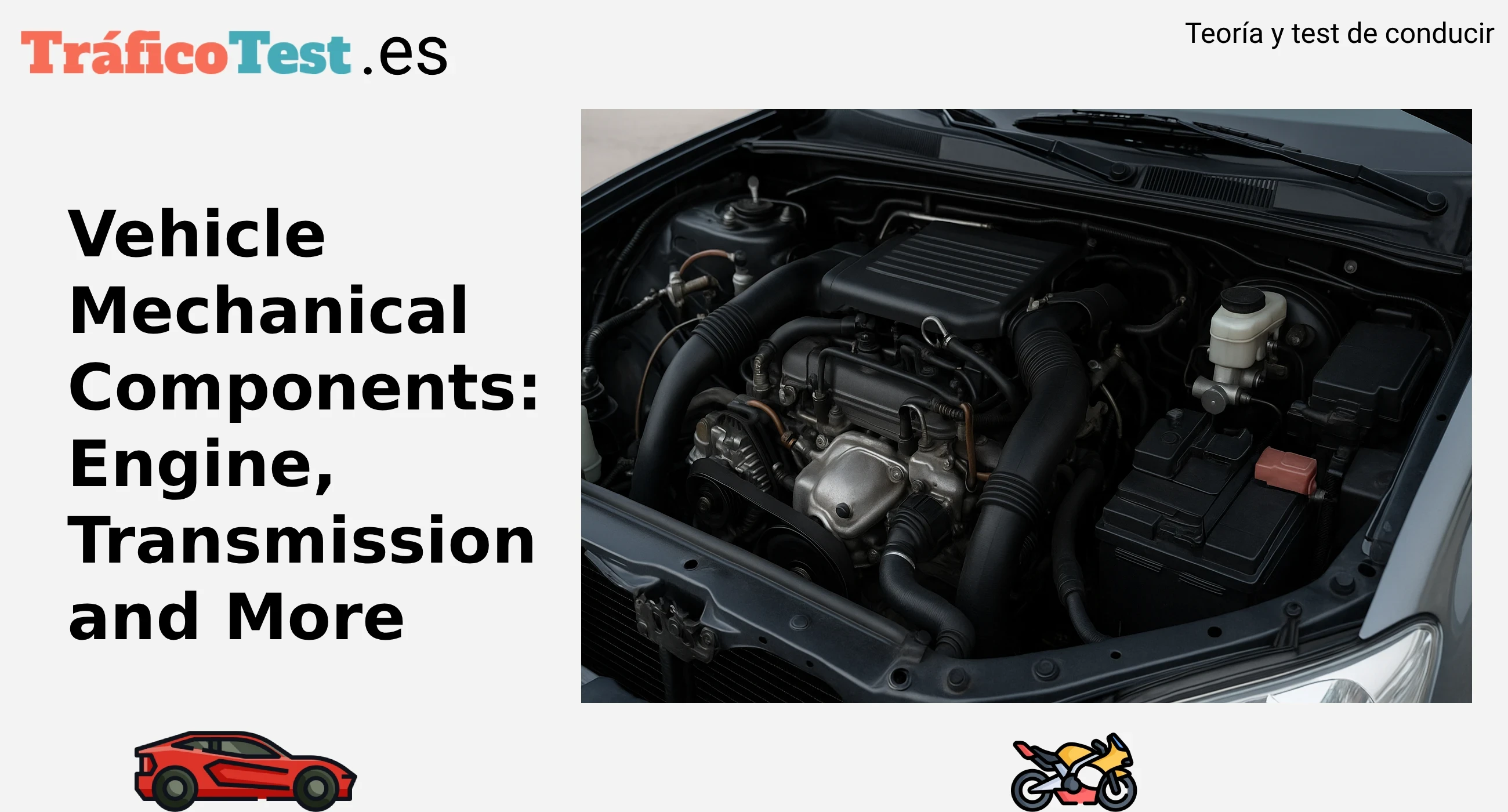
- 🔥 Engine: Produces the vehicle’s motion.
- ⚙️ Transmission: Transfers power to the wheels.
- 🧭 Steering: Allows the vehicle to be guided.
- 🛑 Brakes: Stop or reduce speed.
- 🔩 Suspension: Provides comfort and safety.
- 🛞 Wheels: Connect the vehicle to the road surface.
- 🔌 Electrical equipment: Supports vehicle operation.
🛠️ 2. The Engine
- 💥 Spark-ignition (gasoline) engine: Air–fuel mixture ignited by a spark.
- 🔥 Compression-ignition (diesel) engine: Direct injection without a spark.
- 💨 Types of smoke: white (cold), black (excess fuel), blue (burning oil), gray (dirty/faulty injection).
💧 3. Lubrication system
- 🛢️ Forms an oil film to prevent friction.
- 🔄 Uses a pump, oil pan, filters, and a (oil) pressure gauge.
- 🧼 Change the oil and filter periodically.
🌬️ 4. Cooling system
- 🐀Cools the engine with liquid or air.
- 🧊 Includes radiator, pump, fan, thermostat, and hoses.
- 🔁 Replace the coolant every 2 years.
🔋 5. Electrical system
- 🔌 Includes battery, ignition, starter, and lighting.
- ⚡ Battery: stores and supplies energy.
- 🔥 Ignition: produces the spark for gasoline engines.
- 🔁 Charging: alternator recharges the battery.
- 🚗 Starting: electric starter motor cranks the combustion engine.
⚙️ 6. Transmission
- 📦 Clutch, gearbox, driveshaft, and differential.
- 🔁 Transfers the engine’s rotation to the driven wheels.
- 🔧 Types: front-, rear-, or all-wheel drive.
🛞 7. Suspension
- 🌀 Keeps the wheels in contact with the ground.
- 💤 Absorbs road irregularities.
- 🛠️ Components: springs, shock absorbers, anti-roll bars.
🔄 8. Steering
- 🧭 Controls the orientation of the wheels.
- 🧑🔧 May include hydraulic or electric assistance.
- ⚙️ Operates via rack and pinion.
Take the test


