

Vehicle immobilization and falling load is one of the topics in the Safety block of the Spanish DGT theory. Elements and behaviours that protect life: seat belt, helmet, restraint systems and pedestrian behaviour. Understanding this section well helps you answer the theory-exam questions on this topic with confidence.
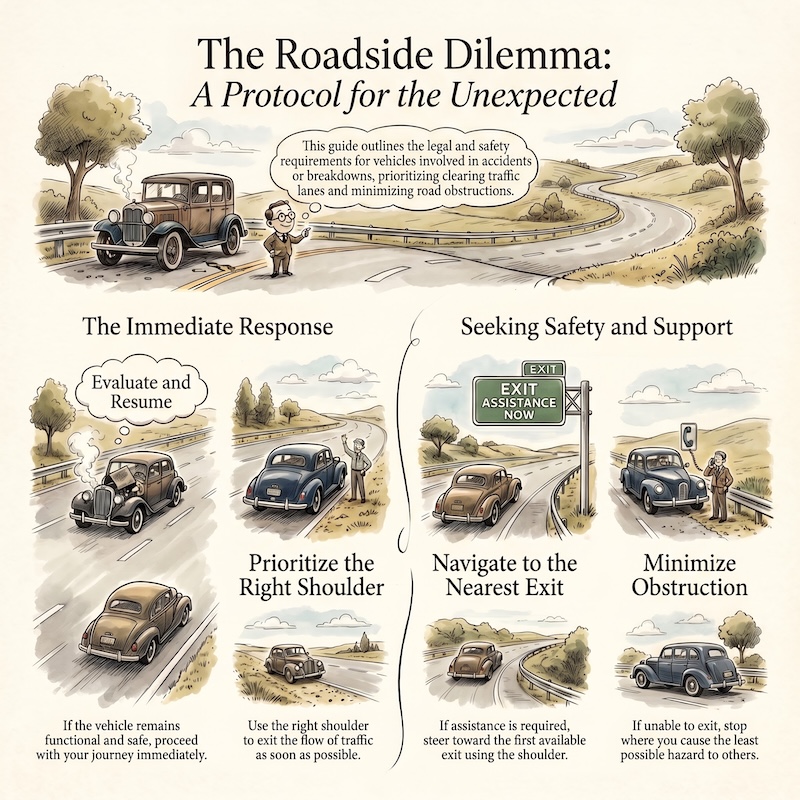
In simple terms, this point of the DGT theory establishes that vehicles that have suffered an accident or breakdown but can still move must resume driving immediately, ensuring they do so safely. If roadside assistance is required, the driver must leave the traffic lanes as soon as possible and head to the nearest exit using the right shoulder.
Seat belt, helmet and restraint systems come with exceptions: learn both the general duty and the cases where it does not apply.
Vehicles that have suffered an accident or breakdown but can still move must resume driving immediately, ensuring they do so safely. If roadside assistance is required, the driver must leave the traffic lanes as soon as possible and head to the nearest exit using the right shoulder. If this is not possible, the vehicle must be stopped on the right shoulder or in a location that causes the least obstruction to traffic.
🔗 Read the official text on the BOE (Spanish General Traffic Regulations)❓ Frequently asked questions
What is vehicle immobilization and falling load?
Does this topic appear in the DGT theory exam?
Where is it regulated (Article 130 (2))?
🚦 Practise with DGT tests
Already studied the theory? Test yourself with official exam-style questions.
📝 Start with TraficoTest