

Restrictions on movement is one of the topics in the Vehicle movement block of the Spanish DGT theory. How vehicles must move on the road: direction of travel, position on the carriageway, speed and distances. Understanding this section well helps you answer the theory-exam questions on this topic with confidence.
In simple terms, this point of the DGT theory establishes that if a recognised emergency, special authorisations may be granted for the movement of vehicles within the routes and periods subject to the restrictions imposed in accordance with the rules of the previous sections, subject to justification of the unavoidable need to travel along these routes and during the periods subject to restriction. These special…
Questions here combine speed, lane position and distances: always check whether the road is urban or interurban.
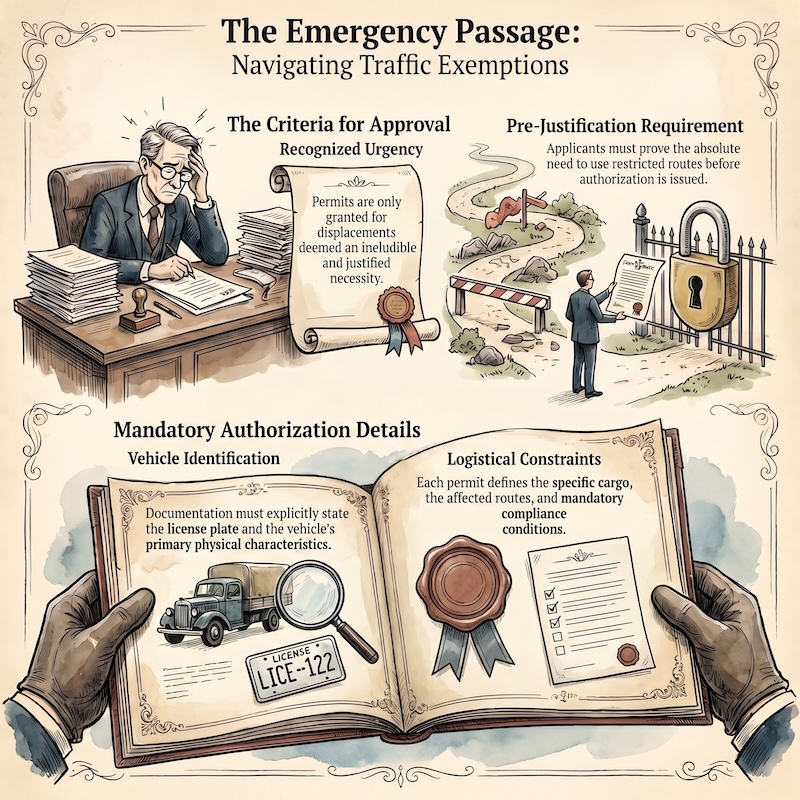
In the event of a recognised emergency, special authorisations may be granted for the circulation of vehicles within the routes and periods subject to the restrictions imposed in accordance with the provisions of the previous sections, subject to justification of the unavoidable need to travel along these routes and during the periods subject to restriction.
These special authorizations will state the registration number and main characteristics of the vehicle to which they refer, the merchandise transported, the roads it affects and the conditions to which it must be subject in each case.
🔗 Read the official text on the BOE (Spanish General Traffic Regulations)❓ Frequently asked questions
What is restrictions on movement?
Does this topic appear in the DGT theory exam?
Where is it regulated (Article 39 (5))?
🚦 Practise with DGT tests
Already studied the theory? Test yourself with official exam-style questions.
📝 Start with TraficoTest