

Rules on pedestrians on motorways and dual carriageways is one of the topics in the Safety block of the Spanish DGT theory. Elements and behaviours that protect life: seat belt, helmet, restraint systems and pedestrian behaviour. Understanding this section well helps you answer the theory-exam questions on this topic with confidence.
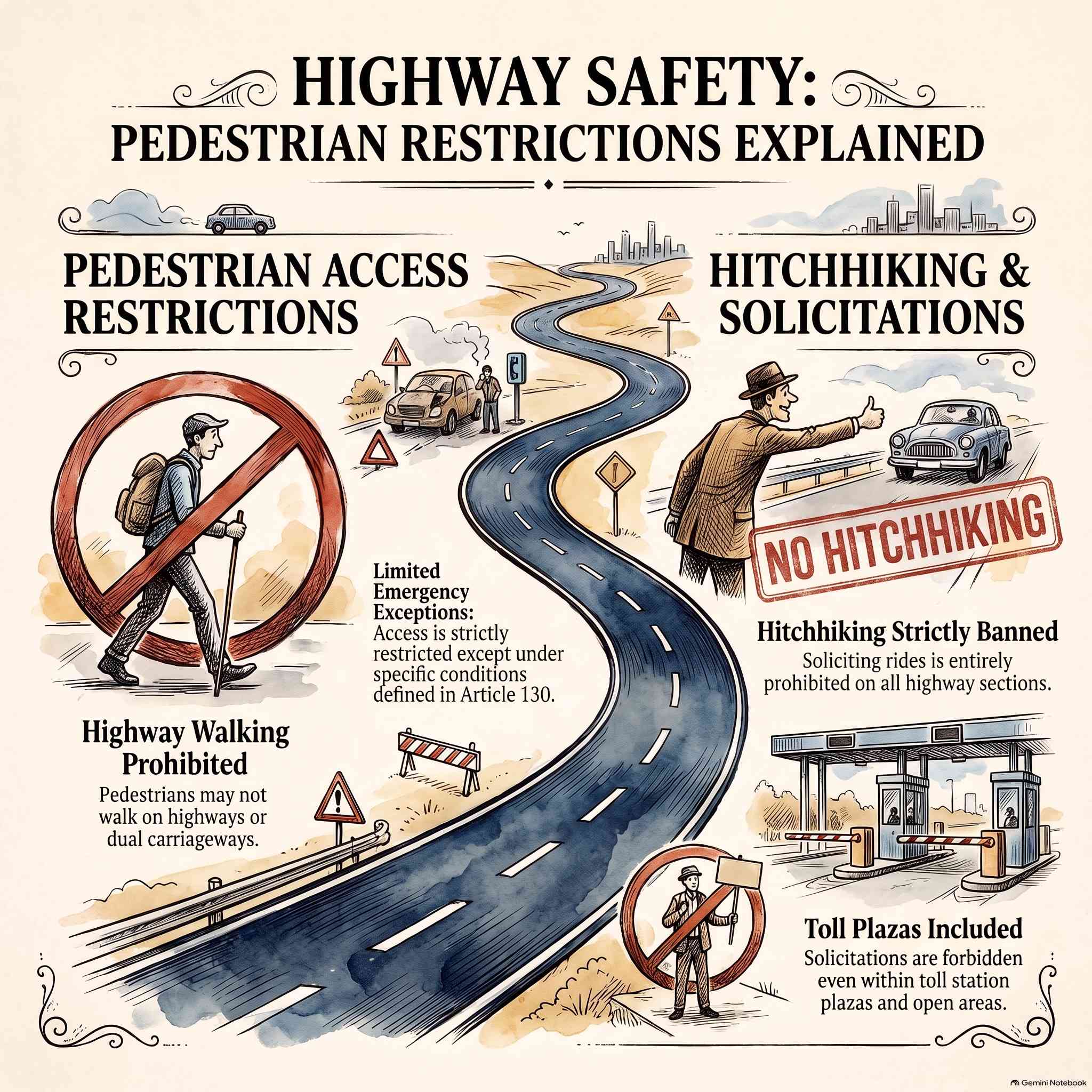
In simple terms, this point of the DGT theory establishes that pedestrians may not walk on motorways or dual carriageways, except in the cases and under the conditions set out in article 130, and may not request lifts on any stretch of them, including the forecourts of toll stations.
Seat belt, helmet and restraint systems come with exceptions: learn both the general duty and the cases where it does not apply.
Pedestrians may not walk on motorways or dual carriageways, except in the cases and under the conditions set out in article 130, and may not request lifts on any stretch of them, including the forecourts of toll stations.
🔗 Read the official text on the BOE (Spanish General Traffic Regulations)❓ Frequently asked questions
What is rules on pedestrians on motorways and dual carriageways?
Does this topic appear in the DGT theory exam?
Where is it regulated (Article 125 (1))?
🚦 Practise with DGT tests
Already studied the theory? Test yourself with official exam-style questions.
📝 Start with TraficoTest