

Non-priority vehicles in emergency service is one of the topics in the Priority block of the Spanish DGT theory. Who goes first: right-of-way rules at junctions, roundabouts, narrow sections and special cases. Understanding this section well helps you answer the theory-exam questions on this topic with confidence.
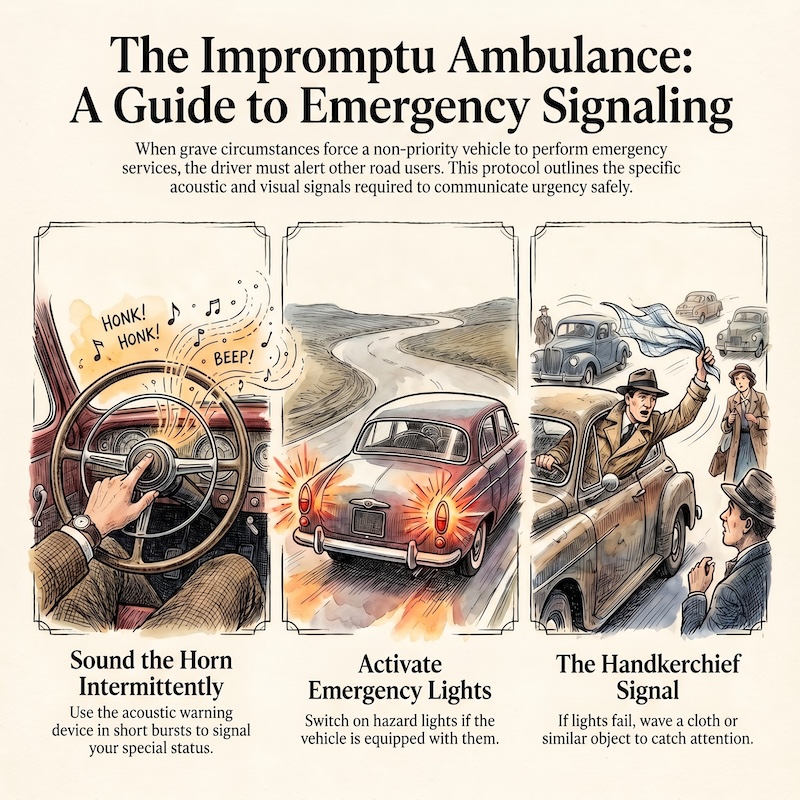
In simple terms, this point of the DGT theory establishes that if, due to exceptionally serious circumstances, the driver of a non-priority vehicle is forced to carry out a task normally reserved for priority vehicles and has no other alternative, they must ensure that other road users are aware of the situation. To do so, they should use intermittent acoustic signals, activate emergency lights if available, or wave a…
Priority questions use concrete situations (junctions, roundabouts, narrow sections): first work out who has right of way and why.
If, due to exceptionally serious circumstances, the driver of a non-priority vehicle is forced to carry out a task normally reserved for priority vehicles and has no other alternative, they must ensure that other road users are aware of the situation. To do so, they should use intermittent acoustic signals, activate emergency lights if available, or wave a handkerchief or similar object.
🔗 Read the official text on the BOE (Spanish General Traffic Regulations)❓ Frequently asked questions
What is non-priority vehicles in emergency service?
Does this topic appear in the DGT theory exam?
Where is it regulated (Article 70 (1))?
🚦 Practise with DGT tests
Already studied the theory? Test yourself with official exam-style questions.
📝 Start with TraficoTest