

Pedestrian visibility is one of the topics in the Safety block of the Spanish DGT theory. Elements and behaviours that protect life: seat belt, helmet, restraint systems and pedestrian behaviour. Understanding this section well helps you answer the theory-exam questions on this topic with confidence.
In simple terms, this point of the DGT theory establishes that pedestrians walking on the roadway or on the hard shoulder of interurban roads between sunset and sunrise, or in weather or environmental conditions that significantly reduce visibility, must use at least one luminous or reflective element, in accordance with personal protective equipment regulations, visible from a minimum…
Seat belt, helmet and restraint systems come with exceptions: learn both the general duty and the cases where it does not apply.
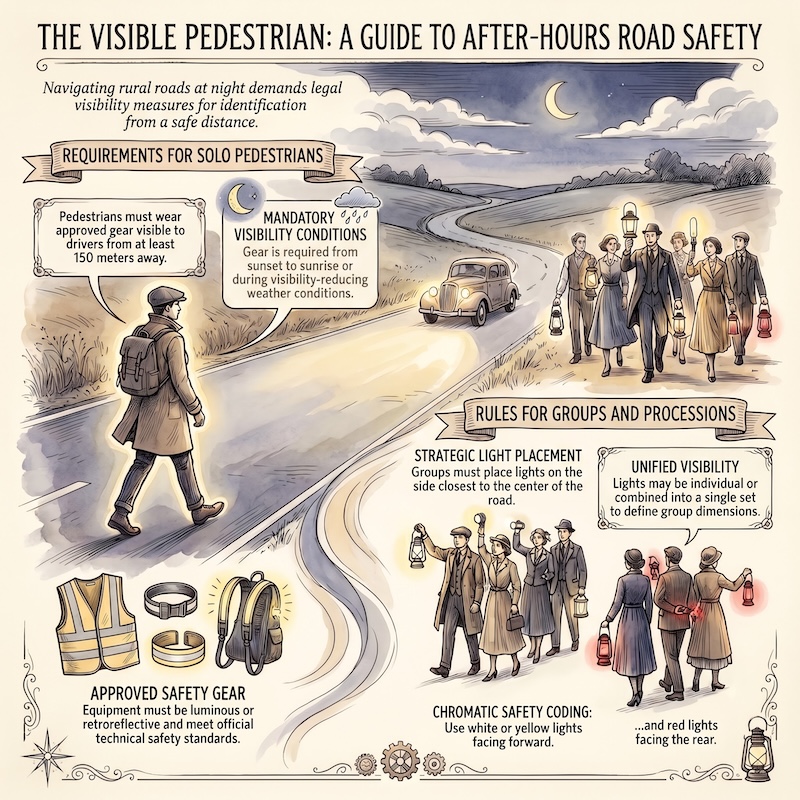
Pedestrians walking on the roadway or on the hard shoulder of interurban roads between sunset and sunrise, or in weather or environmental conditions that significantly reduce visibility, must use at least one luminous or reflective element, in accordance with personal protective equipment regulations, visible from a minimum distance of 150 metres to drivers approaching them.
In the same circumstances, groups of pedestrians shall also carry, on the side nearest the centre of the roadway, the lights necessary to indicate their position and dimensions, which shall be white or yellow towards the front and red towards the rear and which, where applicable, may form a single unit.
🔗 Read the official text on the BOE (Spanish General Traffic Regulations)❓ Frequently asked questions
What is pedestrian visibility?
Does this topic appear in the DGT theory exam?
Where is it regulated (Article 123)?
🚦 Practise with DGT tests
Already studied the theory? Test yourself with official exam-style questions.
📝 Start with TraficoTest