

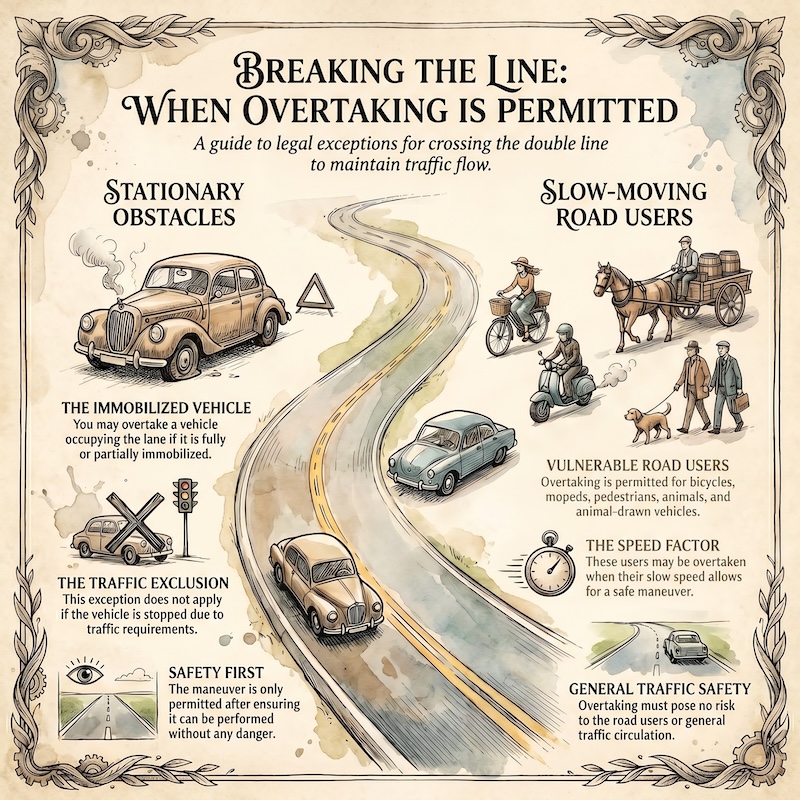
Immobilized vehicles is one of the topics in the Driving maneuvers block of the Spanish DGT theory. Overtaking, changes of direction, stopping, parking, lighting and warnings. Understanding this section well helps you answer the theory-exam questions on this topic with confidence.
In simple terms, this point of the DGT theory establishes that where a vehicle is immobilised on the road due to breakdown or accident, or in the course of an emergency or roadside-assistance service, maintenance of the road's installations and infrastructure, or traffic regulation, management and control duties, and occupies all or part of the roadway in the lane of the direction of…
Manoeuvres are tested with practical cases; remember the correct order: observe, signal and only then carry out the manoeuvre.
Where a vehicle is immobilised on the road due to breakdown or accident, or in the course of an emergency or roadside-assistance service, maintenance of the road's installations and infrastructure, or traffic regulation, management and control duties, and occupies all or part of the roadway in the lane of the direction of travel, vehicles passing it must keep a safety width of at least 1.5 metres, even if to do so they have to occupy the part of the roadway reserved for the opposite direction, and reduce their speed by at least 20 km/h with respect to the speed limit on the road.
🔗 Read the official text on the BOE (Spanish General Traffic Regulations)❓ Frequently asked questions
What is immobilized vehicles?
Does this topic appear in the DGT theory exam?
Where is it regulated (Article 88 (1))?
🚦 Practise with DGT tests
Already studied the theory? Test yourself with official exam-style questions.
📝 Start with TraficoTest