

Forbidden places is one of the topics in the Driving maneuvers block of the Spanish DGT theory. Overtaking, changes of direction, stopping, parking, lighting and warnings. Understanding this section well helps you answer the theory-exam questions on this topic with confidence.
In practice, this comes down to the following:
- ,
- ,
- ,
- ,
- and
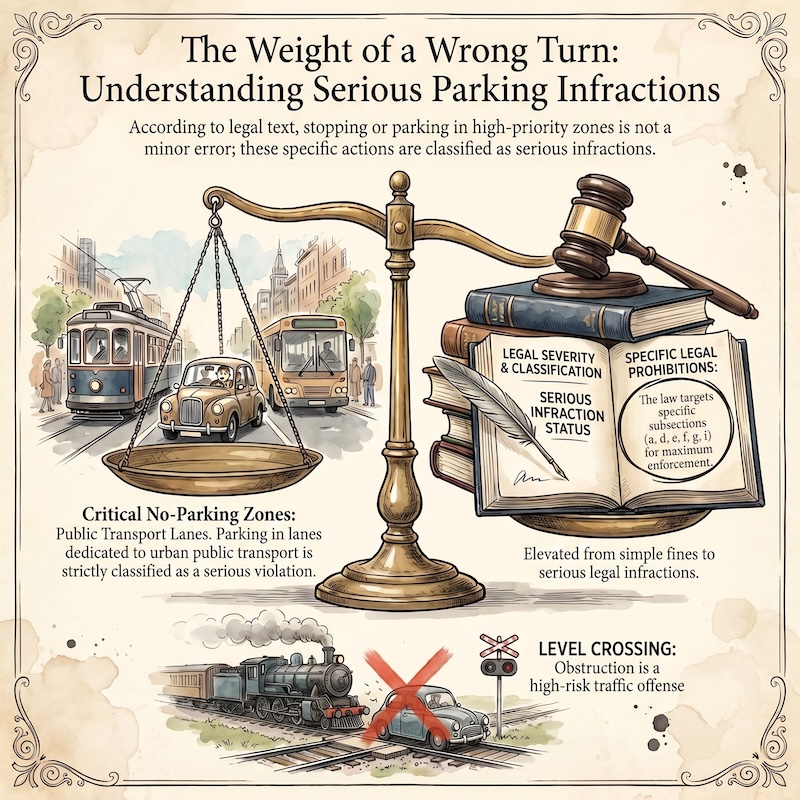
- of section 1, at level crossings and in lanes intended for the use of urban public transport must be considered serious infringements, as provided for in the consolidated text.
In short, the rule makes sure every road user knows what to expect in this situation.
Manoeuvres are tested with practical cases; remember the correct order: observe, signal and only then carry out the manoeuvre.
Stopping or parking in the places listed in paragraphs a), d), e), f), g) and i) of section 1, at level crossings and in lanes intended for the use of urban public transport shall be considered serious infringements, as provided for in the consolidated text.
🔗 Read the official text on the BOE (Spanish General Traffic Regulations)❓ Frequently asked questions
What is forbidden places?
Does this topic appear in the DGT theory exam?
Where is it regulated (Article 94 (3))?
🚦 Practise with DGT tests
Already studied the theory? Test yourself with official exam-style questions.
📝 Start with TraficoTest