

Exemptions is one of the topics in the Safety block of the Spanish DGT theory. Elements and behaviours that protect life: seat belt, helmet, restraint systems and pedestrian behaviour. Understanding this section well helps you answer the theory-exam questions on this topic with confidence.
In practice, this comes down to the following:
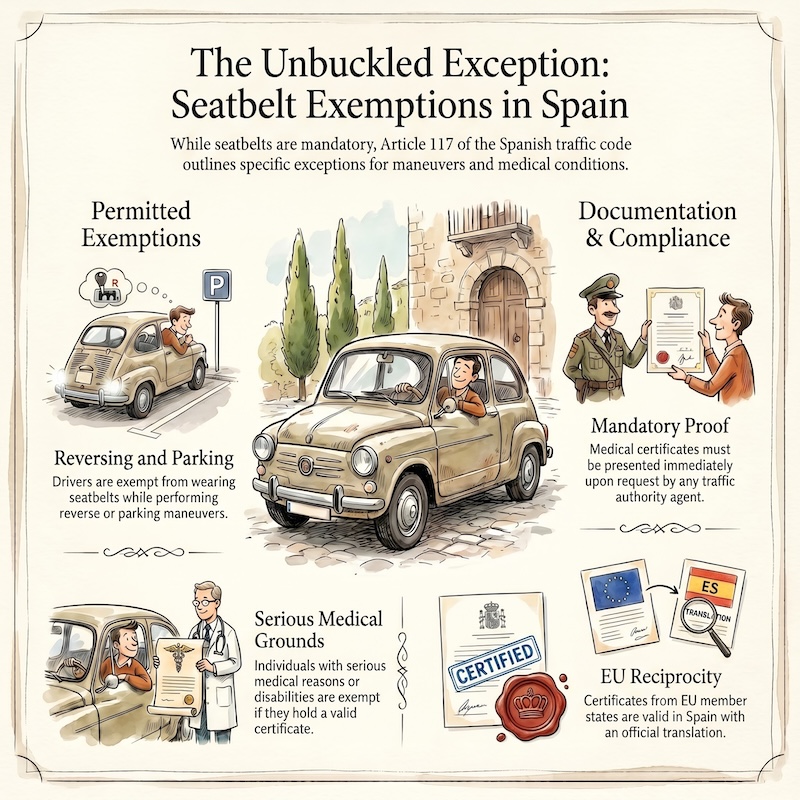
- Drivers, when reversing or parking.
- Persons provided with a certificate of exemption for serious medical reasons or who are disabled. This certificate must be presented when requested by any agent of the authority responsible for traffic.
In short, the rule makes sure every road user knows what to expect in this situation.
Seat belt, helmet and restraint systems come with exceptions: learn both the general duty and the cases where it does not apply.
Notwithstanding the provisions of Article 117, the following may circulate without seat belts or other approved restraint systems:
- Drivers, when reversing or parking.
- Persons provided with a certificate of exemption for serious medical reasons or who are disabled. This certificate must be presented when requested by any agent of the authority responsible for traffic.
Any certificate of this type issued by the competent authority of a Member State of the European Union will be valid in Spain accompanied by its official translation.
🔗 Read the official text on the BOE (Spanish General Traffic Regulations)❓ Frequently asked questions
What is exemptions?
Does this topic appear in the DGT theory exam?
Where is it regulated (Article 119 (1))?
🚦 Practise with DGT tests
Already studied the theory? Test yourself with official exam-style questions.
📝 Start with TraficoTest