

General rules (pedestrians) is one of the topics in the Safety block of the Spanish DGT theory. Elements and behaviours that protect life: seat belt, helmet, restraint systems and pedestrian behaviour. Understanding this section well helps you answer the theory-exam questions on this topic with confidence.
In practice, this comes down to the following:
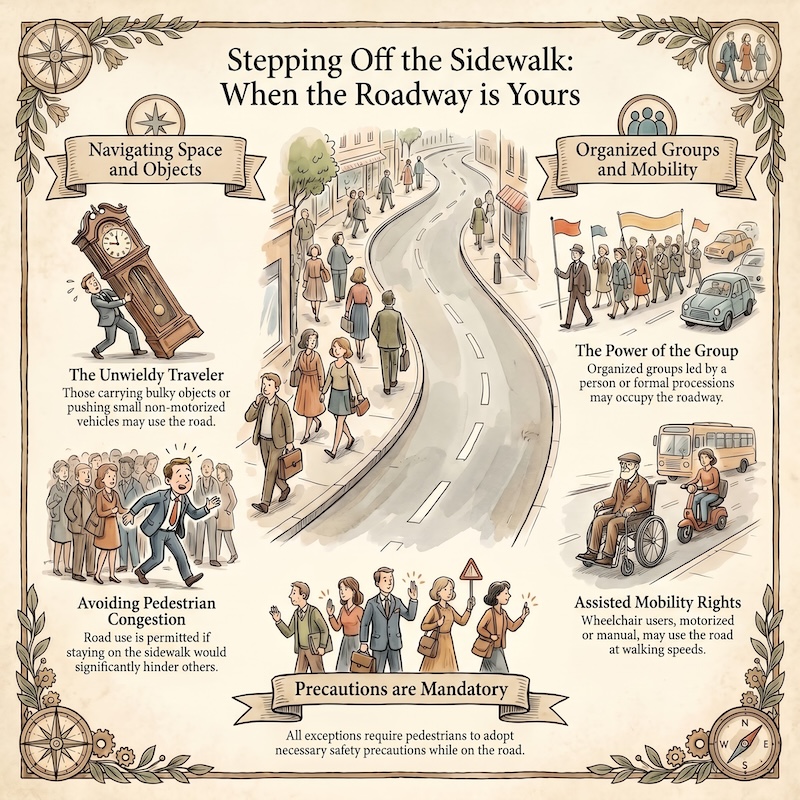
- Anyone carrying a bulky object or pushing or dragging a small non-motor vehicle, if its circulation in the pedestrian zone or on the hard shoulder could constitute a considerable hindrance to other pedestrians.
- Any group of pedestrians led by a person or forming a procession.
- The disabled person who travels in a wheelchair with or without a motor, at a walking speed.
In short, the rule makes sure every road user knows what to expect in this situation.
Seat belt, helmet and restraint systems come with exceptions: learn both the general duty and the cases where it does not apply.
The regulation of the movement and presence of pedestrians in urban areas is established in Title VI, without prejudice to the common rules of this chapter.
🔗 Read the official text on the BOE (Spanish General Traffic Regulations)❓ Frequently asked questions
What is general rules (pedestrians)?
Does this topic appear in the DGT theory exam?
Where is it regulated (Article 121 (2))?
🚦 Practise with DGT tests
Already studied the theory? Test yourself with official exam-style questions.
📝 Start with TraficoTest